
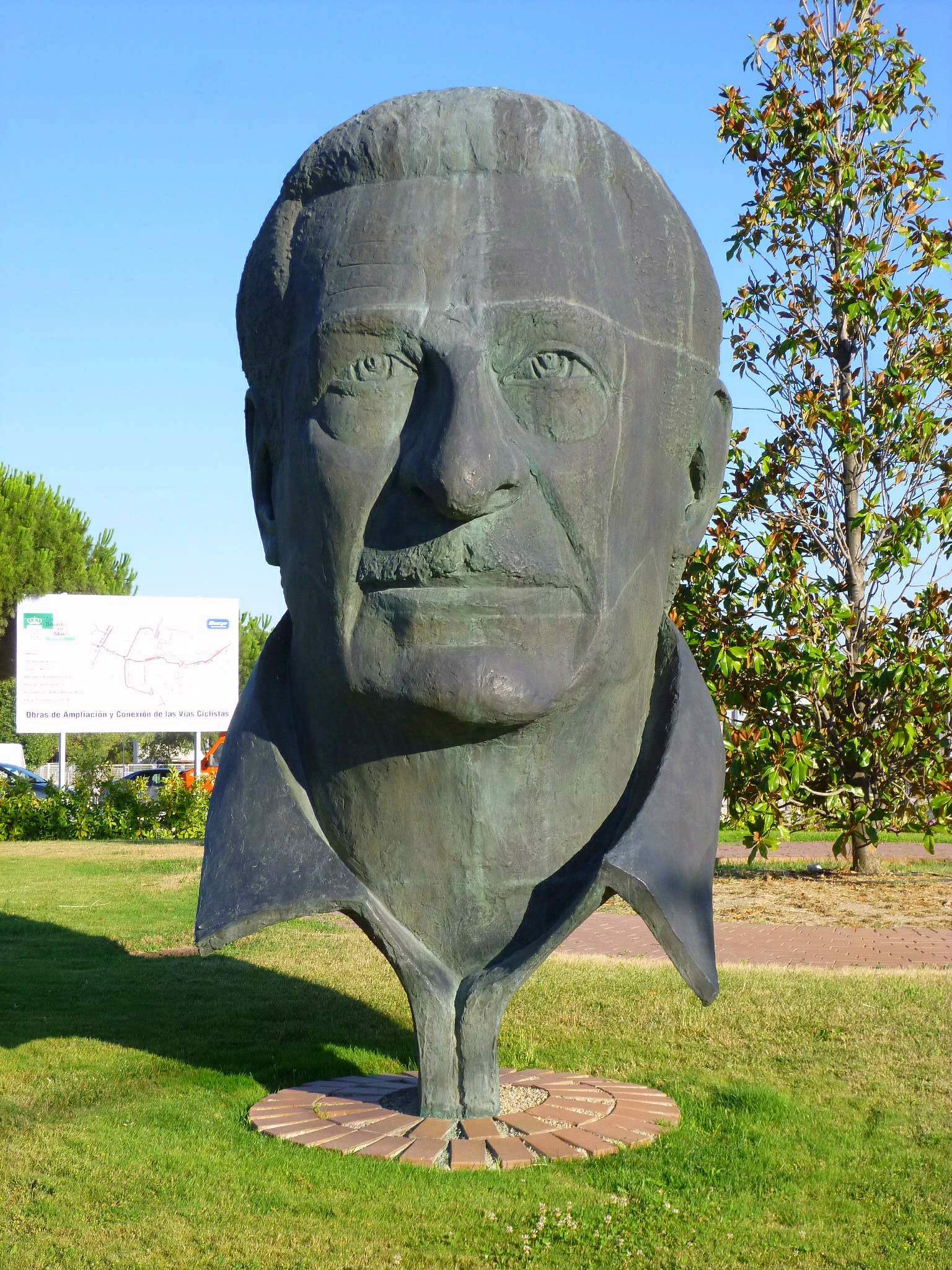
A man who spent his childhood on a Spanish island, raised by an Austrian father and a Spanish mother, would become the definitive French Werther. The paradox sits at the heart of Alfredo Kraus, the lyric tenor who died in Madrid on September 10, 1999 — twenty-seven years ago today. His voice carried the precision of a pianist and the diction of an actor, yet his entire career was built on a single, almost stubborn refusal: he would never push. In an era when tenors were expected to roar, Kraus made his name by gliding.
In an era when tenors were expected to roar, Kraus made his name by gliding.
A household of two brothers calibrating their instruments
Born in Las Palmas de Gran Canaria on November 24, 1927, Kraus did not stumble into music. He was placed at a piano at age four, and by eight he was singing in a school choir. That early choral experience planted the decision to turn professional — not a vague ambition, but a concrete plan. His older brother, Francisco Kraus Trujillo, born in 1926, had already chosen the baritone path. The household must have resonated with scales and arias, two brothers calibrating their instruments against each other.
Milan called, and with it Mercedes Llopart, the pedagogue who would shape his technique. Then came the proving ground. In 1955, Kraus won first prize at the Geneva International Vocal Competition, a victory that immediately framed him as the heir to Tito Schipa. Comparisons to the elegant Italian tenor followed him into every audition. But Kraus did not rush toward the opera house. He spent months sharpening his craft in the zarzuela theaters of Madrid and Barcelona, singing Spanish lyric drama before attempting Verdi.
When the operatic debut finally arrived in 1956, it happened far from Europe — at the Royal Opera House in Cairo. The role was the Duke in Verdi’s Rigoletto, a part that demands swagger, charm, and a top register that sounds effortless. Kraus delivered all three. The Duke became a signature, a calling card he would carry for decades. Critics noted something unusual: the voice had no visible seams. The passaggio was invisible, the vibrato tightly controlled, the intonation absolute.
Holding his own against Maria Callas
Two years later came the night that live-recording collectors still chase. In 1958, at Lisbon’s Teatro São Carlos, Kraus sang Alfredo in La Traviata. Opposite him stood Maria Callas. The chemistry on that stage produced a document of bel canto intensity that later appeared as a live album. Kraus, still early in his career, held his own against the most formidable soprano of the century. His Alfredo was not a victim of Violetta’s tragedy but a partner in its architecture.
London’s Covent Garden welcomed him in 1959 with another cornerstone role: Edgardo in Donizetti’s Lucia di Lammermoor. By now the pattern was clear. Kraus specialized in the French and Italian repertoire of the nineteenth century, favoring roles that demanded elegance over brute force. He was recognized as one of the great lyric tenors of the postwar era, a singer who brought musicianship to every phrase. He was not merely a vocalist; he was a musician who happened to sing.
The technical foundation of bel canto artistry
Then there was Massenet’s Werther. If the Duke of Mantua was his calling card, Werther became his monument. The aria “Pourquoi me réveiller?” — a desperate cry to a spring morning that mocks the singer’s despair — became synonymous with Kraus. He did not attack the high notes; he seemed to lift them out of silence. Critics praised his flawless legato, the way one word melted into the next without a break in the line. His diction was so precise that audiences could follow the poetry without a libretto.
The technical foundation underneath all this beauty was formidable. Kraus possessed a secure upper register that never thinned under pressure. His vibrato control was so refined that some listeners mistook it for a straight tone. He built his interpretations on bel canto artistry, treating ornamentation not as decoration but as psychological revelation. Every run, every trill, every pianissimo had dramatic intent. This was singing as architecture, and Kraus was its most meticulous draftsman.
He also taught. The voice that had filled the Teatro São Carlos and Covent Garden later shaped younger instruments in the studio. His own recordings appeared on Hispavox, capturing a sound that resisted the trends of his time. While other tenors chased volume, Kraus chased clarity. His brother Francisco, who died in 2016, outlived him by seventeen years. But the voice on those records — the one that floats through “Pourquoi me réveiller?” as if asking a question it already knows will go unanswered — still refuses to age.