
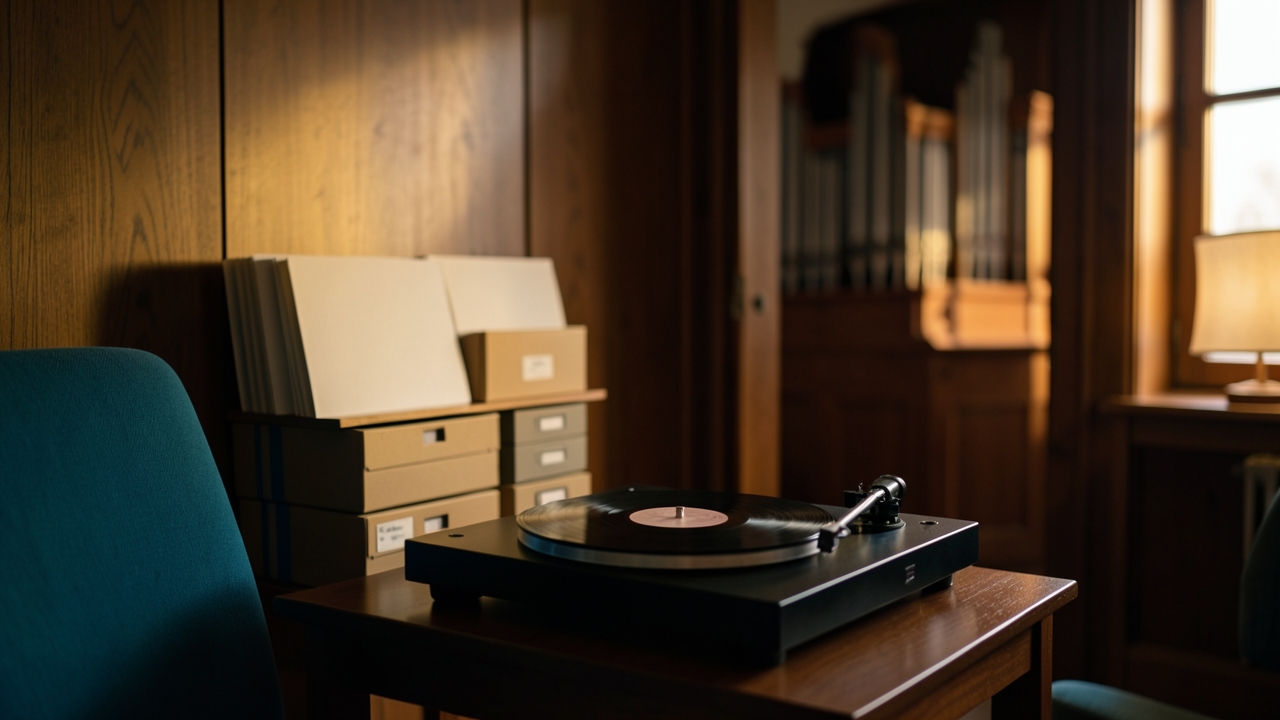
A single wooden organ console in a Gabonese hospital ward became the unlikely meeting point for two obsessions. Albert Schweitzer, born 14 January 1875 in Kaysersberg, Upper Alsace, spent his days treating patients in Lambaréné and his evenings reimagining how Johann Sebastian Bach's music should sound. He died there on 4 September 1965, sixty-one years ago this year, leaving behind a legacy that fused medicine, theology, and musicology into one restless life.
A polymath's education
Schweitzer grew up the son of a poor Lutheran pastor, Louis Schweitzer, and his wife Adèle, herself a pastor's daughter. The family's modest circumstances did not limit his intellectual reach. He attended a Realschule in Münster from 1884 to 1885, then the gymnasium in Mülhausen until 1893. In October 1893 he entered the University of Strasbourg, where he simultaneously studied theology, philosophy, and music theory—a triple load that would define his polymathic career.
His academic path was relentless. He earned a doctorate in philosophy in 1899, a licentiate in theology in 1900, and a doctorate in medicine in 1913. Between those milestones, he served as a soldier in the German army from 1894 to 1895, still attending philosophy lectures while in uniform. From autumn 1898 to spring 1899 he lived in Paris, attending lectures at the University of Paris, writing his dissertation on Kant, and taking organ and piano lessons.
Rethinking Bach's organ sound
Schweitzer's musical scholarship centered on Bach, and his influence on the Organ Reform Movement (Orgelbewegung) was profound. He argued that Bach's organ works demanded a return to the clarity and articulation of Baroque instruments, rejecting the heavy, romanticized registrations of the nineteenth century. His writings and performances pushed organists to rethink touch, phrasing, and registration. This was not academic theory alone—it was a practical revolution that reshaped how Bach was played in churches and concert halls across Europe.
This was not academic theory alone—it was a practical revolution that reshaped how Bach was played in churches and concert halls across Europe.
Theology was equally contested ground. Schweitzer challenged both the secular historical-critical view of Jesus and the traditional Christian orthodoxy of his time. He insisted that Paul's mysticism of being 'in Christ' was primary, while the doctrine of justification by faith was secondary. This reordering scandalized many Lutherans, yet it emerged from his deep engagement with the New Testament. He was a Lutheran pastor, but his interpretations refused to fit neatly into any confessional box.
The Lambaréné hospital and Reverence for Life
In 1913, with a medical degree in hand, Schweitzer founded a hospital in Lambaréné, then part of French Equatorial Africa, now Gabon. He funded and maintained it largely through his own earnings from concerts, lectures, and writing. The hospital became the physical expression of his philosophy of 'Reverence for Life' (Ehrfurcht vor dem Leben), which held that all living beings deserve ethical consideration. This principle guided his medical practice and his refusal to harm even the smallest creature unnecessarily.
The Nobel Peace Prize came in 1952, awarded for his philosophy of Reverence for Life and its embodiment in the Lambaréné hospital. By then Schweitzer was an international figure, yet he remained in the jungle, treating patients and writing. He was also the paternal great-uncle of Jean-Paul Sartre, a family connection that linked two of the twentieth century's most influential thinkers—one existentialist, one humanitarian, both shaped by Alsatian roots.
Schweitzer's daily rhythm at Lambaréné was famously strict: morning rounds, afternoon construction work, evening organ practice on a piano with pedal attachments. He continued to correspond with organ builders and scholars, refining his ideas about Bach performance. His book on Bach, first published in French and later in German, became a standard text for organists. The Orgelbewegung that he helped inspire led to the building of new instruments modeled on Baroque principles, altering the soundscape of sacred music for decades.
The hospital still operates today, and Schweitzer's recordings of Bach organ works remain in circulation, capturing a style that was both scholarly and deeply personal. His death in 1965 closed a life that had moved from a small Alsatian village to a Nobel podium and a jungle clinic. The organ console in Lambaréné, now silent, once carried the same chorales that echoed in Strasbourg and Paris—a reminder that for Schweitzer, music and mercy were not separate callings but one continuous act of reverence.