
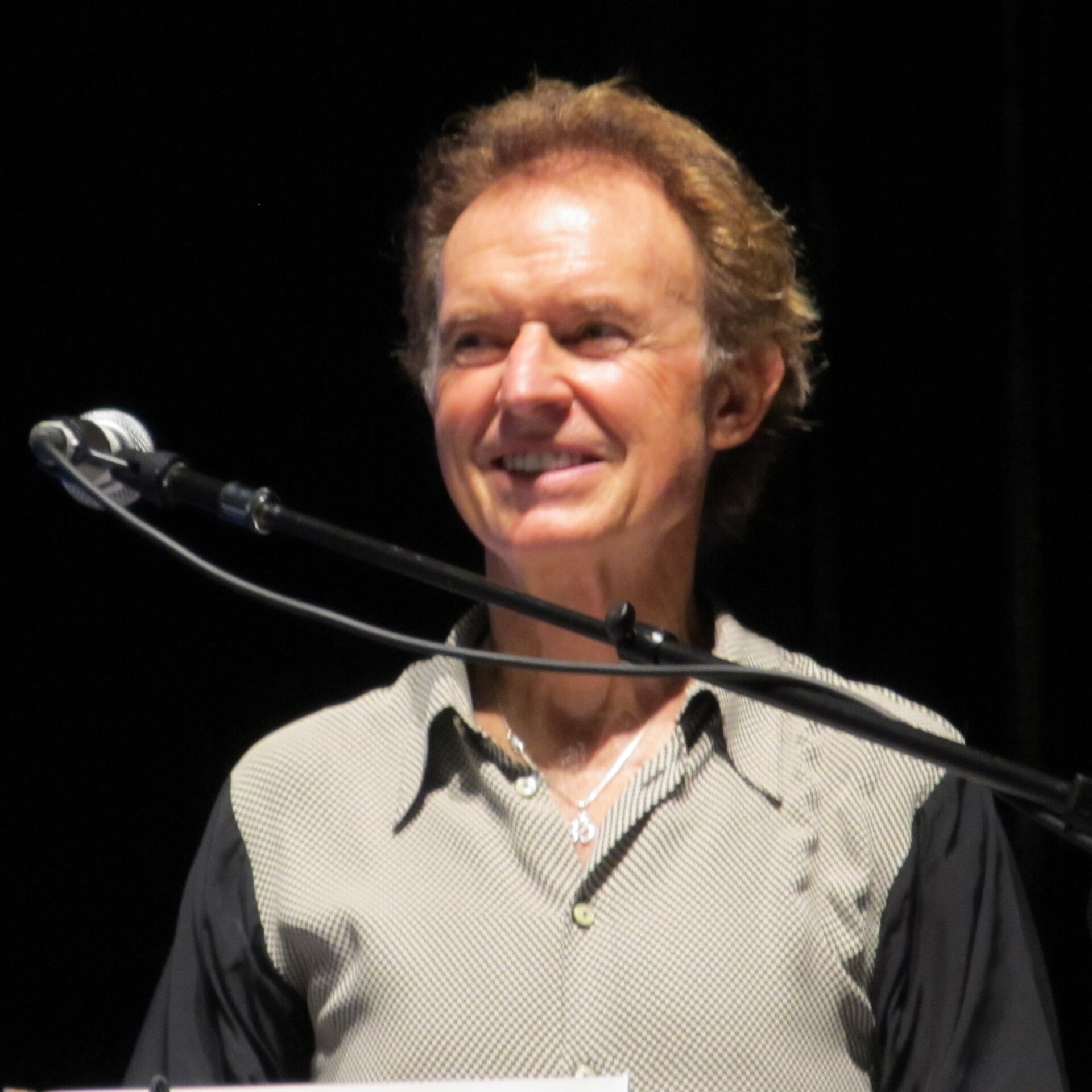
A child actor on Broadway who later studied medicine and psychology in Berlin before co-writing some of the heaviest British blues-rock of the late Sixties. That same man would then, three years ago, leave behind a song so soft and weightless it still drifts through films and shopping malls half a century later. Gary Wright spent a lifetime refusing to be just one thing, yet the paradox of his career is that a single shimmering track from 1975 ultimately defined him.
From Broadway to Berlin and beyond
Wright was born on April 26, 1943, and his early years read like a script no studio would greenlight. He performed in the Broadway production of Fanny as a kid, then pivoted hard into academia, studying medicine before switching to psychology across New York and Berlin. Science seemed like the path forward. A chance encounter in Europe with Chris Blackwell of Island Records detonated that plan entirely. Blackwell saw something in Wright, and the invitation to London was a door the young American pushed wide open.
London in the late Sixties was a forge. Wright joined Spooky Tooth, a British blues-rock outfit that quickly became a formidable live act, partly because Wright himself was writing most of the material. The band’s bruising Hammond organ and dual vocals carved a niche between the psychedelic sprawl and the harder edge creeping into rock. They were never the biggest name on the marquee, but Spooky Tooth built a reputation as a band other musicians watched closely. Seven years in England turned Wright into a different kind of musician.
A Beatle's spiritual influence
Those years also placed him in a room with George Harrison. Wright played keyboards on Harrison’s monumental triple album All Things Must Pass in 1970, a session that changed both his sound and his spiritual compass. Harrison’s immersion in Indian devotional music struck Wright deeply. The friendship that grew from those sessions infused Wright’s own writing with a searching, almost prayerful quality. Indian religious themes began threading through his lyrics, a direct line from Harrison’s influence to Wright’s own voice.
Before the big breakthrough, Wright had already tried the solo route on A&M Records during his London stint. Those early records didn’t catch fire. But they sharpened his instincts. By the time he returned to America and signed with 20th Century Fox Records, Wright had a clear vision: synthesizers could carry a song the way a guitar always had. He wasn’t abandoning rock; he was rewiring it from the keyboard bench. The result was The Dream Weaver, an album that landed in 1975 with a sound utterly its own.
The inescapable singles of 1976
Fifty years ago this year, the album’s two singles became inescapable. “Dream Weaver” and “Love Is Alive” both hit in 1976, and suddenly Wright was everywhere. The former was a slow-motion drift of synthesizer and hushed vocals, a track that felt less like a rock song and more like a lucid dream set to tape. The latter had a harder pulse, a funky organ grind that proved Wright could still write a groove. No other release in his catalog ever matched that moment. The peak was singular and absolute.
Chasing that altitude became the rest of his story. Wright continued recording through the 1980s and beyond, but the commercial lightning never struck twice. Instead of retreading the soft-rock formula, he steered toward world music and new age textures from the late Eighties onward. The shift made sense for someone who had once absorbed Indian spirituality through a Beatle’s playlist. The songs grew more ambient, more exploratory, further from the radio but closer to whatever he was searching for.
The numbers are stark. Eighty-three years since his birth in 1943. Fifty-six years since those All Things Must Pass sessions. Fifty-one years since The Dream Weaver first spun on turntables. And three years since Gary Wright died on September 4, 2023. The discography after 1976 spans decades of earnest work, yet the public memory of Wright narrows to a single album and two songs. He knew it, and he kept making records anyway.
What remains is the strange durability of that one sound. “Dream Weaver” never became a period piece. It floats through car stereos and streaming playlists with the same unmoored quality it had in 1976, a synth line that feels less like a hook and more like the weather. Wright spent his life moving through identities — child actor, medical student, blues-rock brawler, spiritual seeker, new age wanderer. The dream he wove outlasted all of them.