
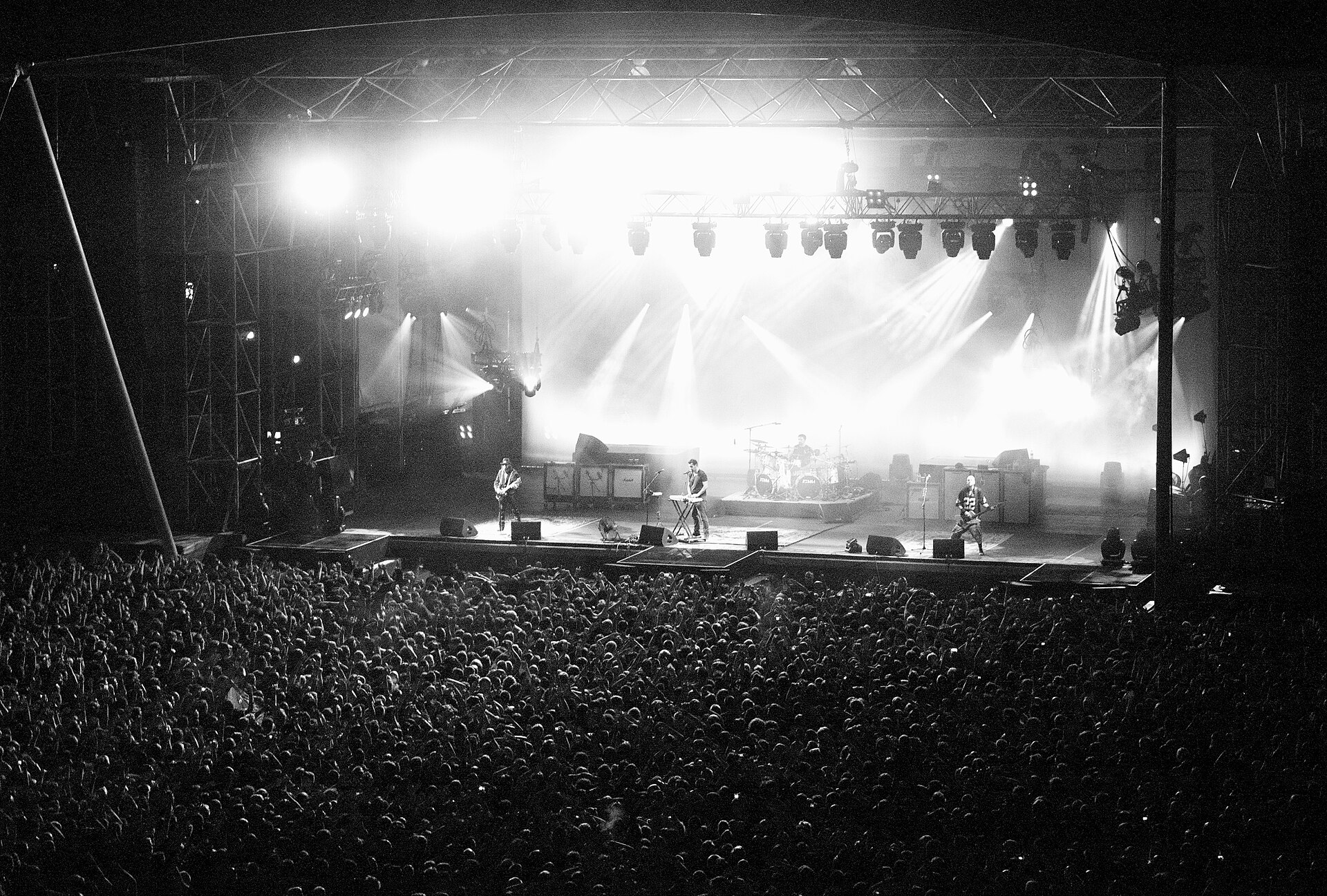
In February 2001, five musicians gathered in a live room at Hollywood’s Cello Studios to capture something combustible. System of a Down had spent weeks rehearsing in North Hollywood, and Rick Rubin was adamant: they would record as a unit, with no click tracks and no isolation booths. The producer wanted the band’s thrash-punk-prog hybrid to breathe like a live set, not a studio construction. Those early sessions yielded Toxicity, an album that debuted at number one on the Billboard 200 and sold over 220,000 copies in its first week.
Writing and recording under Rick Rubin
The band wrote more than 30 songs for the project, but only 14 made the final tracklist. Many had been road-tested for months, evolving through setlists long before Rubin heard them. Daron Malakian wrote the bulk of the music and lyrics, while Serj Tankian’s vocal improvisations often stuck on the first take. The two singers clashed constantly over vocal parts, but Rubin treated the friction as fuel rather than a flaw.
The gear choices defined the sound. Tankian played a Gibson SG, Malakian rotated through Ibanez Iceman models, and Shavo Odadjian anchored the low end with a Gibson Thunderbird. John Dolmayan’s Tama Starclassic kit supplied a percussive precision that sliced through the analog warmth. Rubin tracked everything to 2-inch tape, shunning digital processing to preserve the raw attack. That decision gave songs like ‘Prison Song’ and ‘Jet Pilot’ a physicality that digital editing would have flattened.
The battle over 'Chop Suey!'
One song nearly didn’t survive its own title. ‘Chop Suey!’ began life as ‘Suicide,’ but Columbia Records pushed back hard. The label feared the word would kill radio play before the album even shipped. Tankian’s opening vocal run was pure improvisation, a melodic burst that became the song’s signature. The compromise held, and the track went on to become the band’s biggest hit, even after many stations yanked it from rotation following the September 11 attacks.
The lyrics carried a political weight that felt urgent in 2001. ‘Prison Song’ dissected the U.S. prison system and the war on drugs with a fury that matched the music’s stop-start aggression. ‘Jet Pilot’ channeled awe and horror at American military power. ‘X’ turned to the Armenian genocide, a subject Tankian and Malakian had addressed before but never with such directness. The album’s politics weren’t slogans; they were woven into the riffs and vocal lines.
Beyond metal: acoustic textures and Armenian folk
The band’s sonic palette stretched far beyond metal. ‘Aerials’ featured Tankian on a 12-string acoustic guitar, while ‘Arto’ brought in Armenian duduk player Arto Tunçboyacıyan. That hidden track, tucked after a long pause following ‘Aerials,’ closed the album with a mournful instrumental that felt like a secret. ‘Shimmy’ borrowed from Arabic scales, and ‘Science’ included Dolmayan’s bell work. The title track’s 6/8 time signature gave the song a lurching, off-balance momentum.
The cover art came from within the family. Vartan Odadjian, Shavo’s father, painted a Hollywood hillside with the word ‘Toxicity’ replacing the iconic sign. It was a visual pun that captured the album’s central tension: glamour and decay, spectacle and poison. The image became inseparable from the music, a postcard from a city the band both loved and criticized.
Mixing fell to Andy Wallace, who had shaped albums by Nirvana and Slayer, and mastering went to Vlado Meller at Sony Music Studios in New York. The final product was completed by July 2001, a month before its release. The album’s blend of thrash, punk, progressive rock, and Armenian folk music felt like a collision of worlds, but the band held it together through sheer rhythmic discipline and melodic hooks.
The album’s legacy was sealed by its timing. Released on September 4, 2001, Toxicity arrived a week before the world changed. ‘Chop Suey!’ became an unlikely anthem, banned and beloved in equal measure. The album went multiplatinum in the U.S., and its songs still surface in setlists and playlists. The raw sessions at Cello Studios produced a record that sounds as volatile today as it did when the tape first rolled.