
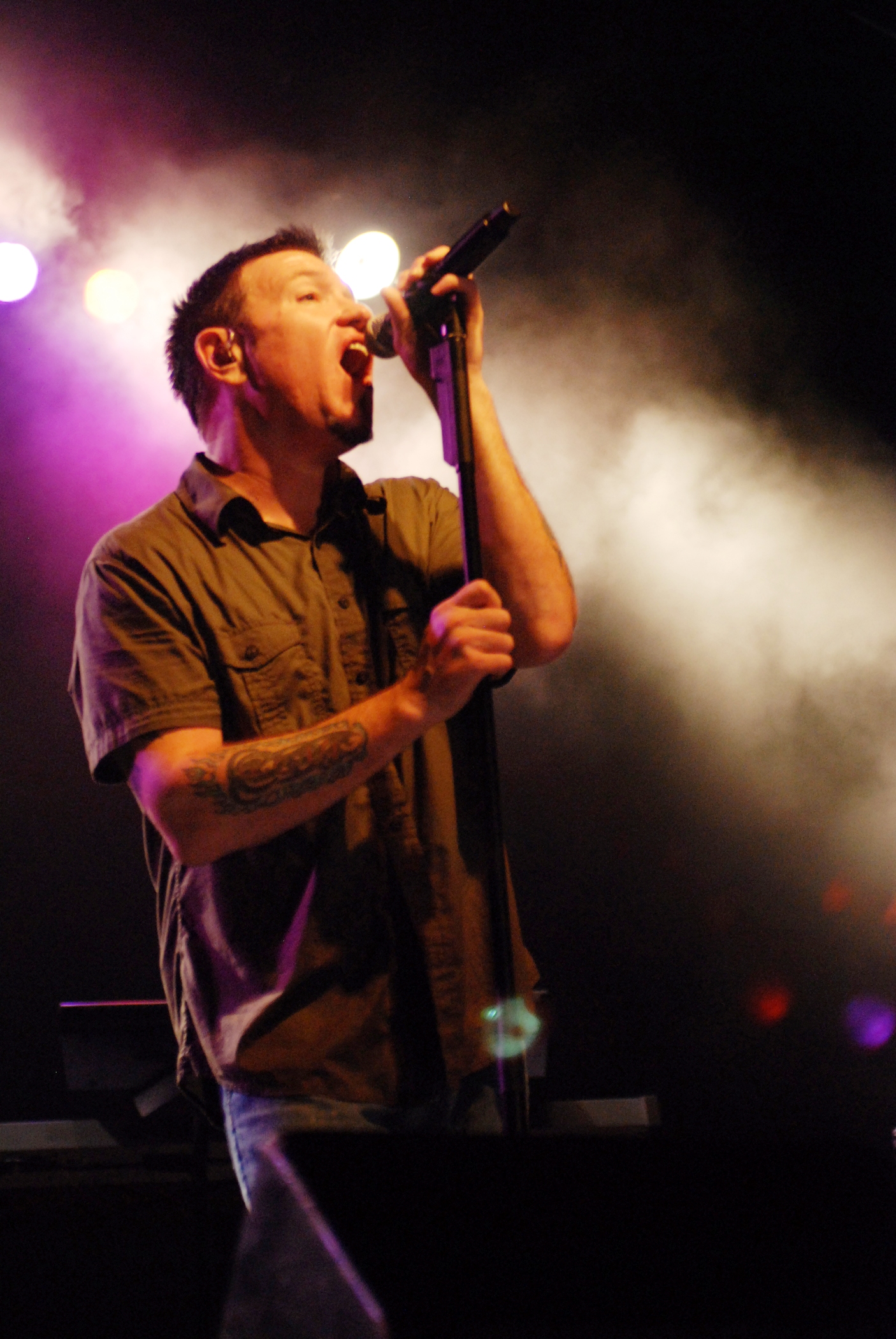
The microphone cable dragged across a stage in Bethel Woods, New York, in 2021. Steve Harwell stood at the center of a wine and beer festival, slurring words at a crowd that had come expecting "All Star" and got something else entirely. He gestured toward the audience, fingers angled in a way that stopped conversations mid-sentence. Three years ago today, on September 4, 2023, the voice behind Smash Mouth died in Boise, Idaho at 56. That festival meltdown, captured on dozens of phones, became the final public chapter of a 27-year run that started in a San Jose garage with a guy who once thought his future was in hip-hop.
The rap phase that Dr. Dre ended
Harwell was born in Santa Clara, California, on January 9, 1967. His father filled the house with vinyl — Elvis Presley one day, David Lee Roth the next. The kid absorbed it all and started a band in his parents' garage before he could legally drive. But the music that first grabbed him as a teenager wasn't rock. It was the dense, confrontational sound of Public Enemy. He formed a rap group called Freedom of Speech, or F.O.S., and threw himself into the role. For a while, this was the plan.
Then 1992 happened. Harwell sat down with Dr. Dre's The Chronic and heard the ground shift beneath him. The production, the G-funk swing, the sheer scale of it — this wasn't the hip-hop he knew how to make. He walked away from rapping entirely. It wasn't a gradual pivot or a side-project experiment. He heard an album, recognized that the genre had moved past him, and decided to find something else. Two years later, in 1994, that something else had a name: Smash Mouth.
He heard an album, recognized that the genre had moved past him, and decided to find something else.
How Smash Mouth began as a ska-punk band
The connection came through Kevin Coleman, who became the band's first manager and sat behind the drum kit at their very first rehearsal. Coleman introduced Harwell to Greg Camp and Paul De Lisle, two musicians who had spent years playing in a punk outfit called Lackadaddy. The four of them landed on ska-punk, the sound dominating California clubs at that moment. Harwell later insisted the genre shaped everything Smash Mouth became. The upstroke guitars, the rhythmic bounce — it all traced back to those early sessions.
Interscope Records took notice. By 1997, Smash Mouth had a song climbing to the top of the charts. "Walkin' on the Sun" wasn't just a hit — it rearranged Harwell's life. He was 27 years old and had never owned a new car. Now he walked into a dealership and bought a BMW. Not a used one. Not a hand-me-down. The garage rapper from San Jose who quit hip-hop because of a Dr. Dre album had a number-one single and a German sedan with zero miles on the odometer.
Television and the unmistakable frontman
The band's sound settled into a blend of alternative rock and pop rock, polished but retaining the ska-punk skeleton underneath. Harwell became the unmistakable frontman — stocky, bald, perpetually in sunglasses, voice rougher than the studio recordings suggested. Television came calling. He appeared on radio shows, popped up on various programs, and eventually joined the cast of VH1's The Surreal Life, where his off-stage personality got more screen time than his music ever had.
By 2021, the cracks were visible. The Bethel Woods festival performance turned into a confrontation. Harwell was intoxicated on stage, cursing at audience members, making gestures that observers described as resembling a Nazi salute. The footage spread fast. Within weeks, he was out of Smash Mouth. The official announcement came in October 2021. A band he co-founded, a project he had led for nearly three decades, ended with a statement and a lot of unanswered questions.
The arc from that garage in Santa Clara to the stage in Bethel Woods spans 34 years. In between: a father's record collection, a rap group called Freedom of Speech, a revelatory listen to The Chronic, a ska-punk band that became an alt-rock institution, a chart-topping single, a first new car at an age when most musicians are already jaded by royalty checks. Harwell was never a hired voice. He built Smash Mouth from the ground up alongside Camp, De Lisle, and Coleman.
He spent 27 years in the same band, from the first rehearsal with his manager on drums to the final, disastrous festival set. The BMW is probably long gone by now — traded in, sold off, rusted out. But the image lingers: a 27-year-old who had never owned a new car, signing papers at a dealership because a song about walking on the sun somehow became the biggest thing in the country.
Three years after his death, the songs still surface in movie trailers, meme compilations, karaoke bars. The voice is unmistakable the moment it kicks in — a little ragged, a little too loud, completely sure of itself. That voice started in a garage, passed through a rap phase inspired by Public Enemy, got rerouted by Dr. Dre, and eventually found its home somewhere between ska-punk and pop radio. Not a bad journey for a kid from Santa Clara whose dad just played a lot of records.