
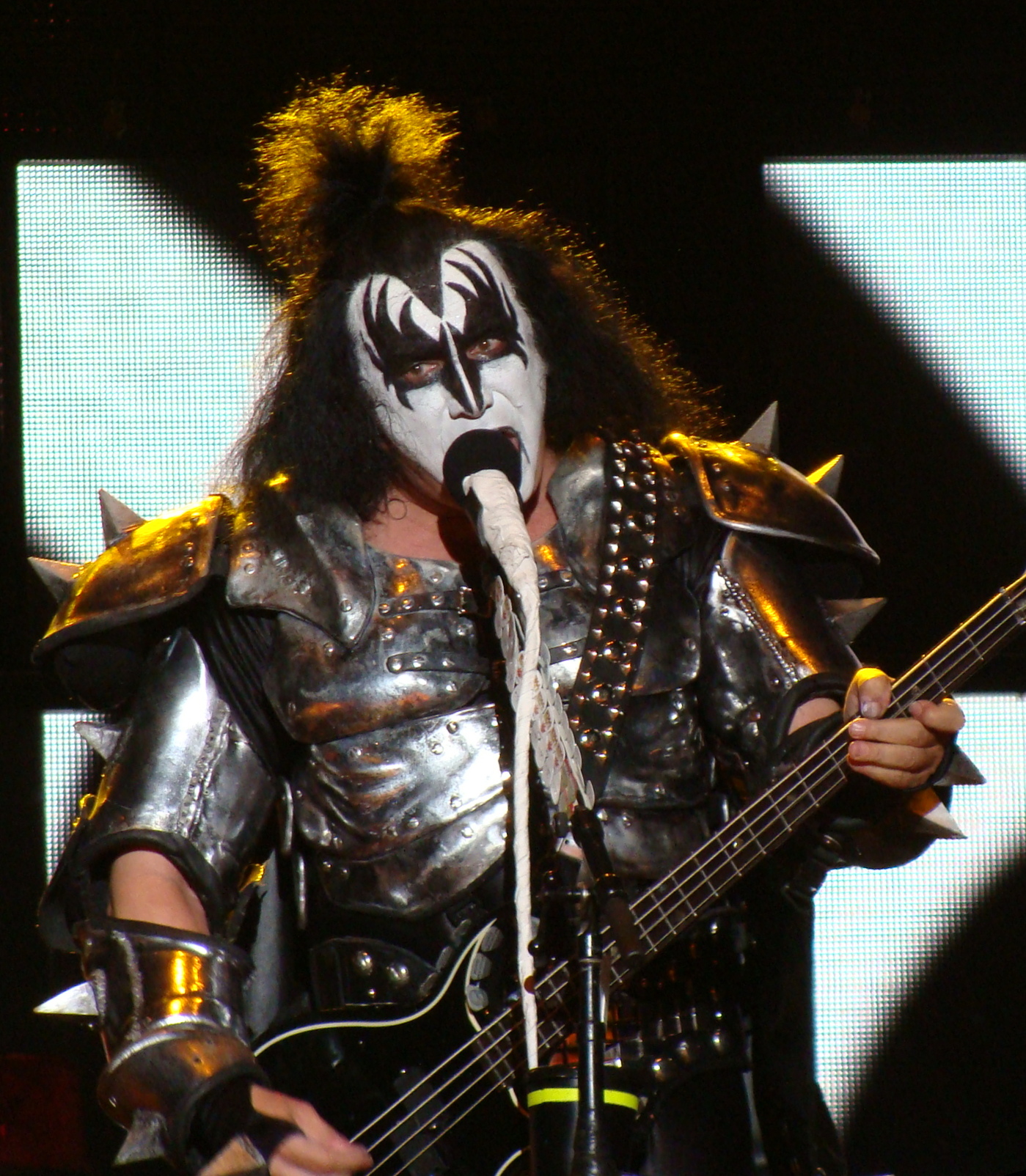
A bassist spitting blood and breathing fire while a Disney standard plays in the background — that contradiction is the entire Gene Simmons story in miniature. Born Chaim Witz in Haifa, Israel, on August 25, 1949, he emigrated to the United States as a child, carrying a love for American comic books and horror films that would later warp the DNA of hard rock. Simmons, co-founder of KISS, turned a New York glam-scene misfire into a global commercial juggernaut, proving that the music itself was only half the product.
From Wicked Lester to four comic-book archetypes
The road to the greasepaint ran through a string of dead-end bands. Simmons cycled through groups like Bullfrog Bheer before landing in Wicked Lester, where he met guitarist Paul Stanley. That partnership fizzled when the duo decided their folk-tinged rock lacked the necessary violence. They scrapped the project entirely, determined to forge a heavier sound welded to a visual spectacle. The blueprint was simple: four distinct characters, each a comic-book archetype, masking the musicians in a way that made the music feel larger than any individual player.
Stanley coined the name KISS, and the recruitment process was pure 1970s New York street mythology. Peter Criss answered a Rolling Stone classified ad to become the drummer. Ace Frehley walked into his audition looking entirely out of place and proceeded to outplay every other guitarist in the room. With the lineup locked, Simmons adopted the persona of 'The Demon,' a leering, blood-drooling figure whose unnaturally long tongue became a trademark as recognizable as the band's logo. The imagery was aggressive, cartoonish, and impossible to ignore.
Casablanca Records and the bet on chaos
Casablanca Records, founded by Neil Bogart, was the volatile engine that pushed KISS onto a national stage. The label was flashy, cash-strapped, and operated on a philosophy of excess that mirrored the band's own instincts. Early studio albums struggled to capture the sheer physical assault of the live show, a problem that threatened to sink the project before it truly ignited. The stage production, featuring pyrotechnics, flying guitars, and Simmons’ axe-tossing routine, was bleeding money, but Bogart bet everything on the visual chaos translating to a wider audience.
That bet paid off in 1975 with 'Alive!', a double album that finally trapped lightning in a groove. The record captured the crowd roar, the cannon blasts, and the raw, sped-up tempos that studio polish had dulled. 'Rock and Roll All Nite' became the group's anthem, a rallying cry that turned concerts into mass participatory rituals. The success of 'Alive!' transformed KISS from a cult attraction into a commercial force, setting the stage for a licensing empire that would soon dwarf the music industry's traditional revenue streams.
The licensing empire beyond the turntable
Simmons understood that a fan’s loyalty could extend far beyond the turntable. KISS licensed their likenesses to a staggering array of merchandise: action figures, comic books, lunchboxes, and eventually even branded coffins. This was not a band selling t-shirts; it was a brand colonizing every corner of a consumer’s life. The strategy drew sneers from purists, but it insulated the group from the shifting tides of radio formats. While other hard rock acts relied solely on album cycles, KISS built a self-sustaining economy.
This was not a band selling t-shirts; it was a brand colonizing every corner of a consumer’s life.
The 1978 solo album experiment distilled each member's distinct musical personality. While Frehley leaned into hard rock grit and Criss explored soul-inflected balladry, Simmons delivered the wildest left turn. His record included a cover of 'When You Wish Upon a Star,' a move that felt less like irony and more like a calculated provocation. Releasing four separate albums on the same day, all under the unified KISS branding, was a logistical flex that no other act of the era could have attempted without risking total commercial collapse.
Hollywood, reality TV, and the death of rock
Simmons spent the following decades oscillating between rock stardom and a broader entertainment career. He acted in films like 'Runaway' and 'Extract,' co-founded the Rock & Brews restaurant chain, and starred in the reality show 'Gene Simmons Family Jewels,' which documented his domestic life with Shannon Tweed. He authored books, including the autobiography 'Kiss and Make-Up,' and became a reliably provocative voice, frequently declaring rock music commercially dead while KISS continued to gross millions on the road.
The 1996 reunion, putting the original four members back in makeup, triggered a nostalgia explosion that dwarfed their 1970s peak. Decades later, the Rock and Roll Hall of Fame induction in 2014 acknowledged the machinery they had built, and the 'End of the Road World Tour,' launched in 2019, framed the spectacle as a final victory lap. Forbes pegged Simmons’ fortune in the hundreds of millions, a number generated not just by bass lines, but by a relentless refusal to separate art from commerce.
Seventy-seven years after his birth in Haifa, the Demon’s silhouette remains a fixed point in the cultural landscape. The makeup hid the man, but the business instincts were always visible. KISS turned hard rock into a trademark, and Simmons, ever the archivist of his own myth, secured ownership of the very symbols that made him unrecognizable.