
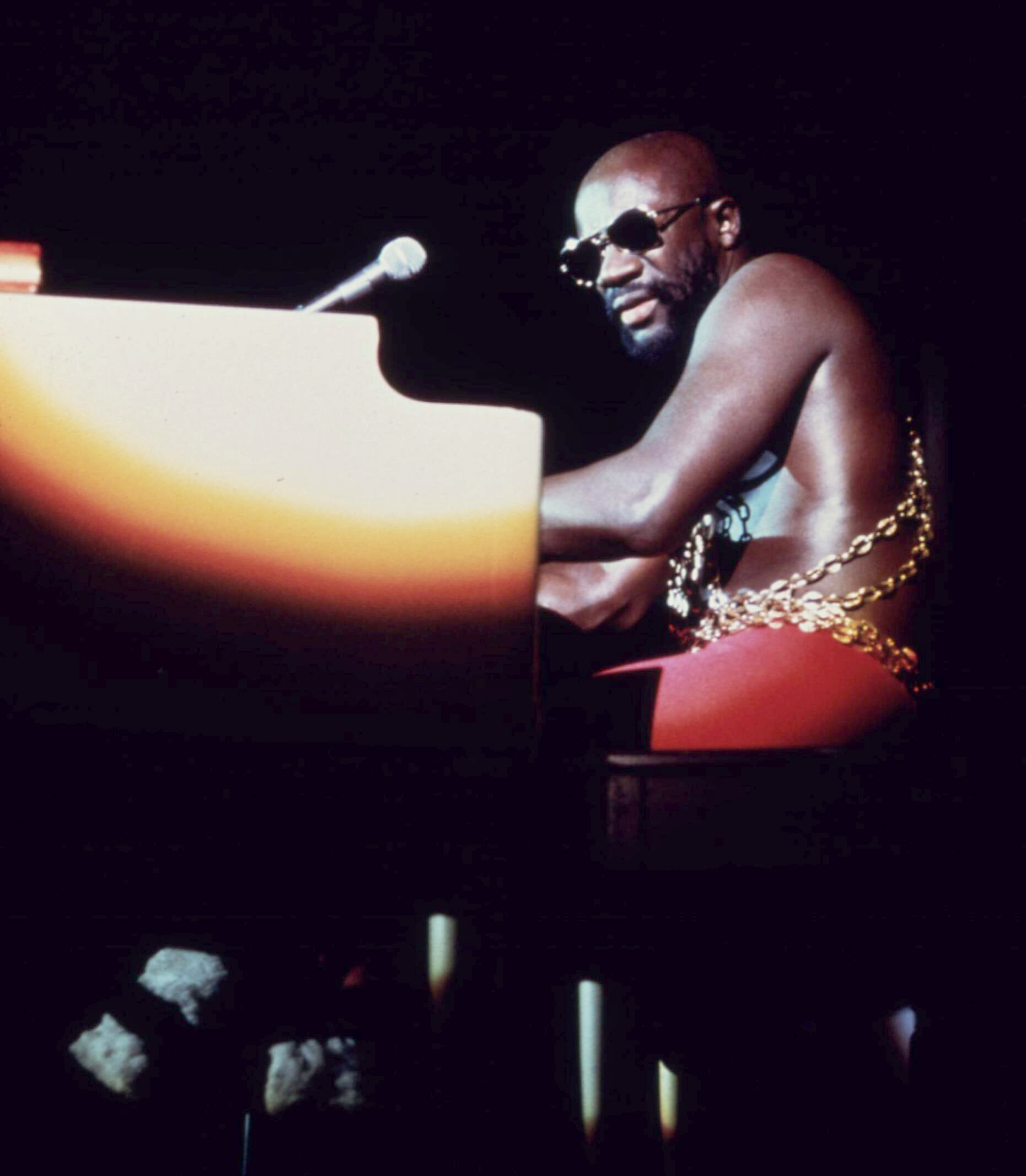
An Oscar-winning song that spent two weeks atop the Hot 100 started with a man who had never scored a film before. Isaac Hayes walked into the 'Shaft' project already carrying a reputation as the architect of Stax Records' biggest hits, yet Hollywood had no idea what he could do with an orchestra. The studio handed him a rough cut and expected a standard funk backdrop. What they got instead was a double LP — a format almost unheard of for soundtracks in 1971 — that would sit at number one on the Billboard 200 for two weeks. Hayes was born on August 20, 1942, and by the time he commanded a symphony orchestra in a Memphis studio, he had already co-written 'Soul Man' and 'Hold On, I'm Comin'' for Sam & Dave.
Full creative control at Stax
The shift from behind-the-scenes songwriter to the bald-headed, chain-draped icon happened because Hayes insisted on a condition most producers would have laughed off. He demanded full creative control. He wrote every note of the score, shaped the arrangements himself, and produced the entire record without interference. Stax Records, the label that had already felt his gravitational pull as a writer and producer, backed the gamble. The result was a soundtrack that behaved like a proper soul LP — sprawling, patient, and unapologetically luxurious. Hayes didn't just decorate the film's action; he built a sonic world that could stand alone.
When the needle drops on 'Theme from Shaft,' the first thing that hits is Charles 'Skip' Pitts and his wah-wah guitar. That sixteen-note riff doesn't introduce a character so much as a silhouette — before a single word is sung, the attitude is already in the room. Hayes enters not with a conventional melody but with a conversational murmur, almost a spoken-word narration that asks questions and answers them in the same breath. This 'rap' style, layered over the tight groove of The Bar-Kays' rhythm section, made the single an immediate force. It climbed to number one on the Billboard Hot 100 and stayed there for two weeks, pulling the entire album to the top of the charts with it.
That sixteen-note riff doesn't introduce a character so much as a silhouette — before a single word is sung, the attitude is already in the room.
Orchestra and funk in one room
The Memphis Symphony Orchestra and The Bar-Kays shared studio space for the sessions, a pairing that defined the album's architecture. Strings didn't sweeten the funk — they tangled with it. Horns punched through arrangements that stretched beyond radio logic. Some instrumental tracks ran well over ten minutes, building tension through repetition rather than verse-chorus resolution. Across four sides of vinyl, Hayes placed just fifteen tracks. The double LP format wasn't a gimmick; it was a demand for attention. Each composition was given room to breathe, to mutate, to let a rhythm section lock into a groove and ride it until the air changed.
The cultural timing was surgical. 'Shaft' arrived as blaxploitation cinema was finding its footing, and the album's success lit a fuse. After Hayes proved that a soul soundtrack could dominate both the box office and the Billboard 200, studios scrambled to commission their own. The formula — orchestral sweep anchored by funk, a charismatic vocal presence, and music that worked as an album first — became a template. Hayes hadn't just scored a film; he had created a new commercial lane where the soundtrack LP was the main event, not an afterthought sold in the lobby.
Awards and a new commercial lane
Awards started arriving in clusters. The Academy gave him the Oscar for Best Original Song — a historic moment, as Hayes became the first African American to win in that category. The Grammys followed, recognizing the album's instrumental arrangements and its overall achievement as a film score. The trophies mattered, but they also obscured a simpler truth: this was a Stax house producer stepping into a spotlight that had rarely been offered to someone who looked like him. The gold chains and dark glasses that became his uniform weren't costume; they were armor for a space that hadn't been designed with him in mind.
Listeners who came for the hit single discovered an album that refused to be background music. Side-openers sprawled. Ballads stretched past the point of comfort. Hayes used silence as an instrument, letting passages collapse into near-whispers before the horns returned. The production blended soul, funk, and orchestral pop into a texture that felt cinematic even without the film flickering nearby. This wasn't a collection of cues stitched together to sell tickets. It was a complete artistic statement, sequenced with the pacing of a live set, demanding to be flipped and flipped again.
Original pressings from 1971 have become sought-after artifacts, their gatefold sleeves carrying the weight of a moment when a double LP soundtrack could top the Billboard 200. Stax Records continued to press the album, and vinyl reissues still surface, keeping Pitts' wah-wah riff and those ten-minute instrumental journeys available to new ears. The Library of Congress added 'Shaft' to the National Recording Registry in 2014, formalizing what collectors and DJs had known for decades: this record altered the chemistry between film and phonograph.
The man born on August 20, 1942, had already written the blueprint for Southern soul before he walked into the scoring session. Sam & Dave's 'Hold On, I'm Comin'' and 'Soul Man' carried his fingerprints as a co-writer, hits that built the Stax empire. But 'Shaft' required him to become something else — a performer who could command an orchestra and a persona that would become inseparable from the music. Fifty-five years after the album hit number one, Charles 'Skip' Pitts' wah-wah introduction still does what it did in 1971: it clears the room of everything except the figure about to enter.