
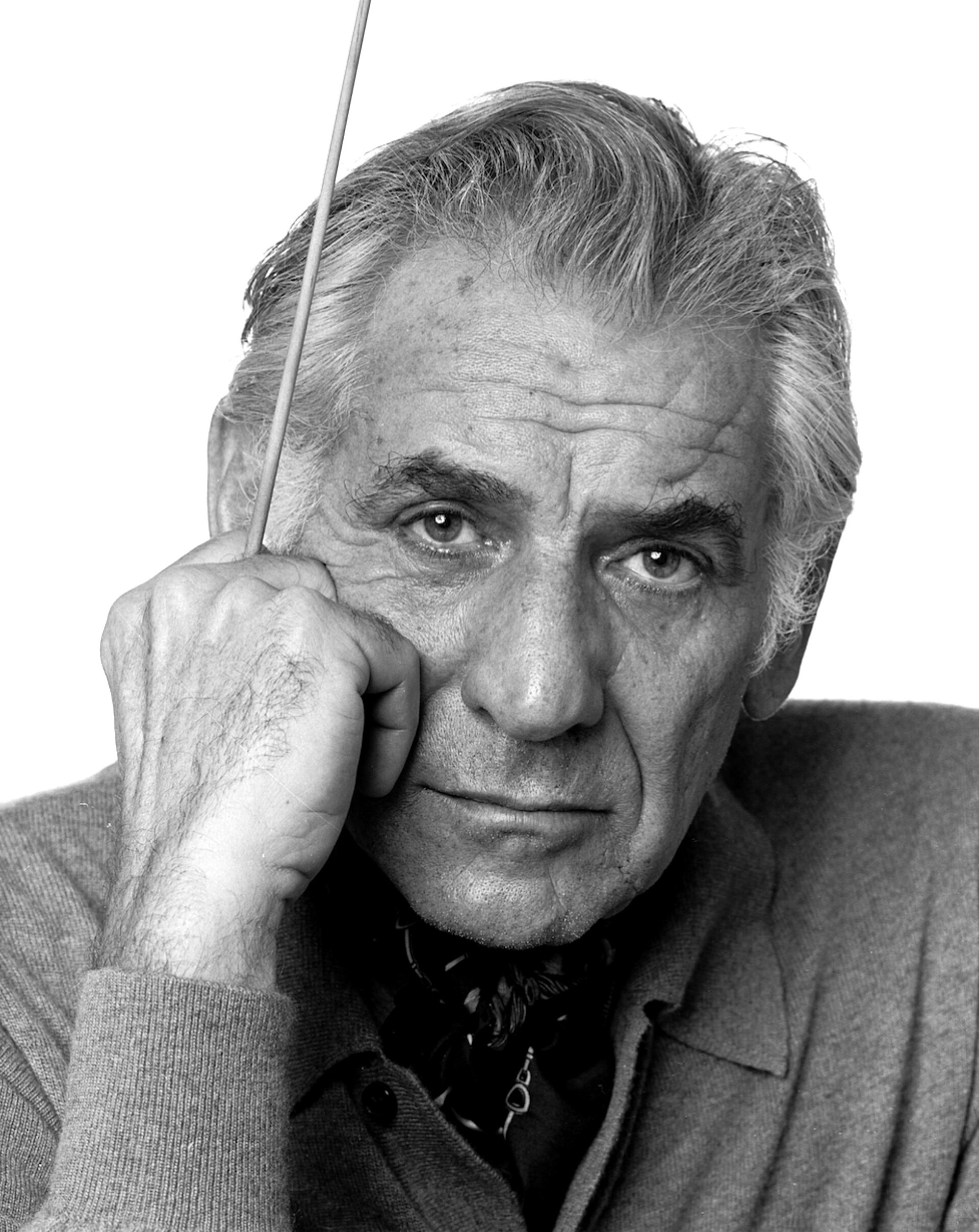
The baton was missing — and that was the whole point. Leonard Bernstein stood before the New York Philharmonic radiating a kinetic charge that seemed to bypass the podium entirely, conducting with eyebrows, shoulders, and a pair of hands that could conjure a whisper or a thunderclap from thin air. Born on August 25, 1918, Bernstein would become one of the first American conductors to command genuine global authority, a title he earned not by mimicking the restrained elegance of the Old World, but by treating the orchestra pit as a site of raw, emotional combustion.
Symphonic jazz and the Harvard lecturer
The move that still feels radical was his insistence that the concert hall had no walls. Bernstein saw no treason in letting a drum set crash through a symphonic texture or threading a tenor saxophone line into a composition meant for the conservatory crowd. He called it symphonic jazz, but the term barely captured the audacity of a man who could lecture at Harvard in a cycle titled 'The Unanswered Question' and then pivot to scoring a ballet about three sailors on shore leave, a collaboration with choreographer Jerome Robbins that premiered in 1944 as 'Fancy Free.'
That ballet detonated a creative partnership. Bernstein and Robbins followed it with 'On the Town' and then spent years circling a bigger idea: a contemporary 'Romeo and Juliet' set among warring street gangs in New York. When 'West Side Story' finally hit Broadway in 1957, the score didn't just borrow from Latin rhythms and bebop — it fused them with operatic architecture so seamlessly that the show landed 69 years ago as a question the classical establishment still can't answer definitively. Is it musical theatre? Is it opera? Bernstein never bothered to resolve the argument.
America's most effective music teacher
He was too busy building a parallel career as America's most effective music teacher. Starting in 1958, Bernstein hosted televised Young People's Concerts with the New York Philharmonic, broadcasts that ran until 1972 and turned millions of living rooms into classrooms. For 68 years, those black-and-white tapes have been passed forward: a conductor at a piano explaining sonata form not as a dusty museum exhibit but as a living argument, his face flickering with the same fervor he'd bring to a Mahler symphony.
The Mahler revival itself owes Bernstein a debt that's hard to overstate. At a time when the Austrian composer's sprawling symphonies were still considered difficult curiosities, Bernstein programmed them relentlessly, recording cycles that became the gateway for a generation. His own three symphonies — 'Jeremiah,' 'The Age of Anxiety' based on W.H. Auden's poem, and 'Kaddish' — reveal a composer who absorbed Mahler's existential scale but spoke in an accent unmistakably his own, blending Hebrew liturgy, jazz anxiety, and mid-century American dread into a single voice.
A composer for every genre
Hollywood came calling, and Bernstein answered with a score for Elia Kazan's 'On the Waterfront' starring Marlon Brando, a film that proved his orchestral language could carry the weight of moral collapse on a dockside. He wrote the operetta 'Candide' after Voltaire, the opera 'A Quiet Place,' and the musical 'Wonderful Town,' for which he won a Tony Award. Each project seemed to inhabit a different genre, yet all of them were wired with the same conviction that a composer's job was to write the music the moment demanded, not the music a résumé required.
That conviction had a political edge. Bernstein was an unapologetic voice for civil rights and social justice, hosting fundraisers, marching, and using his platform when silence would have been safer. Decades before 'crossover' became a marketing department's buzzword, Bernstein was already living its most radical definition: a man who believed Beethoven and the mambo could share the same stage, the same score, the same breath — and that audiences were ready for the collision.
The proof came in the strangest of settings. In 1989, 37 years ago, Bernstein conducted Beethoven's Ninth Symphony to mark the fall of the Berlin Wall, an orchestra assembled from musicians across nations that had been divided for decades. He altered Schiller's text, changing 'Freude' (joy) to 'Freiheit' (freedom), a single-word edit that reframed the entire performance as a political act. No baton. Just those hands, pulling a new Europe out of an old score.
The energy never dimmed. Bernstein wrote books like 'The Joy of Music' that became bestsellers, collected multiple Grammy Awards, received the Kennedy Center Honors, and kept composing, conducting, and teaching until his death on October 14, 1990 — 36 years ago. His legacy isn't sealed in a single masterwork but scattered across formats and genres: a 'West Side Story' original Broadway cast LP on Columbia Records, a televised lecture frozen on videotape, a Mahler cycle on Deutsche Grammophon vinyl with his unmistakable tempo markings burned into the grooves.