
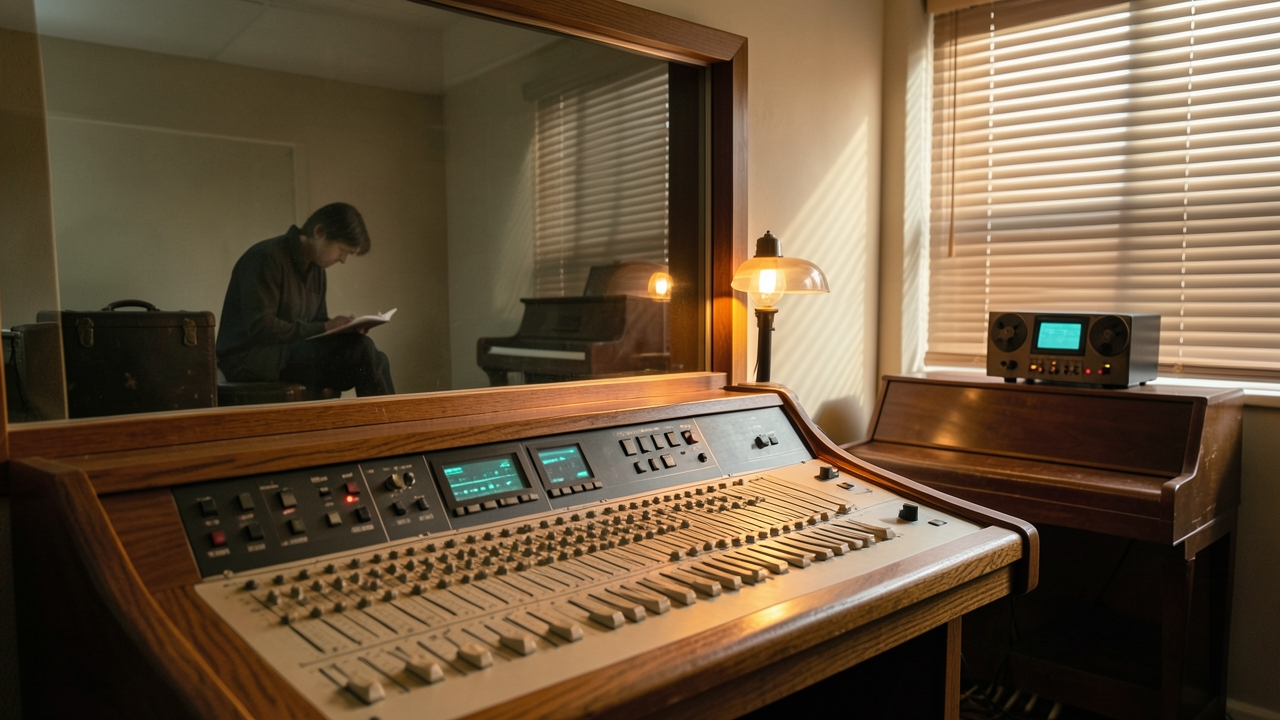
The first sound on a debut album that would win Album of the Year is a defiant dismissal aimed directly at former bandmates and label executives. Lauryn Hill, 22, pregnant, and alone in a booth at Chung King Studio in New York, opens “Lost Ones” with a measured fury that leaves no room for misinterpretation. The track sets the tone for The Miseducation of Lauryn Hill, released on August 25, 1998 via Ruffhouse and Columbia, and built from a personal reckoning that most artists would bury in a diary.
A survival manual recorded across three cities
Hill conceived the record not as a victory lap after the Fugees’ success, but as a survival manual. She was carrying her first child, with Rohan Marley—son of Bob Marley—as the father, and navigating an industry that had already shown its teeth. Half of the album was cut at Tuff Gong in Kingston, the studio built by her child’s grandfather, an environment that bled reggae’s pulse into the rhythm of songs like “Lost Ones,” whose hook lifts directly from Sister Nancy’s 1982 dancehall classic “Bam Bam.”
The geography of the recording is a map of her influences. Sessions moved between Circle House Studios in Miami, Perfect Pair Studios in New Jersey, and Marley Music Inc back in Kingston. Each location pulled a different texture into the 77-minute, 39-second runtime. Hill served as executive producer and handled the bulk of production herself, shaping a sound that deliberately referenced vinyl—the warmth, the faint imperfections, the sense of a document that existed in a physical world rather than a pristine digital file.
The classroom conceit and its four-part architecture
That sonic philosophy is clearest on “Ex-Factor,” a song inspired by Aretha Franklin’s Capitol soul recordings. Before the album took shape, Hill had traveled to Detroit to meet Franklin, and the ghost of that encounter hangs over the track’s arrangement. The guitar solo channels Wayne Perkins’ work on The Wailers’ “Concrete Jungle,” bending notes into a lament that sits somewhere between Kingston and Muscle Shoals. Hill’s vocal, distorted and frayed at the edges, refuses the clean separation between hip-hop phrasing and Motown melody.
The album’s architecture relies on a classroom conceit—interludes of children discussing love—that frames the entire project as an education in four parts: love of God, love of a child, love of others, and love of self. This structure gives coherence to a record that swings from the acoustic confession of “To Zion,” featuring Carlos Santana’s liquid guitar, to the late-night restraint of “Nothing Even Matters,” a duet with D’Angelo that feels like a conversation overheard through a cracked door. Mary J. Blige appears on “I Used to Love Him,” adding a bruised counterpoint to the narrative.
Grammy sweep and the legal battle that followed
Hill’s rapping across these tracks operates at around 92 beats per minute, a tempo that lets her lock into a pocket slightly behind the beat. The delivery is unhurried but unshakeable, an authority forged in the years she spent writing for Whitney Houston before anyone knew her name. On “Superstar” she turns that authority on the industry itself, dissecting musicians who chase profit over craft with the same precision she applies to the gender dynamics of “Doo Wop (That Thing).” That single, which examines relationships from both male and female perspectives, became an inescapable hit.
“Doo Wop (That Thing)” would win Grammys for Best Female R&B Vocal Performance and Best R&B Song, part of a sweep that included Best R&B Album and the landmark Album of the Year award. The recognition was historic, but the aftermath quickly curdled. A legal dispute with the production team New Ark, who claimed they were denied proper credit and compensation for their work, pulled Hill into a draining court battle. The fight contributed to her retreat from public life, a withdrawal that still shapes her sporadic appearances 28 years later.
The album’s legacy refused to dim during her absence. Its fusion of hip-hop, Motown-era soul, doo-wop harmonies, and reggae had mapped a territory that neo-soul would spend the next decade exploring. The double vinyl reissue in 2016, a decade ago now, pressed the 77-minute masterwork across two LPs, restoring the warmth that the original CD-era sequencing had compressed. The record remains a document of a 22-year-old making decisions no focus group would greenlight, from the distorted vocals to the classroom skits to the unflinching opening salvo of “Lost Ones.”
That opening track functions as a thesis statement and a line in the sand, an indictment of former Fugees collaborators and label heads delivered before the album has even settled into its groove. Hill had already written for the biggest voices in music and sought out the counsel of Aretha Franklin herself. Now she was standing at a microphone in New York, alone with a beat and a sample from a 44-year-old dancehall record, refusing to be anyone’s product. The miseducation was never hers.