
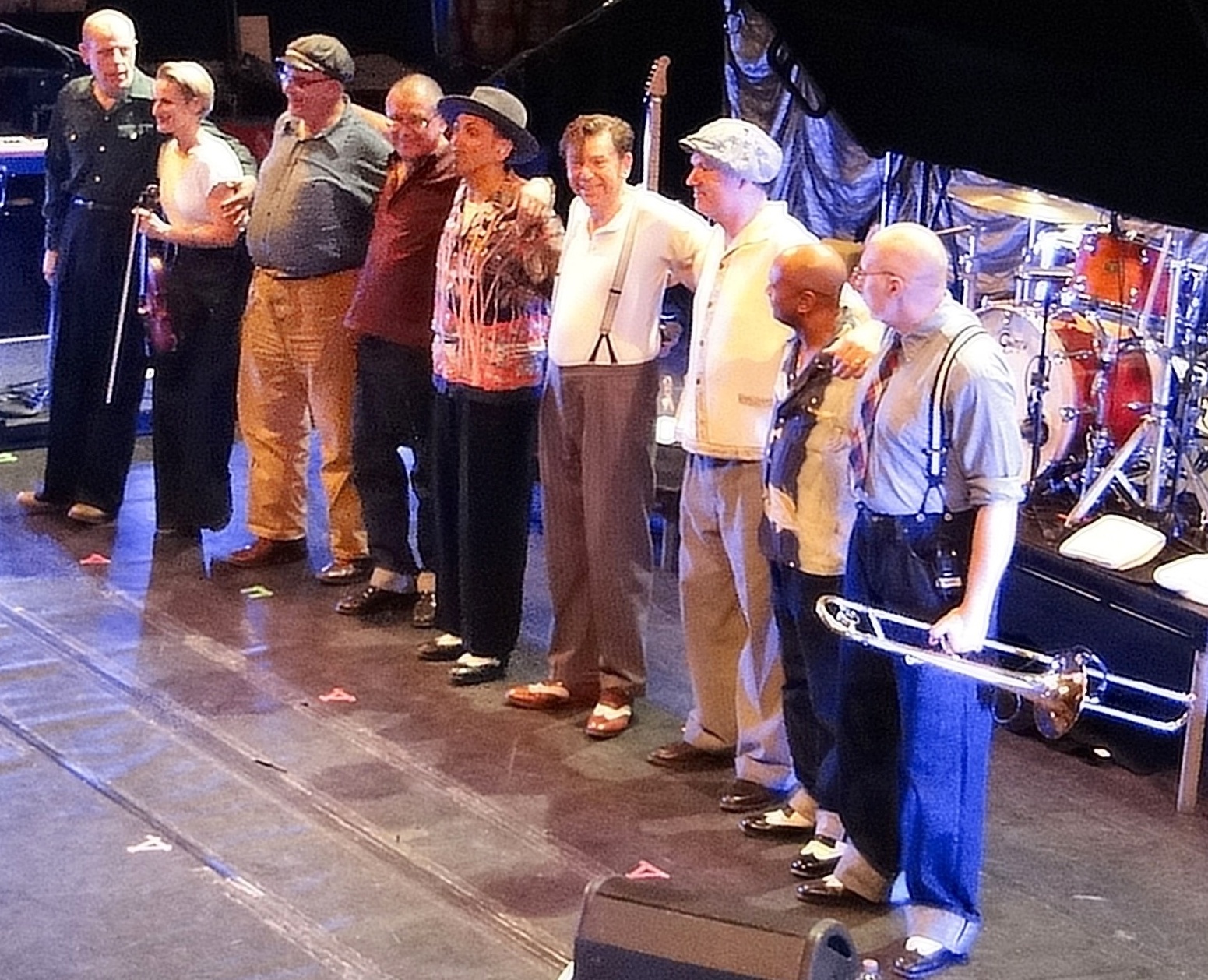
A fiddle scrapes through the silence of a Kennington backstreet. Kevin Rowland, draped in a worn denim bib overall that looks like he’s slept in it for a week, doesn’t sing so much as plead. The slow, Celtic-tinged prelude of ‘Come On Eileen’ is a trap — a false calm before a tempo eruption that, on August 24, 1983, finally exploded at the top of the Billboard Hot 100, knocking ‘Every Breath You Take’ from its perch. This was Dexys Midnight Runners executing a hostile takeover of American pop with a weapon nobody saw coming: a desperate, stomping fusion of folk and soul.
A manifesto dressed in rags
The Birmingham group had been churning through lineups and manifestos since forming in 1978, but nothing in their brass-driven earlier work fully forecast the ‘Too-Rye-Ay’ era. The album dropped in 1982, a manifesto dressed in rags. The aesthetic was a radical departure — an idealized blend of American stevedores and Irish travelers, all fraying denim and leather. Rowland and trombonist Jim Paterson crafted a song about youthful longing and the urgent need to escape gray routines, with the name ‘Eileen’ chosen purely for its melodic fit rather than a real-life muse.
Rowland’s tyrannical perfectionism defined the session at Genetic Sound in Reading. Producers Clive Langer and Alan Winstanley, fresh from work with Madness and Elvis Costello, had to capture a sound built on a rigid principle: no synthesizers. The band’s early dogma demanded organic textures, leading to a live string section arranged by Helen O’Hara and Steve Brennan. That fiddle hook, intertwined with Billy Adams’ banjo part, transformed a pop song into a raucous campfire rave — a sound completely alien to the synth-driven production dominating 1982.
The band’s very name is a secret handshake to the initiated. It references Dexedrine, a stimulant favored by dancers in the 60s Northern soul underground. This is the thread connecting ‘Come On Eileen’ back to the group’s first UK number one, the 1980 single ‘Geno’ — a tribute to soul singer Geno Washington. Before the dungarees, Rowland was a devotee of that raw, sweat-drenched soul sound. The new single didn’t abandon that passion; it strapped a fiddle to its back and sprinted toward a pop chorus.
A domestic smash built on yearning
Lyrically, the song is pure yearning, a protest against the ‘poor old clothes’ that mirror the band’s deliberate scruffiness. The vocal attack is a conversation, a dueling plea between Rowland’s nasal intensity and the gruff baritone of trombonist Jim Paterson on the chorus. This call-and-response builds toward a massive accelerando, a structural trick that makes the breakdown irresistible. In Britain, the effect was immediate. Released in June 1982, the single hit number one and stayed there for four weeks, moving over a million copies domestically.
America took longer to surrender. The song’s visual companion, shot in the south London district of Kennington, became a crucial battering ram. MTV had just launched and needed content; this video, with its drab color palette, unpolished characters, and extreme close-ups of dirty thumbs and missing teeth, looked like nothing else on the channel. It was an anti-fashion statement in a medium built on glamour. The rotation was heavy, and it pushed the single across the Atlantic on a slow burn that took almost a full year to reach its destination.
Painted into a one-hit corner
When the 4-minute, 12-second album cut finally seized the US chart summit 43 years ago, it instantly painted the band into a corner. The US market, uninterested in the deeper catalog, branded Dexys Midnight Runners a one-hit wonder, ignoring their previous chart-topper ‘Geno’ and the radical art-pop pivot that followed. That pivot, the 1985 album ‘Don’t Stand Me Down’, crashed commercially — a meticulously staged suicide of a pop career that totally shed the raggle-taggle gypsy image.
Time has been kinder to the fallout. ‘Don’t Stand Me Down’ was eventually reclaimed by critics as an overlooked masterpiece, a vindication of Rowland’s refusal to repeat a formula. He later resurrected the Dexys banner for the 2012 album ‘One Day I’m Going to Soar’, and in 2022, the man who once insisted on live strings returned to the mixing desk. For the 40th-anniversary reissue of ‘Too-Rye-Ay’, Rowland personally remixed the original tapes, adjusting the balance of a sound he had been obsessing over for nearly half a century.
The cultural half-life of ‘Come On Eileen’ has mutated into something beyond the band’s control. It won the Brit Award for Best British Single in 1983 and lodged itself in Rolling Stone’s canon of the 500 greatest songs of all time. Yet, a ban on the track at many UK wedding receptions — prompted by guests engaging in increasingly unhinged interpretation of the dance — proves that the desperation in Rowland’s voice still triggers a physical, chaotic release. The song survived being a hit to become a social liability, a threat to formalwear.