
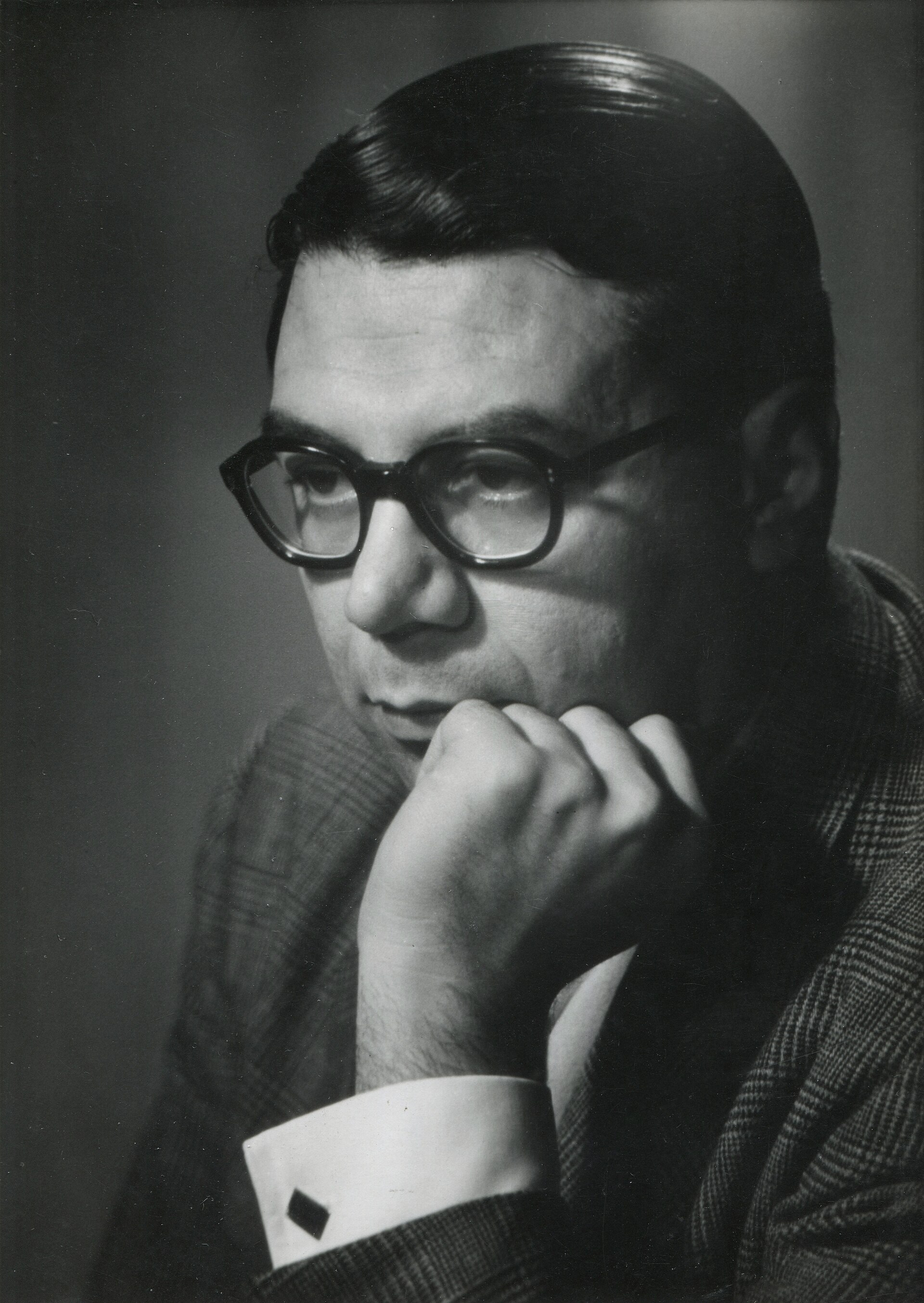
He walked into the classroom, faced the students, and within forty-eight hours the whole experiment was finished. Ariel Ramírez, born 4 September 1921 in Santa Fe, Argentina, learned painfully early that his temperament and institutional discipline were never going to mix. His father, a Spanish immigrant who had built his life around education, must have watched the collapse with complicated feelings. The son would not follow the father’s path — not through teaching, anyway.
The mountains as a classroom
Instead, Ramírez found his classroom in the mountains. He had started studying piano in Santa Fe, drawn at first to the sharp, urban melancholy of tango. But something pulled him away from the city’s sound. The music of gauchos and Creoles in the high country seized his imagination with a force tango had never mustered. This was no casual interest — it was a complete reorientation of his musical identity.
He moved to Córdoba to continue his studies, and there the pivotal encounter of his early life took place. Atahualpa Yupanqui, the folk singer and songwriter whose name carried the weight of two continents, crossed his path. Yupanqui didn’t just influence Ramírez — he redirected him. Their friendship became the compass point against which everything else would be measured.
Yupanqui’s advice was concrete: go to the northeast. Seek out the traditional rhythms where they lived, not where they were performed. Ramírez took the instruction literally. He packed up and went searching for the raw material of a nation’s sound — the chacarera, the carnavalito, the estilo pampeano — in the places where they had grown organically for generations.
Becoming the architect of Argentine folklore
Between 1950 and 1954, he left Argentina for Madrid, Rome, and Vienna on a training fellowship. But when he returned, he did not come back as a Europeanized pianist. He came back as a collector. Ramírez assembled a personal archive of roughly four hundred folk and popular songs, founding the Compañía de Folklore Ariel Ramírez around this growing body of work. He was no longer a student of Argentine folklore — he was becoming its architect.
He was no longer a student of Argentine folklore — he was becoming its architect.
The 1964 composition that would define him arrived after a decade of building. Misa Criolla, written for tenor, mixed choir, percussion, piano, and folk instruments, was an act of translation: the Catholic mass rendered entirely through traditional Argentine rhythms. Chacarera, carnavalito, estilo pampeano — these were not decorative flourishes. They were the structural language of the piece. The work opened Europe and Latin America to him, and with Mercedes Sosa in 1999 and José Carreras in 1990, it found voices that carried it far beyond any church.
Across his lifetime, Ramírez wrote more than 300 compositions and sold over 10 million albums, primarily through Philips Records. His genre was Andean music, but his method was archival anthropology. He didn’t borrow from folk traditions — he excavated them, catalogued them, and then rebuilt them into something that could travel the world without losing its origin.
From Argentine Christmas to Soviet nature documentaries
One of those compositions took a path nobody could have predicted. Ramírez wrote the cantata Navidad Nuestra, and a single melody from it became globally recognizable as “Alouette” in the hands of Paul Mauriat’s orchestra. In the Soviet Union, that same version — retitled “Жаворонок” — became the theme music for the television program “В мире животных.” A fragment of Argentine Christmas music, filtered through a French orchestra, soundtracking Soviet nature documentaries. The chain of transmission is almost absurd.
He died on 18 February 2010 in Monte Grande, Buenos Aires province, at 88 years old. The centenary of his birth arrived in 2021, and now, at 105 years, the distance between that two-day teaching career and the scale of what followed has only grown sharper. Ramírez was also an actor, a pianist, a musical director — but the role that mattered was the one he invented for himself.
Somewhere in those four hundred collected songs there are melodies that never made it onto a recording. Rhythms he transcribed and filed away, waiting for a project that never came. What did he hear in them that we never got to hear? The archive sits silent, and the question has no answer — only the faint hum of a chacarera no one ever arranged.