
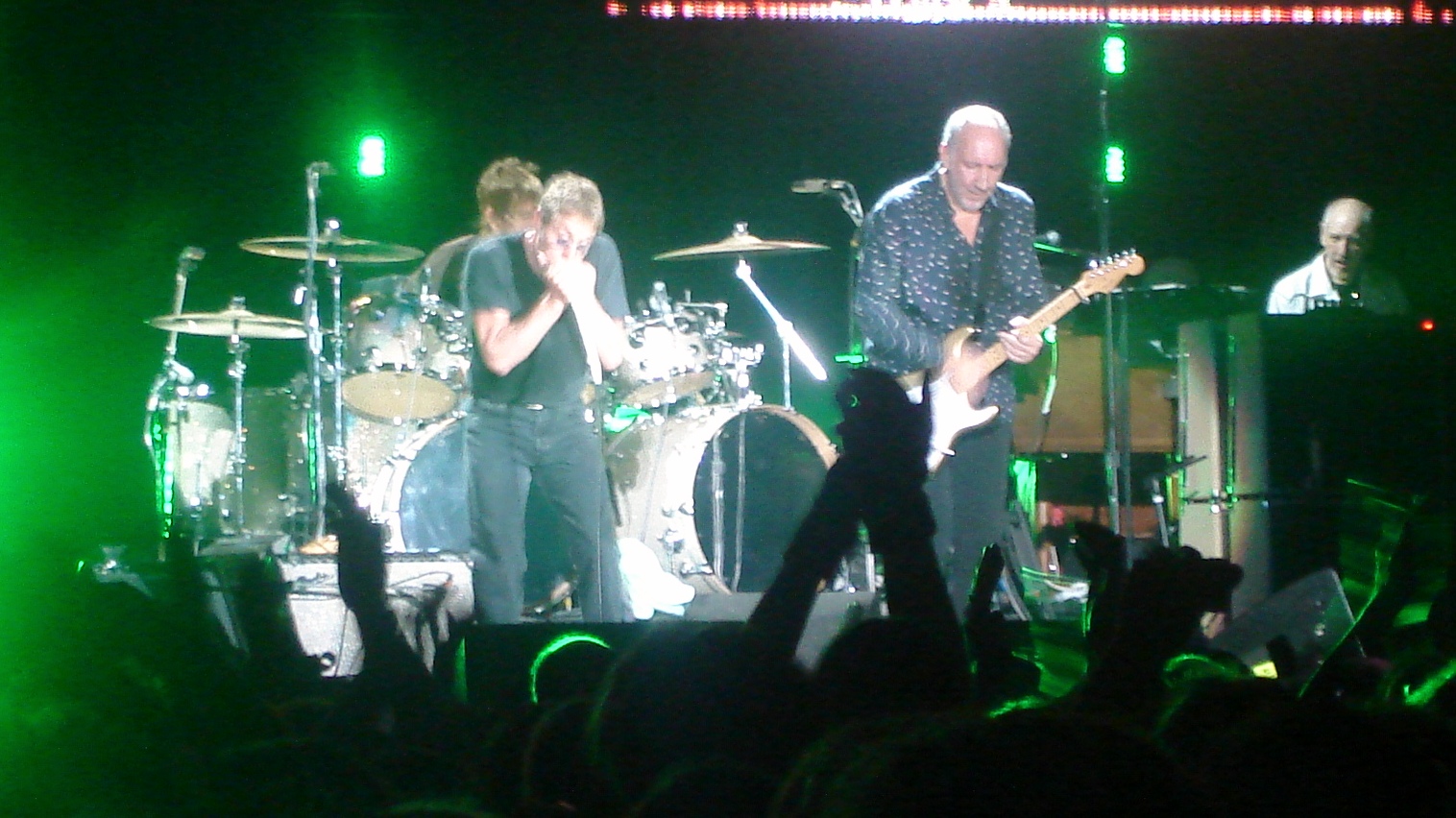
As the last echoes of feedback ricocheted off the Hollywood Bowl’s iconic bandshell, Keith Moon’s drum kit erupted. Not metaphorically. The concussion from his bass drum was a premeditated blast of flash powder and pyrotechnic charge, the kind of stunt that had already blown a gash in the dampened August air and, just weeks earlier, seared permanent tinnitus into Pete Townshend’s ears on live television. On the evening of August 19, 1967, The Who were headlining the most prestigious venue of their first major American tour, and they were not about to let the utopian passivity of the Summer of Love dilute their violent art.
A collision of countercultural tribes
The Los Angeles show was a tense summit of sound, positioned halfway through a jaunt that had already scarred New York and rattled San Francisco. The bill itself was a collision of countercultural tribes. Opening were The Mamas & The Papas, purveyors of sun-drenched vocal harmony and the paisley-smooth sheen of a gentle, flower-powered California, followed by The Jimi Hendrix Experience, a trio busy redefining the physics of the electric guitar. It fell to The Who, four mods from Shepherd’s Bush, to close the gap between folk-pop shimmer and psychedelic blues with something far more physical: a fury of mechanical destruction and volume that routinely pushed 120 decibels.
This collision of sensibilities was rehearsed chaos. The group had spent much of the summer shackled to a mismatched package tour with Herman’s Hermits, a union masterminded by their manager Kit Lambert that pitted pop-pinup mania against the auto-destructive impulse. Night after night, The Who performed for masses of screaming teenagers who simply wanted to hear the breezy jangle of a British Invasion hit, and they responded by short-circuiting the expectation. The Hollywood Bowl, however, offered a crowd attuned to extremity, a home-turf audience for Hendrix that The Who had to win over through sheer aural and visual assault.
Marshall stacks and a mini-opera
Their weaponry was new and massive. By 1967 The Who were pioneering the deployment of towering Marshall amplifier stacks, turning volume into a visceral architectural presence on stage. The rigs were not just for audibility; they were a psychological tool that funneled Townshend’s slashing, windmilling chords into a physical force. This was the mechanical backdrop against which they tore through the complex mini-opera “A Quick One, While He’s Away,” a multi-part suite from their second album that defied the three-minute pop structure Herman’s Hermits’ fans craved. The Bowl’s concrete shell amplified every breakneck tempo change and sharp vocal harmony, an intricate rarity in a rock climate dominated by solo improvisations.
Lurking beneath the performance was a band in rapid aesthetic flux. Just months removed from the sharp, target-logoed lines of the mod uniform, The Who were discarding their old skin for a campy, psychedelic wardrobe that matched their increasingly experimental studio work. That year’s recording sessions produced The Who Sell Out, a concept album disguised as a pirate radio broadcast, complete with fake commercials and jingles. It was a playful but razor-sharp satire of consumerism, and its sonic centerpiece—“I Can See for Miles,” a song built on a single, hypnotic chord—was their heaviest psychological blow yet, their first single to crack the US Top 10, peaking at number 9.
The machines of Tommy already grinding
That chart success was a provocation in itself. While Monterey Pop had celebrated peace and transcendence just two months prior, The Who’s appearance there was famously erased from the documentary film after rights disputes—a decision that obscured the brutal contrast their set created. 1967 also witnessed the group declining a chance to play Woodstock, an event two years on the horizon, because Townshend’s focus was shifting entirely to a new talismanic project. His obsession was no longer the three-minute single or the stage wreckage, but a sprawling rock opera about a deaf, dumb, and blind boy, sparked by his spiritual study of Meher Baba. The machines of Tommy were already grinding.
Moon, however, remained the band’s volatile id, an agent of pure anarchy. His love of explosives was not mere legend; the charges planted in his kick drums during that first US television appearance for The Smothers Brothers Comedy Hour blew shrapnel into the soundboard and Townshend’s hearing, a wave of pressure that the Hollywood Bowl sound crew likely did not know they were in for until the last possible second. This was the grim comedy that accompanied The Who’s stateside rise: a tightrope walk between a meticulously arranged pop opera and a drummer who might literally explode his instrument at the climax.
The tension was the point. By the end of the tour, the schizophrenic duel between Herman’s Hermits’ pop and The Who’s sound had only hardened the latter’s resolve, and the Hollywood Bowl show captured them pivoting from a singles band into a seismic live phenomenon. This was not merely the British Invasion continuing its long march; this was a faction of it breaking ranks, dropping the pop ornamentation to compete directly with the brute force of America’s own rock acts on their own enormous, bandshell-shaped turf. The Summer of Love had a soundtrack of gentle rebellion, but The Who ensured the air left the lungs with a thunderous, ungentle bang.
The concrete arc of the Bowl did not forgive mistakes, but it immortalized impact. Looking back from 2026, nearly six decades after that unhinged summer night, the physical residue of that era sits in the grooves of The Who Sell Out. The LP itself is a conceptual artifact of a band dismantling pop radio from the inside, its pitch for real deodorant and baked beans masking a record that spawned the 9th best-selling single in the country. Moon's actual explosive hardware is long gone, confiscated by various hotel security teams and venue managers, but the sound of an exploding drum kit threatening to swallow a full orchestra pit remains one of rock's most irreducible images.