
The film was nominated for two Academy Awards, crackled with the wit of the Marx Brothers, and was shot in a hurried black-and-white blur for a mere £200,000. Yet its most revolutionary act was simply pointing a camera at four musicians playing themselves. When "A Hard Day's Night" premiered in the United States on August 12, 1964, the Beatles were already an inescapable radio presence, but this was the moment their individual personalities crystallized into a global cultural phenomenon that no amount of screaming could drown out.
A stylized mirror of Beatlemania
The American premiere landed in New York right in the middle of the group's relentless cycle of touring and public appearances. The United Artists release was backed by a massive promotional campaign, but the picture itself did something unexpected. It didn't just sell records; it reframed four pop stars as quick-witted, self-deprecating individuals navigating the absurdity of Beatlemania. The chaos you see on screen wasn't a polished Hollywood imitation—it was a stylized mirror of the very hysteria greeting them at every stage door and airport terminal across America.
Director Richard Lester, working from a script by Alun Owen, understood that the boundary between fiction and reality had already collapsed around the band. Owen's screenplay, which earned one of those Oscar nominations for Best Original Screenplay, plunged John Lennon, Paul McCartney, George Harrison, and Ringo Starr into a mock-documentary chase through London. The entire project hinged on a title born from Ringo's exhaustion—a malapropism he let slip after a punishing workday, capturing the weary euphoria of their lives with accidental precision.
Black-and-white grit and kinetic editing
The filming took place at Twickenham Film Studios and on location around London, capturing the band in cramped train compartments, backstage corridors, and fleeting moments of escape. Lester encouraged improvisation, letting the musicians skewer the very machinery of fame that trapped them. Scenes mocked the madness of fans and the patronizing authority figures trying to manage it, all while Wilfrid Brambell, playing Paul's fictional grandfather, stirred up a different kind of mischief. The result was a comedy that skeptical adult viewers and seasoned critics could embrace alongside screaming teenagers.
Visually, the black-and-white cinematography lent a gritty immediacy that separated the film from the Technicolor fantasies of earlier rock-and-roll movies. This aesthetic choice, born partly from budget constraints, became a defining feature of its cool. The kinetic editing during the musical sequences, particularly the performance of "Can't Buy Me Love," didn't just document the songs—it exploded them into pure movement. Decades later, this visual language would be cited as a foundational text for the entire medium of music video.
The soundtrack that silenced skeptics
The American release arrived just over a month after the London Pavilion premiere on July 6, 1964. By then, the soundtrack album had already begun its assault on the charts, eventually hitting number one on both sides of the Atlantic. Crucially, this was the group's first album composed entirely of original material. Tracks like "And I Love Her" showcased a melodic sophistication that silenced the manufactured-pop skeptics, while the title track's opening chord—a ringing, ambiguous clang struck by George Harrison—announced a new level of artistic intention before a single lyric was sung.
Critics at the time reached for highbrow comparisons that would have seemed absurd just a year earlier. Publications like Time and Newsweek ran glowing assessments, invoking the spirit of the Marx Brothers to describe the band's anarchic, quick-draw humor. This reception was a cultural pivot. The film did not merely capitalize on a craze; it actively softened the group's image for a conservative American audience wary of long-haired British invaders, proving that behind the noise lay genuine charm and a sharp, satirical intelligence.
The physical artifacts of a landmark
The commercial success was staggering, boosting ticket sales in cinemas across the country and further cementing the Beatles' domination of the 1960s cultural landscape. The Academy recognized the film's craft with a second nomination for Best Music Adaptation. When the picture screened out of competition at the Cannes Film Festival that same year, it signaled that a musical comedy starring a pop group could be treated as serious cinema—a genre-bending experiment that inspired a wave of imitators in film and television, though few captured the lightning-in-a-bottle energy of the original.
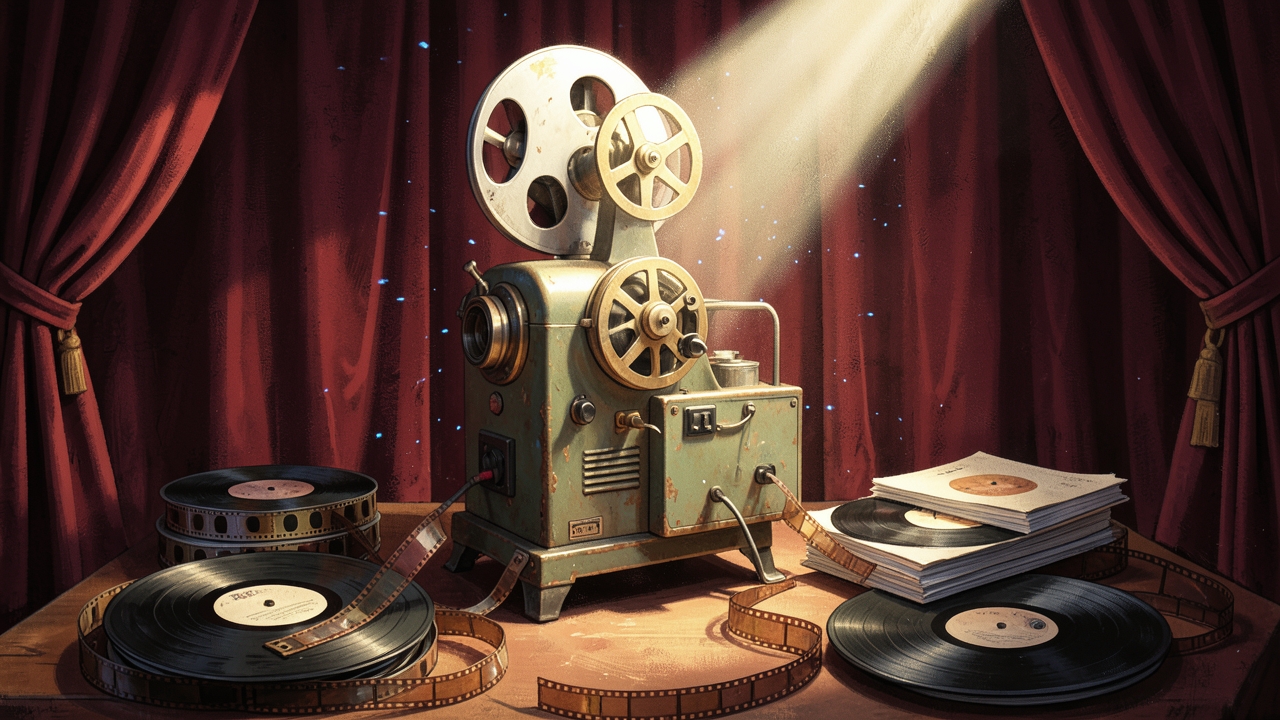
For a collector today, the physical artifacts of this moment carry a specific weight. The original United Artists vinyl release, with its iconic cover portrait, represents the intersection of a landmark film and a flawless pop record. Holding a mono first pressing is to hold the object that defined the summer of 1964 in America. The British Film Institute's 1999 ranking of the picture as the 88th greatest British film of the twentieth century—now a distant 27 years behind us—confirms that what began as a quick cash-in on a fad matured into a cinematic benchmark.
Sixty-two years after the American premiere, the film's stark, screaming landscapes of fandom feel less like a historical document and more like a prophecy of modern celebrity. The self-aware humor, the blurred lines between performance and life, and the relentless chase of the camera all prefigure a world saturated with content. Yet unlike the hollow viral moments that followed, "A Hard Day's Night" endures because it found genuine joy in the exhaustion—a hard-won laugh echoing just above the sound of a crowd losing its mind.