
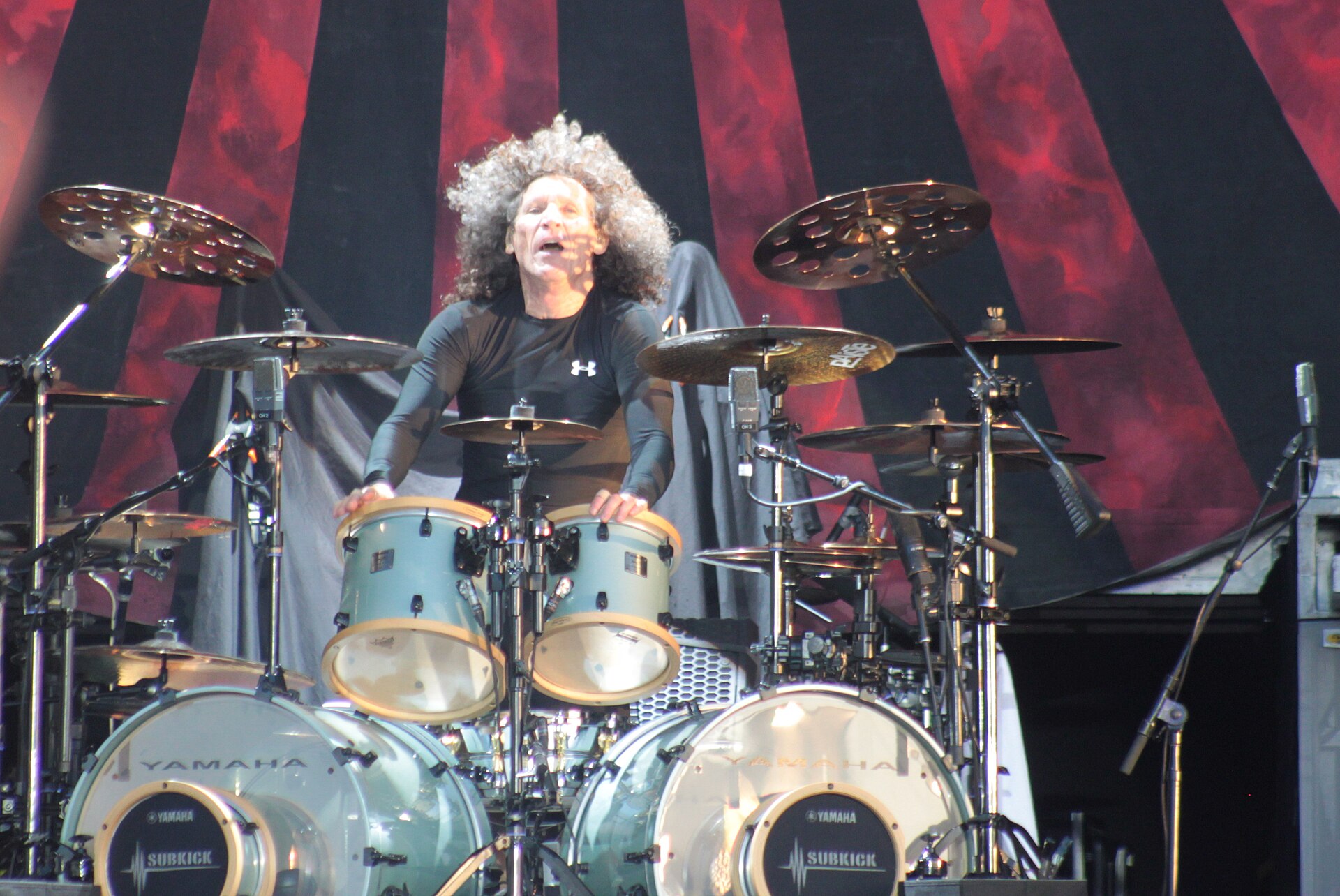
A drummer who refuses to wear gloves while attacking a double bass kit for over five decades sounds like a contradiction—but Tommy Aldridge made that paradox his signature. Born on August 15, 1950, Aldridge became one of the most enduring forces in hard rock and heavy metal, powering Whitesnake through their MTV-era peak and beyond. His bare-handed technique, Promark signature sticks, and Yamaha endorsement since the 1980s are just the surface of a career that spans more than fifty years and shows no signs of slowing. By the time he joined Whitesnake in 1987, Aldridge had already left his mark on Black Oak Arkansas, Pat Travers Band, Gary Moore, Ozzy Osbourne, and Thin Lizzy.
From Southern rock to Ozzy's rotating riser
The early 1970s found Aldridge behind the kit for Black Oak Arkansas, a Southern rock outfit known for raucous live shows. That gig taught him stamina and showmanship, but it was the Pat Travers Band that pushed his double bass work into sharper focus. By the start of the 1980s, Aldridge had joined Gary Moore's band, recording the album Dirty Fingers in 1983—a record that captured his blend of blues-rooted swing and metallic precision. That same year, he stepped into a far larger spotlight when Ozzy Osbourne recruited him for the Bark at the Moon sessions and the subsequent 1984 world tour.
The Ozzy Osbourne era turned Aldridge into a visual icon. He played on a rotating drum riser, spinning mid-song while maintaining machine-gun double bass patterns. The 1984 tour cemented his reputation as one of the most physically demanding drummers in rock, but by 1985 he was out of the band. A brief session stint with Thin Lizzy on their 1983 album Thunder and Lightning had already shown his versatility, yet the late 1980s would demand something even heavier. When Whitesnake called in 1987, Aldridge stepped into a band that was about to dominate MTV and arenas worldwide.
The Slip of the Tongue era
Whitesnake's Slip of the Tongue, released in 1989, became the definitive document of Aldridge's power. His double bass work drove tracks through the album's slick production, and his bare-handed attack added a raw edge that contrasted with the band's polished image. He appeared in the era's high-rotation music videos, his physicality matching the band's glam-metal aesthetic. The supporting world tour was massive, including a slot at the Monsters of Rock festival in 1990. But after the tour ended in 1991, Aldridge left Whitesnake, and the band's classic lineup fragmented.
The 1990s took Aldridge into less chart-focused territory. He worked with Manic Eden, a project formed by former Whitesnake members, and shared stages with guitarists Steve Vai and John Sykes. His style—equal parts hard rock, blues, and heavy metal—fit these collaborations naturally, but the decade lacked the arena-scale visibility of his previous work. Still, Aldridge kept touring and refining his solo spots, which became legendary for their length and intensity. By the end of the decade, he had influenced a generation of metal and hard rock drummers who studied his double bass technique.
A permanent return to Whitesnake
In 2002, David Coverdale invited Aldridge back to Whitesnake, and the return proved permanent. Aldridge recorded the live album Live... In the Still of the Night in 2004, then the studio album Good to Be Bad in 2008. He continued touring with the band through the 2010s, including the 2013 live release Made in Japan. His double bass remained a core element of Whitesnake's sound, and his bare-handed style became a talking point in drum clinics and interviews. Even as the band's lineup shifted, Aldridge's presence anchored the rhythm section.
Age did not slow him down. In 2020, Aldridge joined Ozzy Osbourne's No More Tours 2 farewell trek, revisiting the rotating riser and the double bass onslaught that had defined his 1980s work. Three years later, he was still on the road with Whitesnake during their world tour. His endurance became a benchmark—drummers half his age struggled to match his nightly output. Aldridge's use of Promark Tommy Aldridge Signature sticks and Yamaha drums remained consistent, a testament to a setup refined over decades of relentless performance.
Precision without protection
What sets Aldridge apart is not just power but precision without protection. He plays bare-handed, a choice that most drummers avoid due to blisters and impact. That tactile approach, combined with his double bass mastery, gives his playing a distinct attack that cuts through dense mixes. His solos are marathons, not sprints. When he spins on the riser or locks into a syncopated pattern, the physicality is undeniable. That combination of finesse and force made him a reference point for metal drummers from the 1980s onward.
He plays bare-handed, a choice that most drummers avoid due to blisters and impact.
From Black Oak Arkansas to the 2023 Whitesnake tour, Aldridge has outlasted trends, lineup changes, and the physical toll of his own style. He was born in 1950, yet in 2026 he remains a working drummer with more than five decades of road experience. The rotating riser, the bare hands, the double bass—each element is part of a career built on endurance. And when the kit spins and the hands strike bare skin against Promark sticks, the sound is unmistakably Tommy Aldridge.
The 1989 pressing of Slip of the Tongue captures that sound in its rawest studio form, with Aldridge's drums mixed high and dry. The 2004 live album documents the later era, but the studio record remains the clearest snapshot of his Whitesnake peak. For anyone tracing the evolution of hard rock drumming, that album is a starting point. Aldridge's playing on it is not just powerful—it is a blueprint for how double bass can drive a song without burying the groove.