
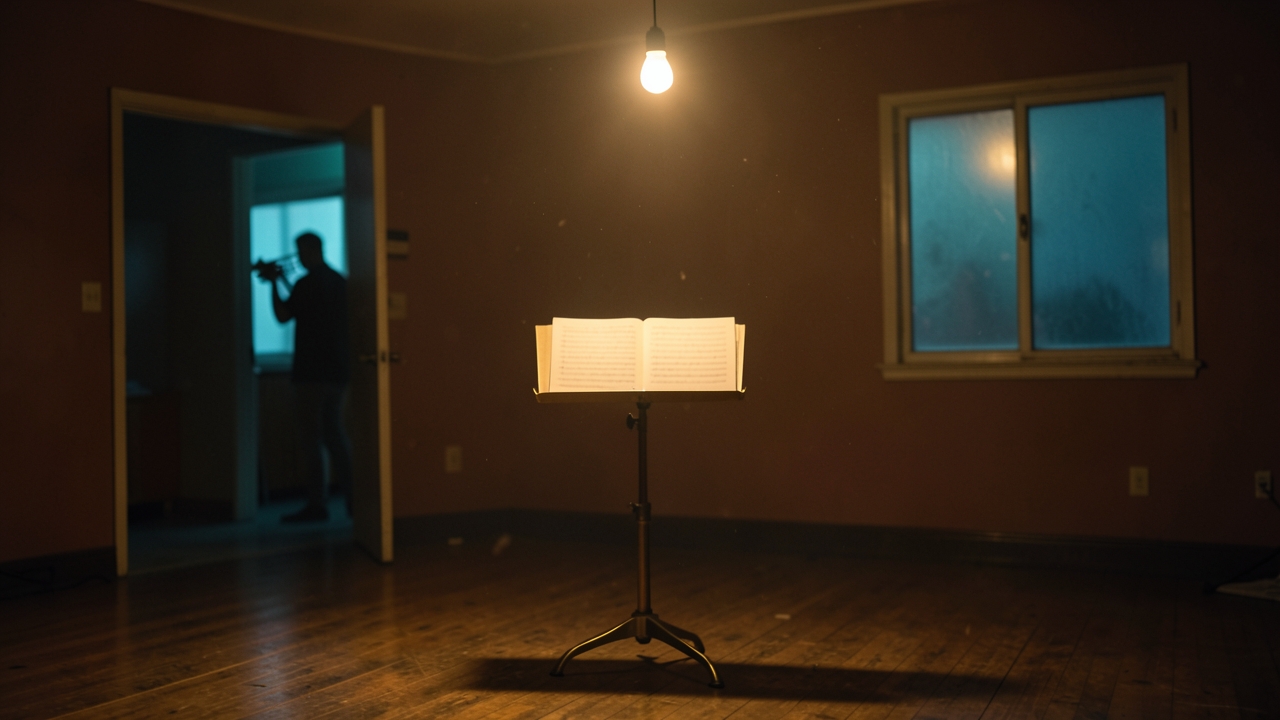
The saxophone lunges in — a blur of notes that shouldn't fit. It's November 26, 1945, inside New York's WOR Studios, and Charlie Parker is dismantling 'Cherokee' at a tempo that would break lesser musicians. The tune was supposed to be a warm-up, a familiar chord sequence Ray Noble wrote as a dance number. Instead, Parker, trumpeter Miles Davis, and drummer Max Roach ignite a performance so dense with harmonic detours that the producer shelves the original plan and cuts an instrumental called 'Ko-Ko'. The tape rolls, and the bebop revolution gets its first definitive document.
Savoy Records and the bebop shift
That session landed on Savoy Records, a label operating out of Newark, New Jersey, far from Manhattan's glamour. Savoy founder Herman Lubinsky ran a tight ship, but he understood that something was shifting in the mid-1940s. Parker's Savoy recordings — including the blues-drenched 'Now's the Time' — captured a music that refused to be mere entertainment. These were not polite swing orchestras. The rhythm section pushed, the harmonies fractured expectations, and the soloists spoke a language the general public had not yet learned to hear.
The physical form of these recordings shaped the music itself. Through the late 1940s, shellac 78 rpm discs were the dominant format, each side holding roughly three minutes of audio. For Parker, that constraint was no limitation; it was a framework. A solo had to state its case, develop an argument, and reach a climax within the span of a single breathless side. The format demanded concision, and Parker met it with improvisations so tightly packed that decades of saxophonists would mine them for vocabulary.
A solo had to state its case, develop an argument, and reach a climax within the span of a single breathless side.
Dial Records and the California sessions
By 1946, Parker's recording activity shifted to Dial Records, a label founded in New York that soon relocated to California. The move west brought a new cast of collaborators. On March 28, in a Los Angeles studio, Parker cut 'Ornithology' with trumpeter Dizzy Gillespie and pianist Erroll Garner. Built on the chords of 'How High the Moon', the tune became a bebop anthem. Gillespie's sharp, angular lines and Garner's lush, unpredictable comping framed Parker's alto in a sound that felt airborne and urgent.
The Dial sessions also document a collapse. In July 1946, during a recording date, Parker suffered a nervous breakdown fueled by alcohol and heroin. The man who had been reshaping American music was admitted to Camarillo State Hospital in California, where he spent six months recovering. When he emerged, he walked straight back into a Dial studio and cut a tune whose title left no ambiguity: 'Relaxin' at Camarillo'. The melody carries a strange, loping calm — a direct reference to the institution where he had been confined.
The Grafton plastic saxophone
An odd detail of those Dial recordings is the instrument Parker often played: a Grafton plastic saxophone. A British-made acrylic horn, cheap and lightweight, its acoustic profile colored his tone in ways a brass Selmer never would. The Grafton's slightly opaque, reedy timbre is baked into those 78s, a sonic fingerprint no LP remaster could fully replicate. Sound engineers in those makeshift studios experimented constantly with microphone placement, chasing a balance between Parker's piercing alto and the rhythm section's attack.
These shellac discs were pressed in limited quantities and distributed without fanfare. Savoy and Dial were independent operations, not major labels with vast networks. The original 78s carried matrix numbers stamped into the run-out wax, tiny codes that now function as a taxonomy of desire for collectors. A first pressing of 'Ko-Ko' or 'Ornithology' is a different object from a later run; the stampers wear, the vinylite formula shifts, and the high frequencies lose their edge. Audiophiles argue endlessly over which pressing captures the true sound of Parker's horn.
When the LP format arrived and consolidated Parker's catalog, something essential was reframed. The 78 rpm sides, conceived as discrete bursts of energy, were sequenced into long-playing compilations that smoothed the jagged edges of his discography. Generations came to know Parker through these reissues, where the original three-minute constraints were no longer felt. The canon crystallized around the LP, but the music was born on shellac — one side at a time, with no guarantee of a follow-up.
Born on August 29, 1920, Parker would have turned 106 this year. The world he recorded for has vanished, but the objects he left behind carry specific, forensic information. A clean Dial 78 of 'Relaxin' at Camarillo', matrix number intact and original sleeve surviving, is a lot that stops an auction room. The music is not the only thing preserved in those grooves; the format itself is a record of how much pressure a genius could sustain inside a three-minute window.