
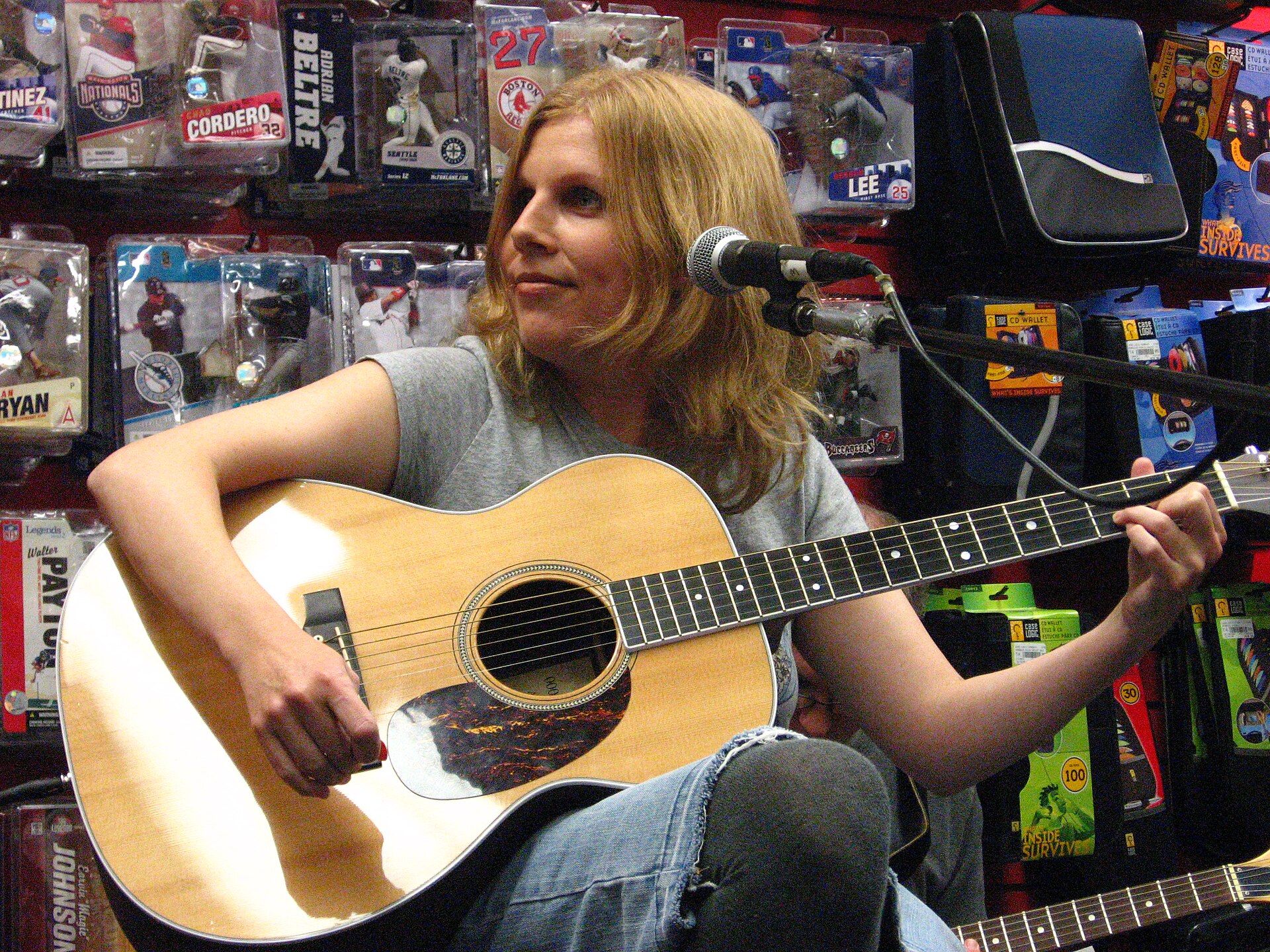
The recording desk at Palladium Studios in Edinburgh sat surrounded by open space — no baffles, no isolation, just a room miked to catch every accidental string scrape. Tanya Donelly stood behind the glass, tracking guitar parts for an album nobody expected to matter. The band was The Breeders, the year was 1990, and the sessions would yield Pod, a record so jarringly intimate that early test pressings felt like eavesdropping on someone else’s rehearsal.
Donelly had been making noise in public since her mid-teens, when she joined her stepsister Kristin Hersh in a Newport, Rhode Island band called Throwing Muses. Formed in 1981, the Muses churned out jagged, tempo-lurching songs before most of its members were old enough to drive. Their 1986 self-titled debut landed on 4AD, a British label known for gauzy art-pop — making Throwing Muses the first American act on that roster, a hard-angled guitar band crashing into a catalog full of ethereal textures.
The 4AD signing broke a transatlantic barrier, but the real friction happened inside the songs. Hersh wrote like a fever dream transcribed; Donelly’s contributions carried a melodic clarity that pulled against the chaos. Their dual-vocal frontline — stepsisters trading verses across an album’s worth of splintered rhythms — defined the band’s 1986-1991 run. When Donelly left after The Real Ramona in 1991, the split didn’t read as a side player bowing out. It read as a songwriter who had outgrown the frame she’d helped build.
By then, Donelly had already opened a second path. In 1988 she and Kim Deal of Pixies started The Breeders as a tour-van fantasy, a project built on shared harmonies and the kind of bass-and-guitar conversations that happen when two sidemen finally grab the front seats. Their 1990 debut Pod caught Steve Albini’s unflinching ear — he produced the album — and later landed on Kurt Cobain’s shortlist of essential records. High praise, though Donelly would be gone from The Breeders before the next chapter began.
Walking away from two influential bands in rapid succession looks reckless on paper. Donelly saw it as necessity. In 1992 she formed Belly with brothers Tom and Chris Gorman and bassist Gail Greenwood, a quartet built around her own name and her own stack of songs. The 1993 debut Star leapt straight into the mainstream conversation: a Grammy nomination for Best Alternative Album attached to a body of work that could shift from sweet vocal hooks to the kind of guitar squall that remembered exactly where she came from.
The single “Feed the Tree” did what no Throwing Muses or Breeders track had managed — it climbed into the top 40 in both the United States and the United Kingdom. A pastoral rumination on family and obligation, wrapped in a chorus that felt like a nursery rhyme echoing through a quarry, the song earned Belly a slot opening for U2 on the Zoo TV Tour. The irony was sharp: a band born from the margins of 4AD now playing stadiums, Donelly’s voice ringing out across arenas designed for Bono’s spectacle.
Belly’s second album King arrived in 1995, heavier and less radio-tuned than its predecessor. It charted, but the machinery around it stalled, and by 1996 the band dissolved. Donelly didn’t retreat. She launched a solo career the following year with Lovesongs for Underdogs, an album that recast her voice — soft on the surface, built with a load-bearing fragility — inside songs about love and loss that needed no co-writer to feel complete. Two more solo records followed in 2002 and 2004, each one quieter, each one more personal.
The decades that followed bent toward reunion. In 2013 she rejoined The Breeders for a 20th-anniversary Last Splash tour, sharing a stage with Deal again for the first time since the early nineties. Then in 2016, Belly reassembled — not for a nostalgia lap, but to write new material. The result was Dove, released in 2018, Belly’s first album in 23 years. The songs didn’t sound like a band chasing its youth; they sounded like a band that had left something unfinished and finally found the right moment to return.
Donelly has never stopped working — a 2020 EP collected stray singles, her visual art occasionally surfaces on album sleeves, and her collaborations with Frank Black and Juliana Hatfield thread through the timeline like footnotes to a story that keeps adding chapters. Sixty years after her birth, the through-line from those early Throwing Muses tours to the Dove sessions isn’t consistency of sound — it’s consistency of instinct: enter, build something that matters, leave before it dulls. The first UK pressing of Pod on 4AD carried catalog number CAD 0006. She was twenty-four when it came out, and she’d already quit two bands that were about to become legendary.