
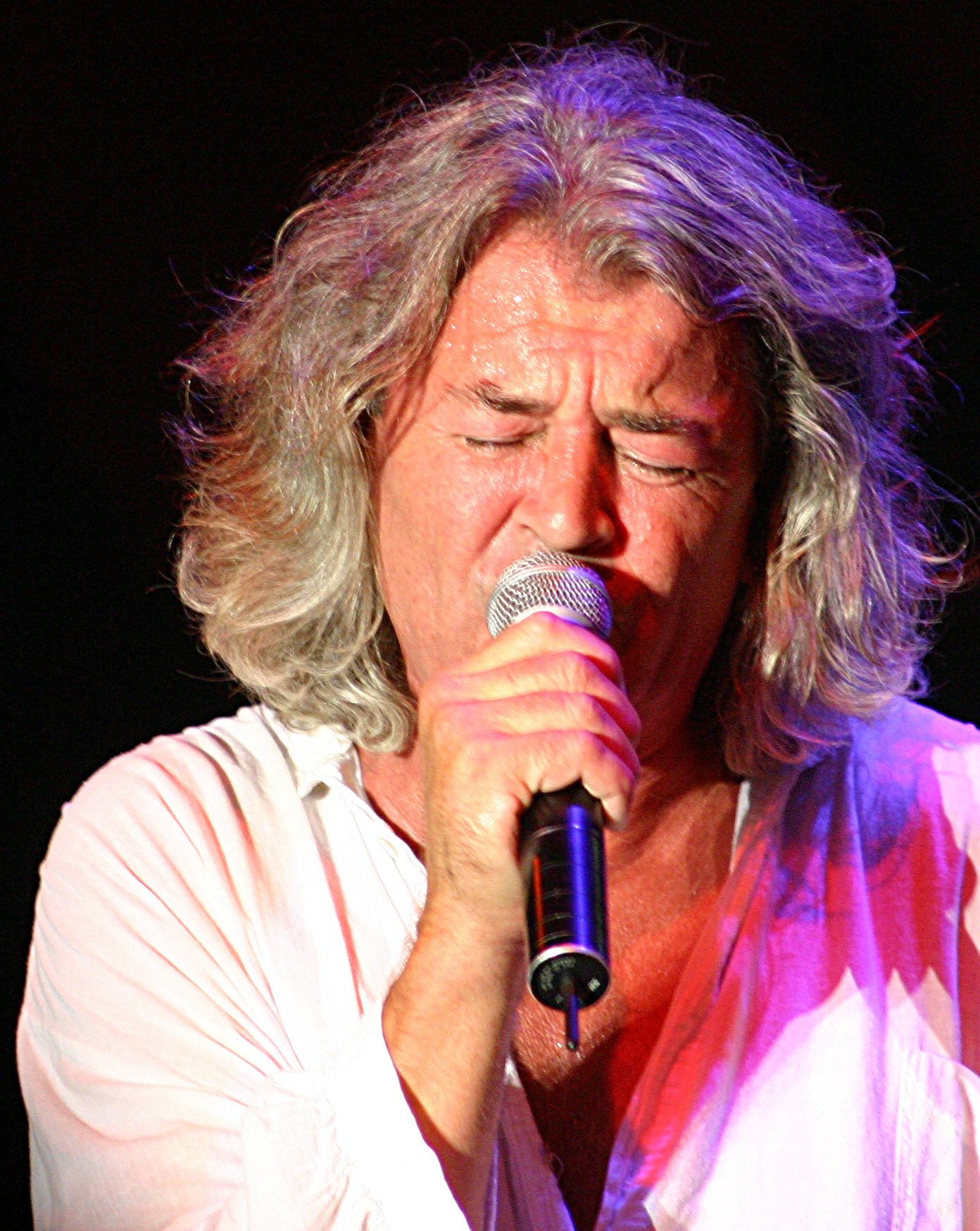
There’s a moment in 'Child in Time' when the band drops to a whisper — organ and guitar barely breathing — and then a voice climbs from a murmur to a full-throated wail that seems to tear the studio air apart. That voice belongs to Ian Gillan, born on August 19, 1945, and the sheer physical fact of it — its power, its multi-octave reach — would become a fundamental building block of hard rock. Before 1969, Deep Purple was a very different band, navigating psychedelic pop and classical crossover with a different singer. When Gillan and bassist Roger Glover joined that year, the Mark II lineup clicked into place with Ritchie Blackmore, Jon Lord, and Ian Paice, and the sonic template shifted overnight.
A voice as a weapon
The instrument Gillan brought wasn’t just range; it was a kind of controlled violence. He had a natural tenor with a seamless leap into a piercing, accurate falsetto, a technique he deployed not as a delicate ornament but as a weapon. This was a voice that could match the escalating volume of Blackmore’s riffs and Lord’s distorted Hammond without strain, turning the band’s live jams into high-stakes dramas. His knack for improvising vocal lines meant no two performances were identical, pushing the group away from studio precision and toward onstage danger. That raw power and theatricality immediately set the new Deep Purple apart from the blues-rock packs forming across Britain.
The first test of this alchemy was 'Deep Purple in Rock' in 1970, an album that opens with the supersonic rush of 'Speed King' and never really lets up. It was here that Gillan’s writing emerged, penning lyrics that matched the music’s intensity with fragmented, often surreal imagery. The centerpiece was 'Child in Time,' a nearly ten-minute anti-war epic built on a simple, ascending chord progression. Gillan structured his performance as a slow-motion detonation, moving from a hushed croon to a series of screams that felt less like singing and more like a physical exorcism, setting a new benchmark for what a rock vocalist could express.
The momentum didn’t slow. 'Fireball' arrived in 1971, a weirder, more experimental record that saw Gillan pushing his voice through the strange time signatures and phased-out vocals of the title track. Then came 1972, a year that would define the band’s mythology twice over. First, the studio album 'Machine Head,' recorded in a Montreux hotel hallway with the Rolling Stones Mobile Studio, yielded the riff that would become a rite of passage for every aspiring guitarist. Gillan’s detached, almost journalistic delivery on 'Smoke on the Water' — recounting the casino fire he watched from across the lake — turned a local news story into a universal rock anthem.
Live peak in Japan
Later that same year, the double-live album 'Made in Japan' captured the Mark II lineup at its absolute peak. Recorded over three nights in Osaka and Tokyo, the album is a masterclass in group dynamics, but it’s Gillan’s spontaneous vocal acrobatics that give it flight. He treats the studio versions as mere suggestions, weaving new melodic lines through the extended jams of 'Highway Star' and 'Strange Kind of Woman,' his voice dueling with Blackmore’s guitar in real time. The album became a cornerstone of live rock documentation, a high-water mark that proved a band could be heavier, faster, and more inventive on stage than in the studio.
By the time 'Who Do We Think We Are' appeared in 1973, the internal friction was terminal. The album had its moments, but the creative well had been poisoned by exhaustion and clashing egos. Gillan quit that year, walking away from the world’s biggest rock band just as they were headlining arenas globally. His exit was not a retreat but a sharp left turn. He formed the jazz-rock leaning Ian Gillan Band, and later the hard-driving group simply called Gillan, refusing to trade on the Deep Purple name while exploring tighter, more aggressive songwriting that would itself influence the emerging New Wave of British Heavy Metal.
Sabbath detour and reunion
A strange and fascinating detour came in 1983 when Tony Iommi called. Gillan stepped into Black Sabbath to record 'Born Again,' his demonic shriek now layered over Iommi’s sludge-metal riffs. The tour was a haze of Stonehenge props and confusion, but the album stands as a cult oddity — the sound of a legendary voice colliding with a completely different kind of darkness. The reunion everyone actually wanted happened the following year. In 1984, the classic Mark II lineup reconvened for 'Perfect Strangers,' an album that proved their chemistry wasn’t nostalgia but a living, breathing force, with Gillan’s voice sounding ageless against Lord’s swirling organ.
The reunion was never a straight line. Gillan left and returned again in 1992, cutting 'The Battle Rages On' in 1993 as grunge was supposedly rendering their style obsolete, and then settled into a lasting third act with albums like 1996’s 'Purpendicular,' which found the band reinventing itself with a more organic, blues-informed sound. His voice, inevitably, weathered decades of high-register punishment, but his phrasing grew craftier, learning to command a room without always reaching for the top shelf. That endurance was formally recognized in 2016 when he was inducted into the Rock and Roll Hall of Fame as a member of Deep Purple.
Before Deep Purple, before the leather lungs and the screams, Gillan made a recording that still startles for its sheer ambition: he sang the role of Jesus in the original 1970 concept album of 'Jesus Christ Superstar.' It was a casting choice that placed a hard rock singer at the heart of a major cultural phenomenon, his voice carrying Andrew Lloyd Webber’s melodies to an audience that might never buy a rock record. The high note he hits in 'Gethsemane' is pure Gillan — a sound that, whether in a rock opera or a smoke-filled concert hall in Japan, has been shaking foundations for 81 years.