← Feed · Читать эту историю по-русски →
The Quiet Master Clapton Turned Into a Roar
July 26, 2026
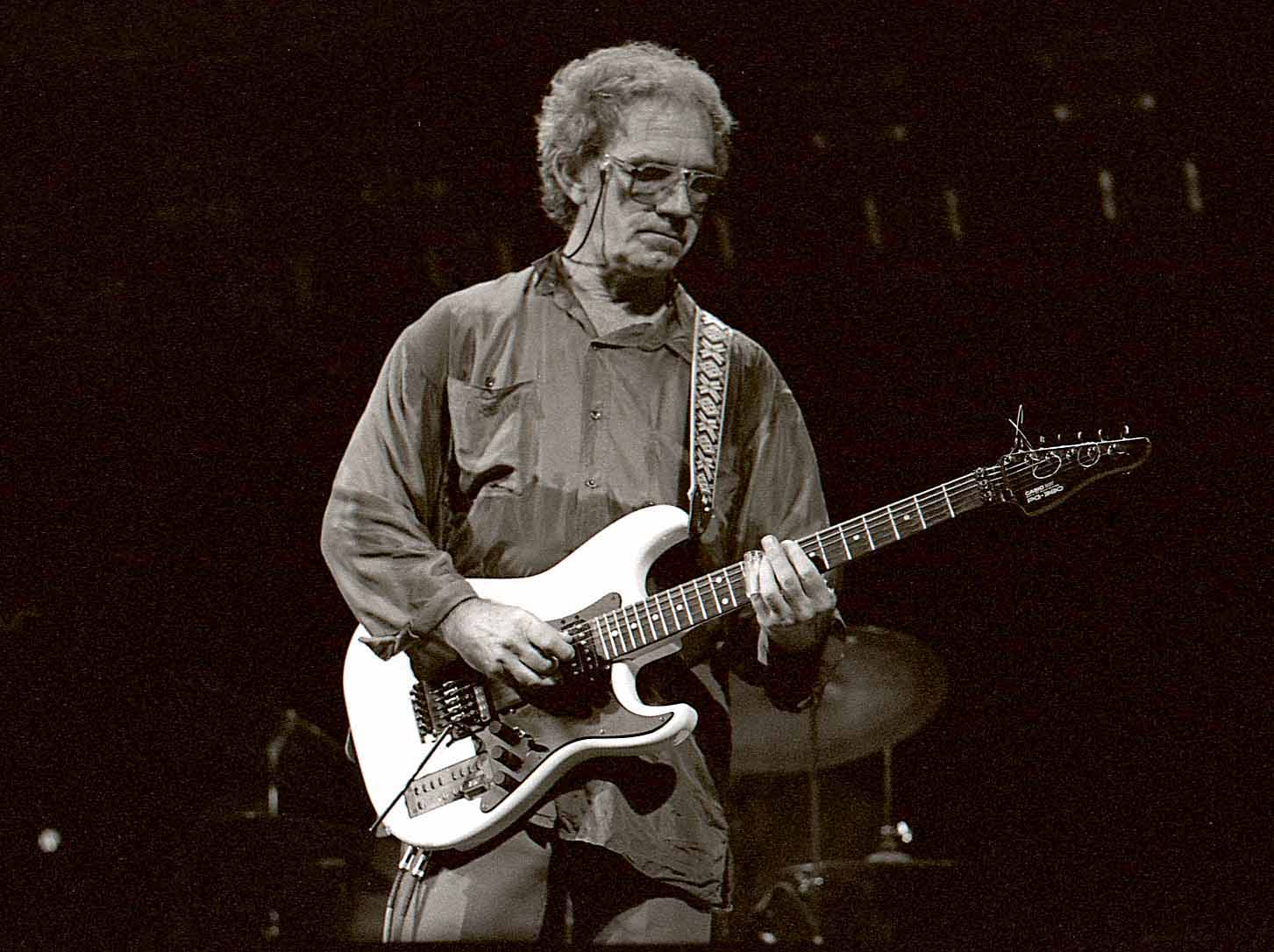
Фото: CrateCore
One man turned a quiet, almost whispered vocal into an arena-shaking anthem. The other spent a lifetime making sure nobody would ever do the same to his own quiet life. Their fates were intertwined by a single song, 'After Midnight,' but the contrast between J.J. Cale and Eric Clapton defines a fundamental rift in rock and roll itself. Cale, who died of a heart attack on July 26, 2013, at the age of 74, didn't just write songs; he created a sonic blueprint so subtle that its power was only fully revealed when amplified by others.
Born John Weldon Cale on December 5, 1938, in Oklahoma City and raised in Tulsa, he crafted the 'Tulsa Sound'—a laconic, unhurried blend of blues, rockabilly, country, and jazz. His move to Los Angeles in the mid-1960s saw him working as a studio engineer, absorbing the technical craft while developing his own staunchly anti-technical philosophy. He would later become a producer of his own records, a multi-instrumentalist who deliberately shunned complex studio trickery in favor of a raw, live feel. This foundation of self-sufficiency defined his entire career.
The world first heard his songwriting genius without hearing him. Cale's original 1966 single of 'After Midnight' was a commercial non-event, a ghost of a track that vanished. But when Clapton's version became a major hit in 1970, it pulled Cale from the shadows of the studio into an unwanted spotlight. The success was a paradox: it gave him a career as a recording artist, yet it established a public persona—the reluctant hitmaker—that he would spend the rest of his life trying to downplay.
His response was 'Naturally,' his debut album recorded in 1971 and released in 1972. It contained his own original, laid-back version of 'After Midnight,' a song that was already a rock standard. More importantly, it included 'Crazy Mama,' which became his only solo hit to crack the Billboard Hot 100's top 40, peaking at number 22. The album was a masterclass in his signature sound: a relaxed, 'lazy' guitar style achieved by a self-developed palm-muting technique, paired with his quiet, unassuming vocal delivery.
The songs were roadmaps of everyday life, filled with domestic scenes and the simple poetry of human relationships. Clapton mined this catalog again, turning 'Cocaine' into a global hit in 1977. Other artists followed, translating Cale's quiet sketches into bold statements. Lynyrd Skynyrd and Johnny Cash both recorded 'Call Me the Breeze,' a song whose title would later become a symbol of Cale's own elusive legacy. He was a whisper in a genre of screams, and his influence seeped into the foundations of roots rock and Americana, inspiring figures like Mark Knopfler and Neil Young.
Cale's aversion to fame was not a pose but a principle. He rarely gave interviews, made few television appearances, and disliked touring, preferring the controlled solitude of the studio. There, he worked with a consistent group of session musicians, including his wife, guitarist and singer Christine Lakeland, building a private world of sound. He released 14 studio albums during his lifetime, each a testament to his quiet consistency, with his final one, 'Roll On,' arriving in 2009, four years before his death in a hospital in La Jolla, California.
The paradox of his career reached its peak in 2006 with 'The Road to Escondido,' a collaborative album with Clapton. It was a meeting of the quiet master and his most famous disciple, a record that won a Grammy for Best Contemporary Blues Album in 2008. The collaboration was a full-circle moment, but it was Clapton who once again orchestrated the public tribute by inviting Cale to perform at the Crossroads Guitar Festival in Dallas in 2004, a rare live appearance that added to the artist's mystique.
The quiet after the master's passing was broken by a carefully orchestrated roar. In 2014, Clapton released 'The Breeze: An Appreciation of JJ Cale,' a tribute album featuring Tom Petty, Mark Knopfler, and John Mayer. Its title, a direct reference to 'Call Me the Breeze,' was a final, grand gesture from the man who had built a stadium-sized career on Cale's intimate songs. The tribute was a love letter written in the very volume Cale had always avoided.
The final paradox arrived in 2019, seven years ago, with the posthumous album 'Stay Around,' compiled from previously unreleased recordings. It was a new whisper from the grave, a reminder that even in silence, J.J. Cale’s work was never truly finished. He engineered a life where the sound was everything and the noise was nothing, leaving behind a catalog that feels less like a collection of albums and more like a secret, shared between friends, on a dusty road to nowhere in particular.