← Feed
The Leather Jacket That Built a Catalog
August 2, 2026

AI-generated illustration
The contract was for the Indra, a strip club off the Reeperbahn, and the pay was laughable. On August 2, 1960, five Liverpudlians — John Lennon, Paul McCartney, George Harrison, Stuart Sutcliffe, and a drummer named Pete Best, hired just days before — rattled into Hamburg in a van driven by their manager, Allan Williams. They were a scruffy amateur outfit chasing a myth of rock-and-roll excess, and the reality waiting for them was a grueling residency that would either forge a band or break it. The Indra’s owner, Bruno Koschmider, didn’t book The Beatles for their charm; he booked them to keep a crowd drinking through the night.
They slept in a windowless concrete storeroom behind the screen of the Bambi Kino, a decrepit cinema with no heat and a single cold-water tap. The schedule was inhuman: eight-hour sets, night after night, in a district that demanded volume, stamina, and a kind of feral showmanship none of them knew they possessed. The band’s repertoire was a frantic patchwork of rock-and-roll and R&B covers, stretched and distorted to fill the endless hours. To survive, they turned to Preludin, a stimulant that kept their motor running long after their fingers should have bled. The music, born of exhaustion and chemistry, began to mutate into something harder and stranger.
The look changed first. Hamburg’s bohème, led by the artist Klaus Voormann and the photographer Astrid Kirchherr, pulled the group out of their Teddy-boy threads and into leather jackets, Cuban-heeled boots, and a sharp, menacing silhouette. Kirchherr’s black-and-white portraits from this period didn’t just document a band; they invented an iconography. Her lens caught Lennon in a collarless jacket and Sutcliffe in dark glasses, framing a gang that looked less like pop stars and more like a European art-film cast. Those images, stark and unsmiling, became the visual seed for a catalog that would later privilege cover art as a primary text.
Onstage, the competition was a physical force. When the Indra was shuttered after noise complaints, Koschmider moved the band to the Kaiserkeller, where they shared a bill with Rory Storm and the Hurricanes. The Hurricanes’ drummer was a genial, big-nosed pro named Ringo Starr, who occasionally sat in for the flagging Pete Best. The rivalry between the two groups turned the stage into a combat zone. Lennon and McCartney began screaming, leaping, and goading the crowd with a reckless, confrontational energy that included mocking Nazi salutes — a provocation that shocked even the hardened Reeperbahn regulars.
The chaos spilled into the streets. Fights with local toughs and drunken patrons were routine, and the band’s living quarters became a crash pad for a rotating cast of sailors, strippers, and petty criminals. In November 1960, the brittle infrastructure collapsed. Harrison, only 17 and without a work permit, was deported. McCartney and Best, in a moment of absurdist vandalism, were arrested for setting fire to a condom in the Bambi Kino’s corridor; they were released, but the damage was done. The first Hamburg season ended in a staggered retreat back to Liverpool, the group slinking home in disgrace.
Yet when they walked back into the Cavern Club, something had shifted. The band that had left as a promising local act returned as a tight, aggressive unit with a repertoire forged in an eight-hour-a-night crucible. The crowds swelled immediately. It was this transformed group that Brian Epstein saw at the Cavern, a discovery that would rewire the entire apparatus of pop management. The Hamburg alchemy — the drugs, the noise, the punishing schedule — had compressed years of development into a few months, turning a covers band into a professional collective with its own gravitational pull.
The second Hamburg season in 1961 was a different affair. They returned with swagger, and this time the work included their first proper studio session, backing the singer Tony Sheridan. The recording of ‘My Bonnie’ was a raw, rockabilly-inflected single, credited to Tony Sheridan and the Beat Brothers, and it was this disc, pressed on the German Polydor label, that first brought the name ‘Beatles’ to a wider audience. A customer’s request for the record in Epstein’s own NEMS record shop set in motion the chain of events that led him to the Cavern. The physical artifact — a seven-inch single — became the unassuming catalyst for everything that followed.
Loss reshaped the group’s core. Stuart Sutcliffe, Lennon’s closest friend from art college, had fallen deeply in love with Astrid Kirchherr and chose to leave the band in 1961, staying in Hamburg to pursue painting. His death from a brain hemorrhage on April 10, 1962, reached the group during their third Hamburg visit, a devastating blow that Lennon absorbed with a stoic, private grief. Sutcliffe’s departure and death cleared the way for McCartney’s move to bass, a musical pivot that redefined the band’s harmonic architecture, while his romance with Kirchherr had already cemented the group’s aesthetic bond with the German avant-garde.
The final Hamburg season in December 1962, at the Star-Club, was a raucous coda captured on a primitive portable tape machine. Those rough, distorted recordings, later released as a controversial live album, are the only document of the band in its raw, pre-fame element — a sound so unvarnished it feels like a bootleg smuggled out of a war zone. For a collector, the Hamburg legacy isn’t a single pressing but a constellation of artifacts: a Polydor ‘My Bonnie’ single, a first-edition Kirchherr print, a Star-Club tape. Each object holds the DNA of a band that learned to be The Beatles not in a studio, but on a stage where the only rule was to make the audience move.
Related stories

Cover of “The Suburbs” by Arcade Fire. Source: Cover Art Archive (coverartarchive.org)
The Suburbs: Arcade Fire's Letter from the Edge of Town
August 2, 2026

Cover of “Immunity” by Clairo. Source: Cover Art Archive (coverartarchive.org)
76 Points and a Bedroom: Clairo’s Immunity at 7
August 2, 2026

deep ghosh from München, Germany, CC BY 2.0, via Wikimedia Commons (https://commons.wikimedia.org/wiki/File:Andy_Fairweather-Low,_July_02_2006.jpg)
The Bedroom Walls Before the Stadium Stages
August 2, 2026
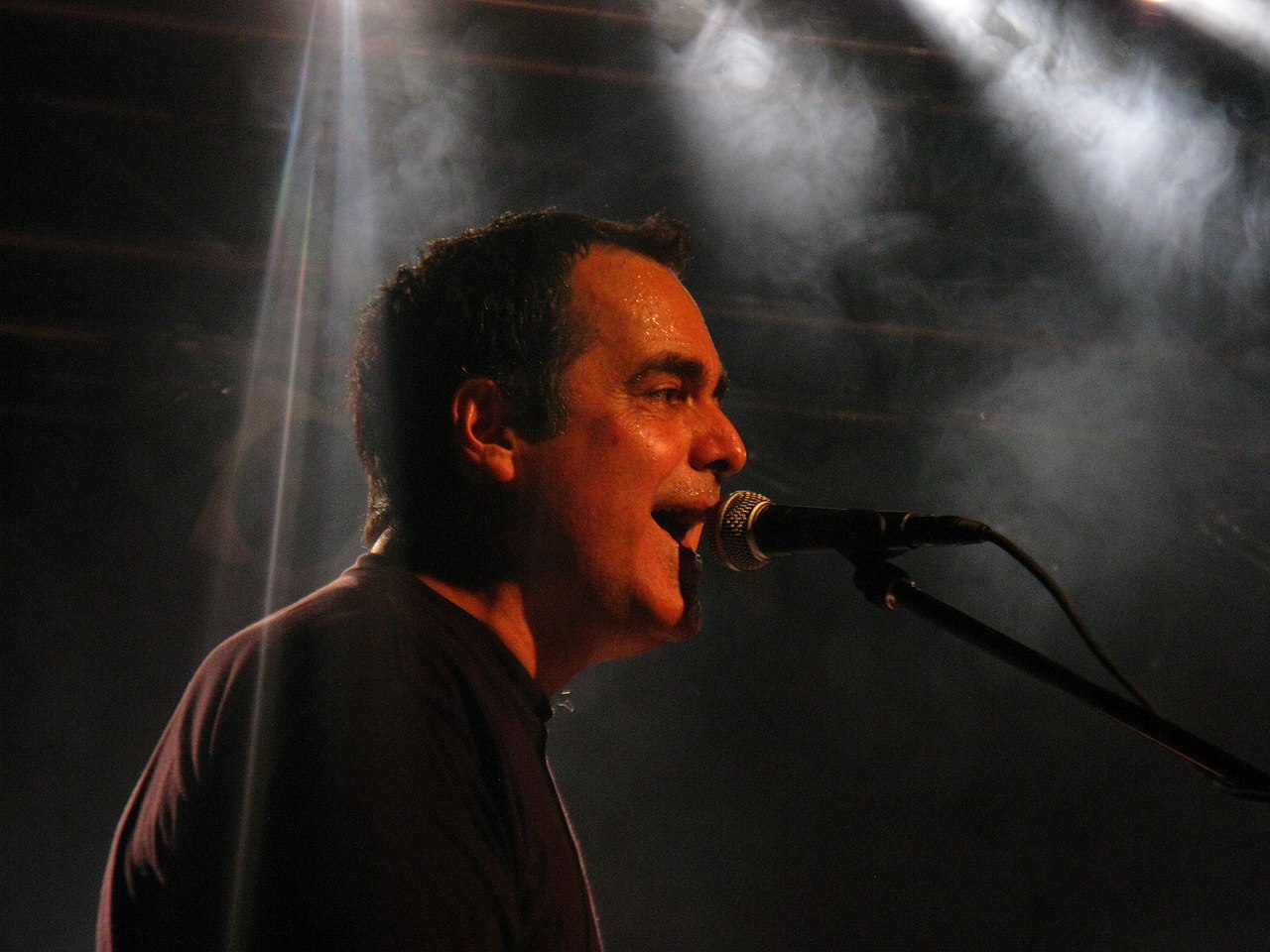
Michael Hanselmann - http://www.michaelhanselmann.de, CC BY-SA 3.0, via Wikimedia Commons (https://commons.wikimedia.org/wiki/File:Transatlantic2010_morse.jpg)
Neal Morse: The Light That Split a Progressive Empire
August 2, 2026
iOS — after Android
Android — in closed testing on Google Play
 Crate
Crate