
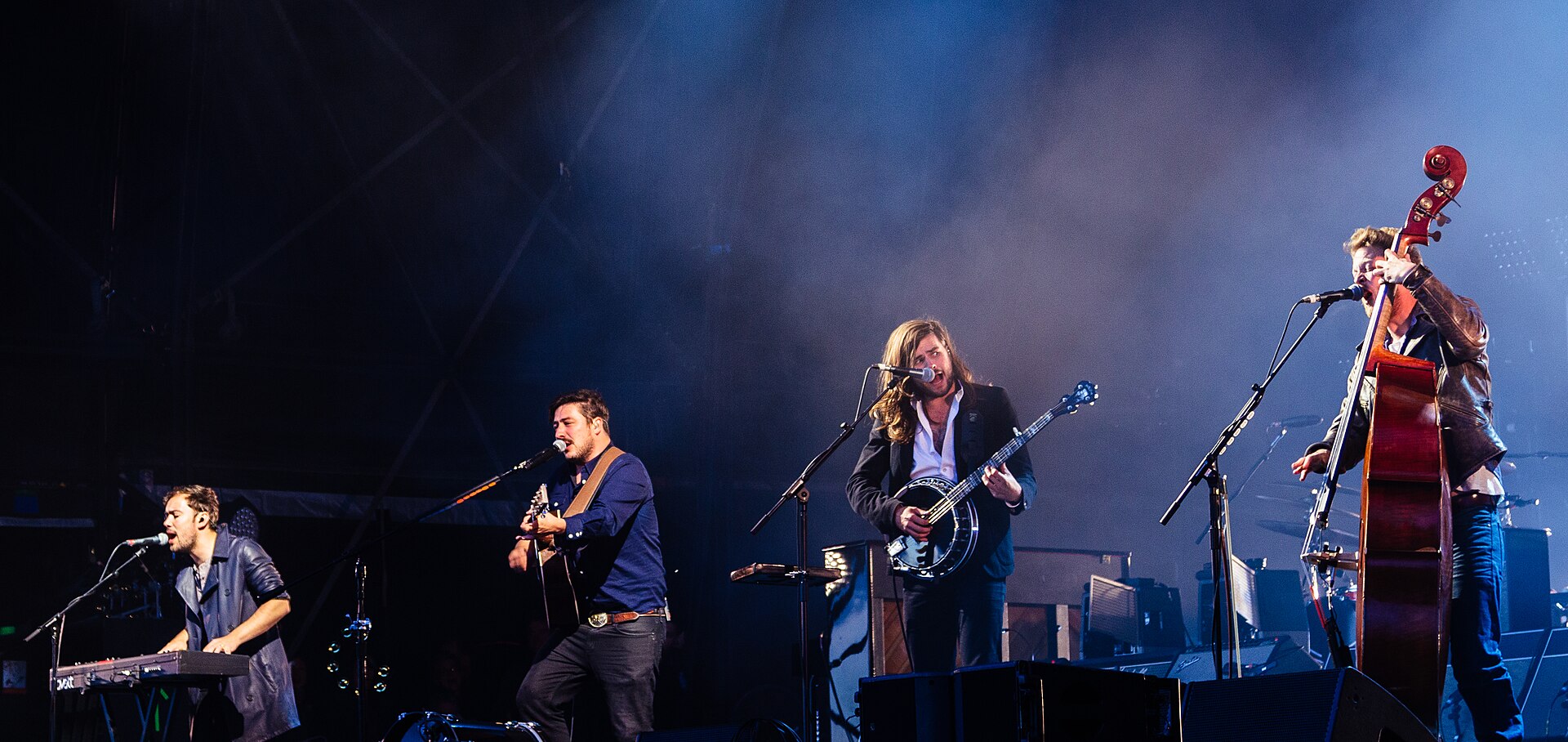
Three bass strings hum through a vintage Kay upright, filling a London rehearsal room in 2007. The man drawing a bow across them had recently walked away from a job in advertising. Ted Dwane wasn't a founding member of the group that would become Mumford & Sons, but when he joined that year, the quartet's acoustic architecture locked into place. His double bass became the low-end anchor around which banjo, acoustic guitar, and four-part harmonies could orbit.
From advertising to the London folk scene
Dwane grew up in London and attended King's College School in Wimbledon. Before music paid the bills, he worked in advertising — a chapter that closed when he joined the indie-soul outfit The Milk. That gig sharpened his instincts, but the call from Marcus Mumford, Ben Lovett, and Winston Marshall pointed toward something more urgent. The four musicians had been circling each other in London's folk scene, and by late 2007 the lineup solidified. Rehearsals moved fast. Songs took shape around acoustic instruments pushed to percussive extremes.
The debut album 'Sigh No More' arrived in 2009 and detonated quietly at first, then everywhere. 'Little Lion Man' became the first massive hit, its video shot the same year, and the single's raw confession pulled listeners into a world of stomping folk-rock. The album brought international success, and by 2011 the group had won a Brit Award for Best British Group and an Ivor Novello for the song 'The Cave'. Mumford & Sons were no longer a pub-circuit curiosity — they were headlining festivals and selling millions.
The Kay bass that defined a sound
Dwane's instrument choices shaped the band's sonic identity. He used a Kay double bass, a workhorse model prized for its punchy, percussive tone under a microphone. On stage, he alternated between bow and pizzicato, sometimes switching to electric bass guitar when the arrangement demanded a different texture. The group's reliance on banjo, double bass, and acoustic guitar became a signature, but it was Dwane's physicality — lunging into the neck, slapping the fingerboard — that gave the rhythm section its theatrical charge.
The second album 'Babel' landed in 2012 and pushed everything further. It won the Grammy for Album of the Year in 2013, and the band headlined Glastonbury that same summer. They also performed at the closing ceremony of the London Olympics in 2012, a moment that cemented their status as a national institution. Then, in 2013, the machinery nearly broke. Doctors discovered a blood clot in Dwane's brain. Emergency surgery followed immediately. The band cancelled several shows, and Dwane temporarily stepped away from performing.
Recovery and the electric turn
Recovery was not a metaphor. It was a slow, medical process with no guaranteed timeline. Dwane returned to the stage, and the band resumed touring, but the episode left a mark on their internal clock. By 2015, the group released 'Wilder Mind', an album that swapped acoustic instruments for electric guitars and synthesizers. The shift startled fans who had built their identity around the banjo-and-bass template, but it also proved the band could write songs that didn't rely on folk signifiers. Dwane moved to electric bass full-time for much of the new material.
In 2016, Dwane married actress Isabel Lucas. The personal milestone arrived during a period of recalibration. The band's next album, 'Delta', came out in 2018, recorded at Church Studios in London with producer Paul Epworth. Dwane contributed to the songwriting, and the sessions pushed the group into darker, more textured territory. The album was followed in 2019 by the 'Delta Acoustic Sessions' EP, a nod to the band's origins that stripped the new songs back to their bones.
The vinyl resurgence ran parallel to the band's arc. In 2019, 'Sigh No More' received a tenth-anniversary reissue with additional tracks, pressed for a generation of listeners who had discovered the album through streaming and wanted the physical artifact. The 2011 concert album 'Live at Shepherd's Bush Empire' captured the band at a peak of sweaty, acoustic intensity, a document of the moment before stadiums and Grammys changed the equation. Dwane's Kay bass rumbles through those grooves with a warmth that digital files flatten.
Dwane also played in the side project The Wedding Band, a looser outlet far from the Mumford & Sons machine. The group released the single 'Blind Leading the Blind' in 2020, and by then the band had sold more than 15 million albums worldwide. The Kay bass still travels with Dwane, a wooden witness to a career that began in advertising, survived a brain clot, and passed through Glastonbury's Pyramid Stage. The bow hair frays. The strings get changed. The low end holds.