
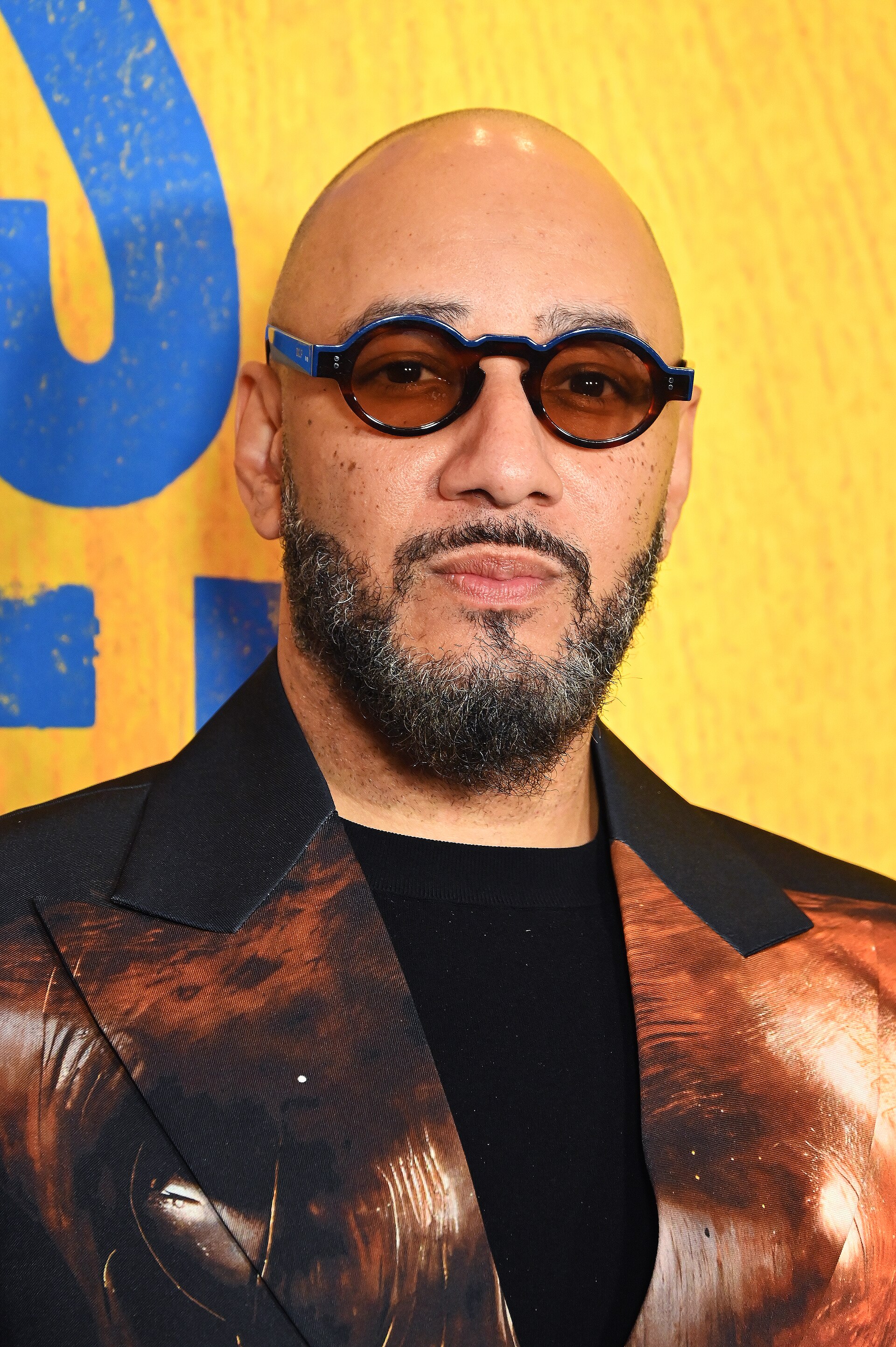
Bronx, September 13, 1978. Kasseem Daoud Dean was born into a neighborhood where hip-hop was less a genre than a survival language. The borough's cadence shaped his instincts, even before he understood what a sampler did. Three decades later, the same kid would be signing deals and redefining what a rap beat could sound like.
By 1994, at sixteen, Swizz Beatz was already behind turntables, starting as a DJ. That path led him to Ruff Ryders Entertainment, his family's label, and into the orbit of Yonkers rapper DMX. As DJ, hype man, and producer, he became the engine behind DMX's live chaos, and by eighteen he was a known name on the East Coast circuit.
Sound architecture of rupture
The sound he brought was a rupture. Hip-hop production in the late nineties leaned heavily on soul and funk samples, warm textures layered to feel familiar. Swizz Beatz ignored that architecture. He built minimal, electronic, sample-free beats that hit like industrial machinery, and his tracks arrived with an aggression that matched the energy of the streets he came from.
His method became folklore. Word spread that he spent ten to fifteen minutes on a song. Whether true or exaggerated, the speed matched the output. Early recordings show him experimenting with the turntable's tonearm, scratching and manipulating sounds in ways that felt wrong to purists. The 'Swizzy' vocal tag at the start of tracks like 'Top Down' became his signature, a fast, recognizable call before the verse dropped.
In 2001, at twenty-three, he launched Full Surface Records. The roster pulled from different corners of hip-hop and R&B: Eve, Mashonda, Bone Thugs-n-Harmony. A year later he released Swizz Beatz Presents G.H.E.T.T.O. Stories, a compilation that functioned as a showcase for his production range and his instinct for assembling talent.
Carrying a debut under his name
His own debut album, One Man Band Man, arrived in 2007 and climbed to the seventh spot on the Billboard 200. Critics were split. Some heard a producer stretching beyond his lane; others heard a restless artist refusing to stay behind the boards. Either way, the record proved he could carry a project under his own name.
By 2018, after signing with Epic Records, he returned with Poison, a second album that arrived eight years after his debut. The title suggested something dangerous, but the music carried the same kinetic energy he had been known for since the Ruff Ryders days. More than one hundred artists have worked with him, a number that underscores how central he became to East Coast hip-hop's evolution.
Away from the studio, Swizz Beatz built a reputation as an art collector and, later, as a music executive at Warner Music Group. The quiet minimalist from his early production years grew into a figure whose influence extended into boardrooms and galleries. He mentored Philadelphia rapper Cassidy, and his marriage to R&B singer Mashonda in 2003, with a son born in 2005, anchored a personal life that ran parallel to a relentless professional pace.
Turning forty-eight in 2026, Swizz Beatz remains a producer whose beats still sound like they were made yesterday. The minimal electronic pulse he introduced when sampling was the default now feels prescient. And somewhere in the Bronx, a sixteen-year-old is still discovering that a turntable can be an instrument, not just a playback device.