
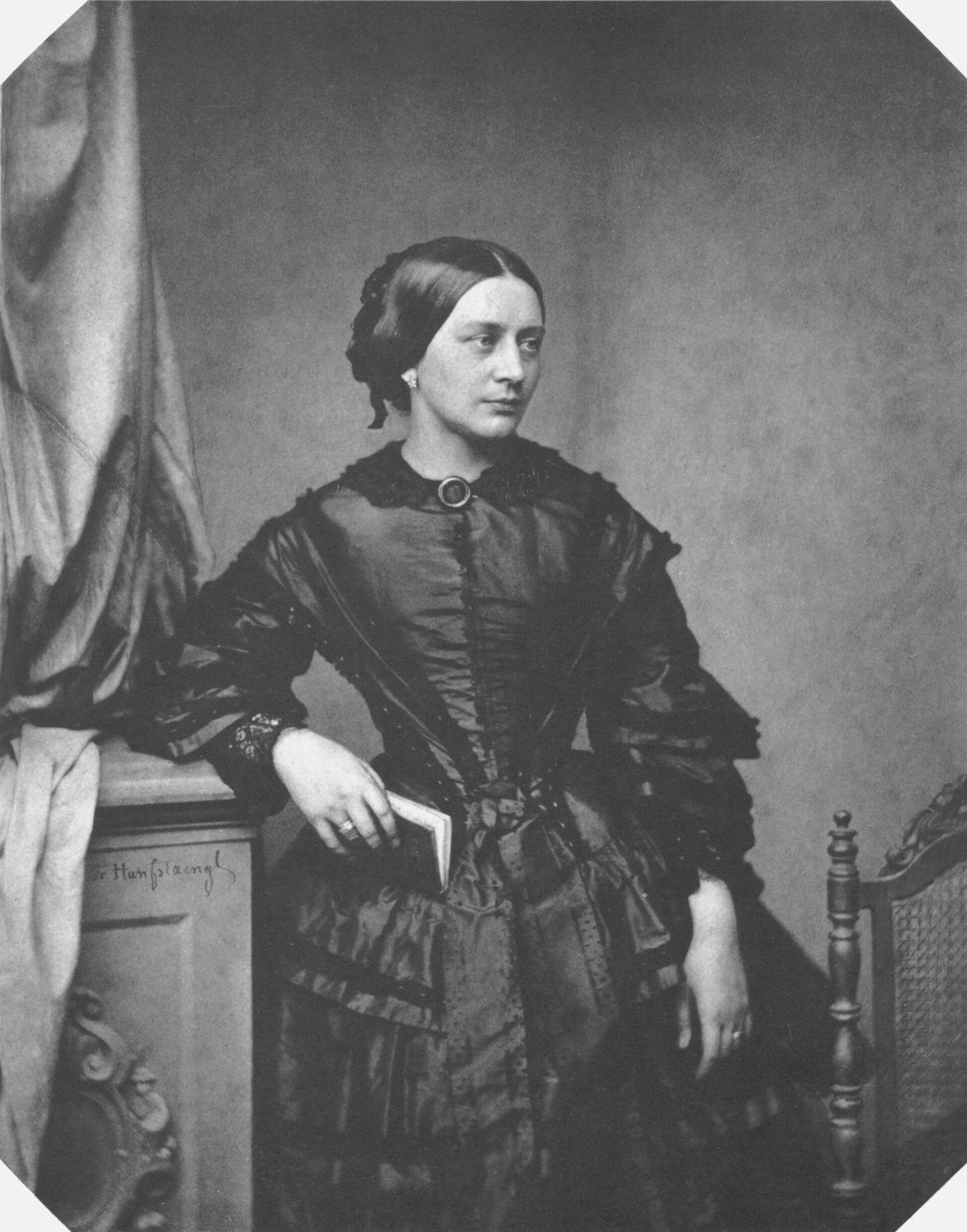
Five children in eight years, a touring soprano for a mother, and a father who sold and repaired pianos while teaching them — the household Clara Josephine Wieck entered on 13 September 1819 in Leipzig was not built for silence. Friedrich Wieck had arrived in the city in 1814 with a theology degree from Wittenberg and an obsession with keyboard mechanics. He quickly earned a reputation as an expert on instruments, and his daughter became the most scrutinized instrument of all. Clara Schumann, born 207 years ago this month, would spend six decades reshaping what a pianist was allowed to be on stage.
A household built on music
Her mother, Marianne Tromlitz, was a concert singer and pianist who had studied under Friedrich before they married in 1816. The family tree reached back to Johann Georg Tromlitz, a celebrated flute maker and composer, and Georg Christian Tromlitz, a cantor in Plauen. Music was not a pastime in this house — it was the family trade. Clara was the second child, and Friedrich, himself a pianist and piano teacher, took control of her training with a rigor that left no room for childhood in the ordinary sense.
By eleven she was touring. Paris, Vienna, and other cities saw a girl who played from memory, composed her own pieces, and handled the stage with the composure of a professional twice her age. The child prodigy label fit, but it undersells what she became. Clara was not merely a phenomenon — she was an argument about what piano performance should prioritize. Her 61-year concert career steadily shifted the weight of recitals away from sheer virtuosic display toward musical substance.
Clara was not merely a phenomenon — she was an argument about what piano performance should prioritize.
Redefining the recital format
She did this by changing the very format of the piano recital. Where audiences expected a parade of flashy showpieces, Clara programmed works that demanded listening rather than gasping. She reduced the importance of purely virtuosic compositions and gave solo recitals a coherence they had lacked. Her own output — solo piano pieces, a piano concerto, chamber choruses, and songs — showed the same instinct: music built to last, not to dazzle for an evening.
On 12 September 1840, the day before her twenty-first birthday, she married Robert Schumann. The couple had eight children, and Clara became the first performer of nearly everything Robert wrote for piano. She premiered his works, championed them across Europe, and after his early death continued touring for decades. Her advocacy was not sentimental — it was structural. She gave public premieres of many compositions by both Robert Schumann and Johannes Brahms, the young composer the couple had supported and befriended.
The Brahms connection
The Brahms connection was one of the most consequential friendships in Romantic music. Clara and Robert encouraged him early, and Clara remained close to Brahms after Robert's death. She premiered his works as well, building a bridge between two generations of German music. Her duo performances with violinist Joseph Joachim extended that reach into chamber repertoire, where her interpretive authority carried equal weight.
All of this unfolded while she taught. Clara was an influential piano teacher and music educator who shaped the repertoire of many classical collections. Her pedagogical work did not pause after marriage — she continued teaching and performing, balancing a public career with a household that grew to eight children. The woman who had once been Friedrich Wieck's most demanding project became the standard by which other pianists measured themselves.
A lasting template for concerts
She was recognized as one of the outstanding pianists of the Romantic era, and her influence on musical culture ran deeper than applause. By making soloistic achievement less important than the music itself, she changed what audiences expected from a recital. The format she refined — serious programs, memory performance, repertoire chosen for substance — became the template for classical piano concerts that still operates today.
Clara Josephine Schumann died in Frankfurt am Main on 20 May 1896. She had outlived Robert by four decades, outlived several of her children, and spent her final years still teaching, still shaping repertoire. The question that lingers is not whether she was great — the record answers that. It is what else she might have composed if the era had treated her compositional voice with the same seriousness it granted her fingers.
Friedrich Wieck trained a prodigy and got a reformer. The girl who practiced in a Leipzig piano shop became the woman who told Europe what a piano recital should be. Two hundred and seven years after her birth, the format she built is so familiar that it feels inevitable. It was not. Someone had to decide that music mattered more than spectacle — and then prove it, night after night, for 61 years.