← Feed
Liana Isakadze: The Soviet Prodigy Who Chose the Baton
August 4, 2026

AI-generated illustration
She was a violinist who had won the world’s most discerning competitions before she turned twenty-five. Yet Liana Isakadze walked away from a guaranteed soloist’s throne to stand in front of an orchestra, not in front of it. The pivot from bow to baton in 1981 was not a retreat — it was a homecoming to a sound she had been chasing since childhood in Tbilisi. On what would have been her 80th birthday, that choice still feels like a quiet detonation in the history of Soviet classical performance.
The biography reads like a fable designed to intimidate lesser talents. Born in Tbilisi on August 2, 1946, Isakadze entered the city’s Central Music School at seven. Her teacher, Leo Shiukashvili, was the figure she later credited with laying the entire foundation of her musical identity. At nine, she stood before the State Symphony Orchestra for her first public performance. A year later, she gave her first full solo recital. At twelve, she took first prize at the Transcaucasian Violin Competition. The term “genius girl” followed her through every conservatory corridor.
Moscow came calling early. In 1961, at fourteen, she captured second prize at the All-Union Competition of Performing Musicians, a bruising showcase that drew the fiercest young players in the USSR. The result placed her directly in the orbit of David Oistrakh, the titan of Soviet violin pedagogy. Oistrakh did not merely mentor her; he adopted her trajectory, guiding her through the Moscow Conservatory, from which she graduated in 1968, and then through postgraduate studies completed in 1970.
The international stage confirmed what Moscow already knew. In 1965, she won first prize at the Marguerite Long – Jacques Thibaud Competition in Paris. Five years later, the Jean Sibelius Violin Competition in Helsinki fell to her bow. The Sibelius victory was the inflection point: it transformed a celebrated Soviet prodigy into an artist with genuine global currency. European orchestras booked her. The Melodiya label pressed her performances into vinyl grooves that circulated far beyond the Iron Curtain.
And then she stopped. Not the music — the singular identity. In 1981, Isakadze took up the post of conductor with the Georgian Chamber Orchestra, shifting her relationship to the repertoire entirely. The move puzzled observers who saw a solo career still ascending. But conducting was not a second act for her; it was a return to the ensemble thinking that had shaped her earliest years in Tbilisi. She now built architecture rather than occupying a single line within it.
Her discography on Melodiya captures the duality. The solo recordings bristle with the Oistrakh-school clarity: a bow arm that never presses, a vibrato that sings rather than insists. The later recordings with the Georgian Chamber Orchestra reveal a different intelligence — a conductor who shapes phrase lengths across an entire string section, who understands where a soloist breathes because she had breathed there herself for decades. These records are documents of a musician who refused to be one thing.
Soviet honors accumulated. In 1988, she was named People’s Artist of the USSR, becoming the youngest musician in the country’s history to receive the title. State Prizes of Georgia followed in 1979, 1983, and 2002 — a span that traces the arc of a career that outlasted the state that first celebrated it. The awards tell a story of institutional validation, but the more interesting narrative lies in what she did with the freedom they afforded: she left.
In 1990, Isakadze relocated the entire Georgian Chamber Orchestra to Ingolstadt, Germany. For five years, she conducted, recorded, and performed as soloist with the ensemble in a new cultural context. She also founded and led the David Oistrakh Academy of String Instruments there, cementing a pedagogical lineage that stretched back to her own teacher. The move was not exile; it was a deliberate transplantation of a Georgian musical organism into European soil.
Liana Isakadze died in Tbilisi on July 5, 2024, two summers short of this anniversary. Her Melodiya pressings now circulate among collectors who hunt not just for the pristine early concerto recordings but for the stranger, rarer artifacts of her baton years. The question that lingers in those grooves is the one she never answered directly: what does a world-class soloist hear that makes her choose to disappear into the collective sound?
Related stories

Cover of “The Suburbs” by Arcade Fire. Source: Cover Art Archive (coverartarchive.org)
The Suburbs: Arcade Fire's Letter from the Edge of Town
August 2, 2026

Wojciech Pędzich, CC BY 4.0, via Wikimedia Commons (https://commons.wikimedia.org/wiki/File:Mayhem,_Summer_Dying_Loud_2024_18.jpg)
How Did a Duran Duran Fan Become Black Metal's Pulse?
August 2, 2026

deep ghosh from München, Germany, CC BY 2.0, via Wikimedia Commons (https://commons.wikimedia.org/wiki/File:Andy_Fairweather-Low,_July_02_2006.jpg)
The Bedroom Walls Before the Stadium Stages
August 2, 2026
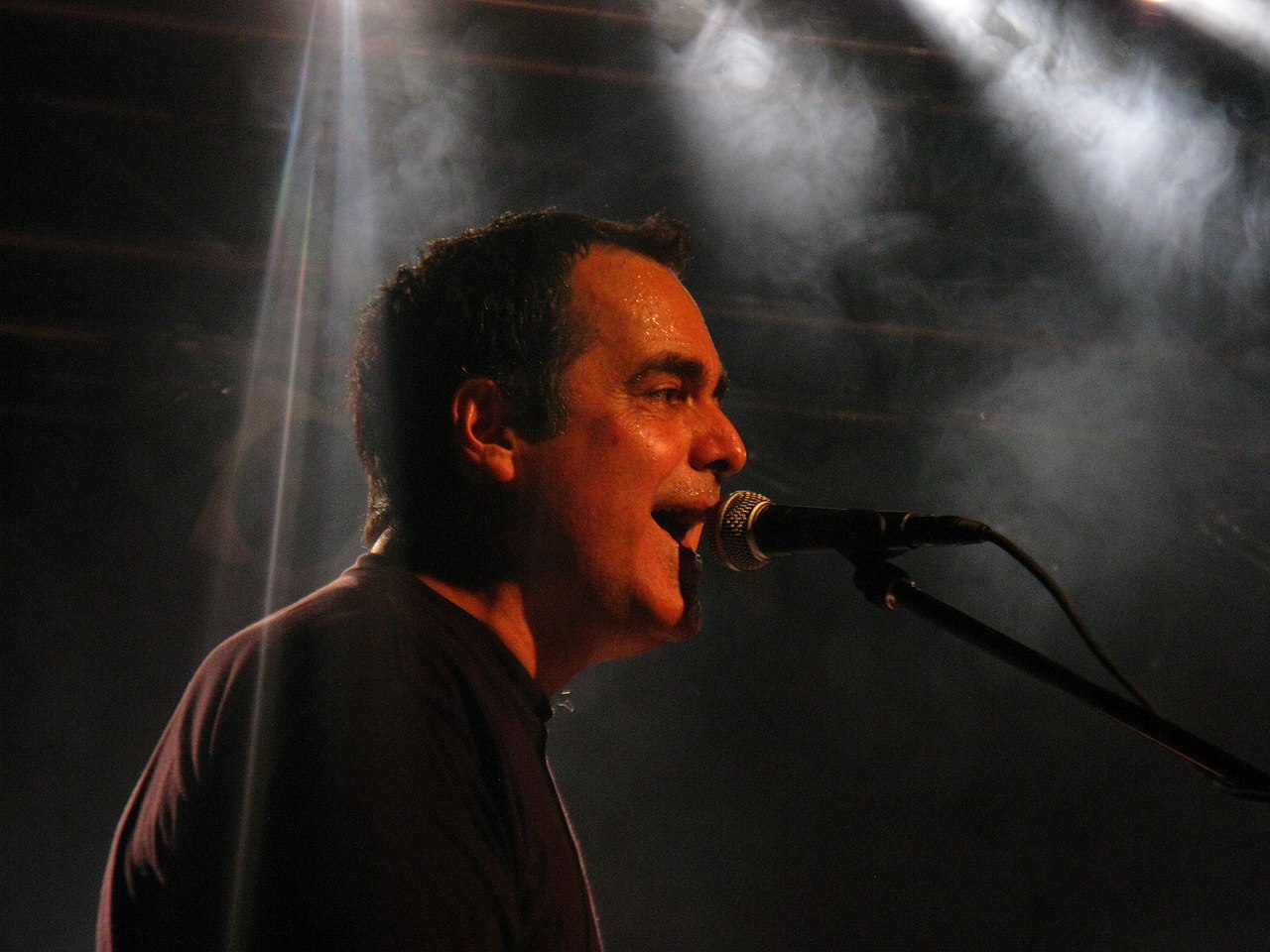
Michael Hanselmann - http://www.michaelhanselmann.de, CC BY-SA 3.0, via Wikimedia Commons (https://commons.wikimedia.org/wiki/File:Transatlantic2010_morse.jpg)
Neal Morse: The Light That Split a Progressive Empire
August 2, 2026
iOS — after Android
Android — in closed testing on Google Play
 Crate
Crate