
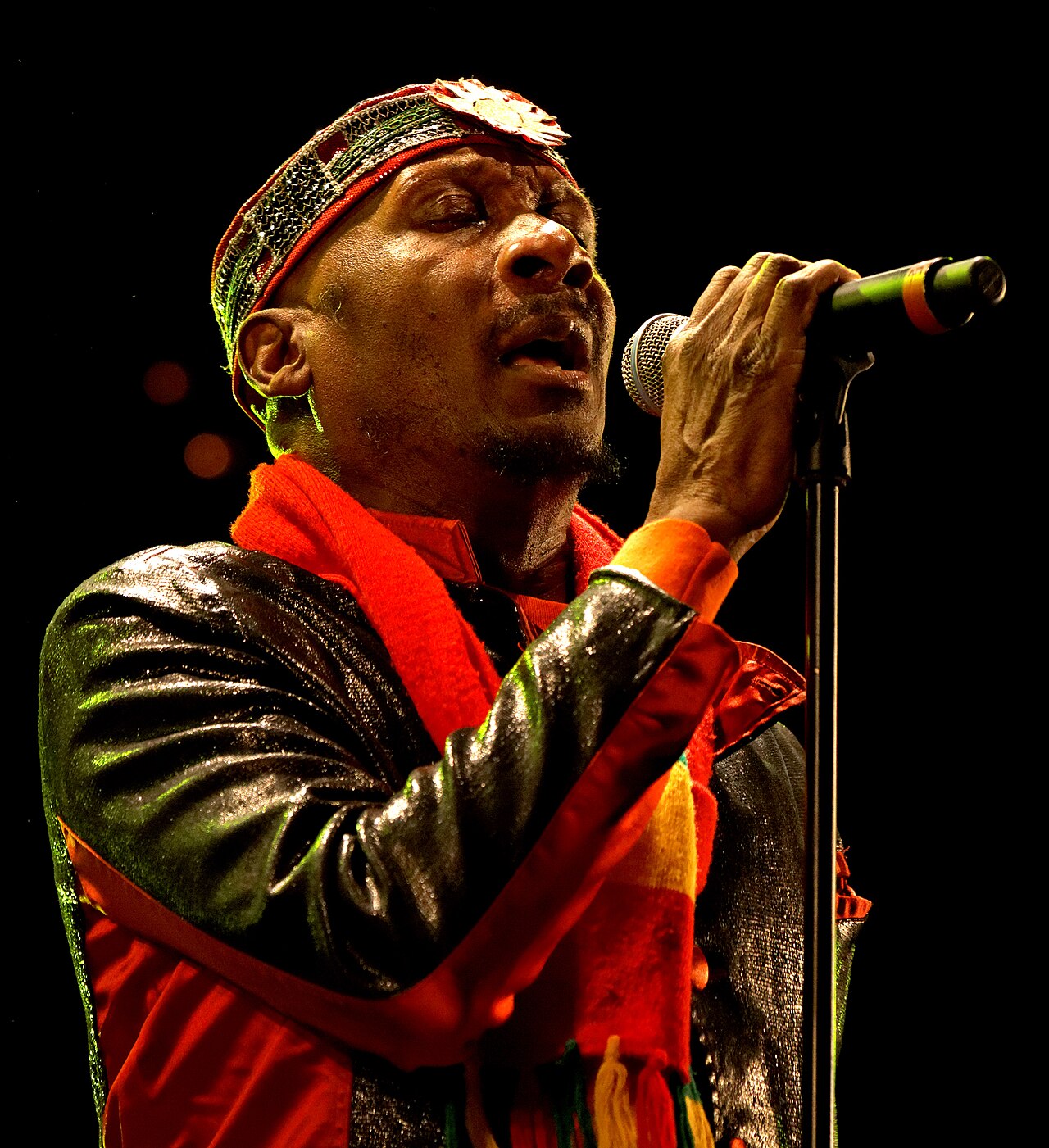
In a dimly lit Kingston recording booth in 1962, a teenage Jimmy Cliff watched producer Leslie Kong cue the tape for 'Hurricane Hattie.' The song, named after the storm that had just battered Jamaica, crackled with the raw energy of a young voice finding its purpose. Cliff, born James Chambers on July 30, 1944, in rural St. James, had arrived in the capital at 14 with little more than a church choir background and a fierce determination. That single became his first hit, but it was only the first tremor in a career that would eventually shake the foundations of global music.
That single became his first hit, but it was only the first tremor in a career that would eventually shake the foundations of global music.
From ska to the soul of early reggae
Before 'Hurricane Hattie,' Cliff's early singles on Kong's Beverley's label had gone nowhere. The failure didn't break him; it sharpened his resolve. By 1964, he was chosen to represent Jamaica at the World's Fair in New York, a gig that led to a contract with Island Records. His 1967 album 'Hard Road to Travel' captured the transitional sound of early reggae—still carrying the ghost of ska but slowing into something deeper. The record didn't sell millions, but it mapped the emotional terrain Cliff would later traverse: struggle, faith, and an unshakeable belief in a better day.
The late 1960s found Cliff chasing a wider audience. In 1968, he won an international song festival in Brazil with 'Waterfall,' a victory that proved his appeal could cross borders. Then came 'Vietnam' in 1970, a protest song produced by Kong that Bob Dylan later covered. Cliff's version was stark and personal, a letter from a soldier that felt less like politics and more like a wound. The track didn't just critique war; it exposed the distance between the powerful and the powerless—a theme that would soon define his most iconic role.
The film that changed everything
That role arrived in 1972 with 'The Harder They Come,' a film by Perry Henzell that cast Cliff as Ivan Martin, a country boy turned outlaw. The soundtrack, a cornerstone of any serious reggae collection, became the vehicle that drove the genre into living rooms from London to Lagos. Cliff wrote and performed the title track, a defiant anthem that mirrored Ivan's descent. Alongside it, his 'You Can Get It If You Really Want' and the aching 'Many Rivers to Cross'—written in 1969—turned the album into a multi-million-selling phenomenon.
'Many Rivers to Cross' was the soul of the soundtrack, a song Cliff had composed years earlier during a period of personal turmoil. Its gospel-drenched plea for deliverance transcended the film's narrative, becoming a standard covered by countless artists. On vinyl, the track's placement after the upbeat 'You Can Get It' created a dramatic arc that mirrored the movie's own shift from hope to desperation. Collectors prize early pressings of the soundtrack not just for the music, but for the raw, unpolished mix that captures the sound of a genre on the brink of global domination.
Bridging reggae and mainstream pop
The success of 'The Harder They Come' rewired Cliff's career. He signed with Reprise Records and in 1973 cut a cover of Cat Stevens' 'Wild World,' a move that signaled his ambition to bridge reggae with mainstream pop. The single didn't replicate the soundtrack's fire, but it cemented his reputation as an artist who could navigate multiple worlds. By 1975, he was touring Africa, absorbing rhythms that would later surface in his work. The journey from Kingston to the world stage was complete, but Cliff kept pushing into new territory.
The 1980s brought reinvention. His 1983 album 'The Power and the Glory' leaned into a polished, rock-inflected reggae sound, and two years later 'Cliff Hanger' earned him a Grammy for Best Reggae Album. That award marked a turning point: Cliff was no longer just the voice of a cult film but a recognized master of the form. In 1993, his recording of 'Hakuna Matata' for 'The Lion King' soundtrack introduced him to a generation of listeners who had never seen Ivan Martin, proving his voice could carry joy as effortlessly as protest.
Decades later, the physical artifacts of Cliff's journey remain objects of fascination. Original Island Records pressings of 'Hard Road to Travel' are sought for their warm, bass-heavy mastering, while early Jamaican 7-inch singles on Beverley's are holy grails for ska and rocksteady collectors. The 'The Harder They Come' soundtrack, with its iconic cover art of Cliff in a cowboy hat, is a staple in any reggae vinyl collection—its grooves worn by decades of listeners discovering the genre's heartbeat.
Cliff's later years have been a testament to endurance. He was awarded the Order of Merit by the Jamaican government in 2003, inducted into the Rock and Roll Hall of Fame in 2010, and in 2012 released 'Rebirth,' produced by Tim Armstrong of Rancid, which won him a second Grammy. Now, at 82, he remains one of the few reggae artists to hold Jamaica's highest civilian honor. His voice, still carrying the echoes of that Kingston booth, reminds us that the harder the journey, the sweeter the crossing.