← Feed
STORY
How Did a Painter Become the 20th Century's Giant?
CrateCore Editorial · August 5, 2026
AI-generated illustration
In a cramped Odessa apartment in 1921, an eight-year-old boy reunited with a father he barely remembered. The Civil War had torn them apart for three years, and during that exile, the child had found his first voice not through music, but through a paintbrush. His aunt Tamara, a surrogate parent through the chaos, had taught him to see the world in color and composition. When the family finally reassembled, the boy—Sviatoslav Richter—carried that painter's eye directly to the piano keyboard, where it would reshape the sound of classical music for the entire century.
Richter's path to the instrument was a slow burn, ignited by a lineage steeped in Central European rigor. His father, Teofil Richter, was a pianist and organist born to German expatriates, a man who had sharpened his craft at the Vienna Conservatory from 1893 to 1900. His mother, Anna Moskaleva, came from Russian landed gentry and had once been Teofil's student. Their marriage collapsed the boundary between teacher and pupil, creating a household where music was the primary language. Yet, when the family fled to Odessa in 1916, the young Richter did not immediately dive into scales and études.
Instead, the visual arts held him captive. Living with his aunt Tamara from 1918 onward, Richter absorbed a discipline of observation that later became his signature interpretive tool. He learned to build a canvas—layering light, shadow, and texture—long before he learned to build a phrase. This early training explains why his playing never sounded merely technical. When he finally began formal piano and composition lessons after the move to Odessa, his father, now a professor at the conservatory and organist at the city's Lutheran church, became his first and most formidable music teacher. The foundation was set not on rote practice, but on an almost architectural sense of structure.
The sonic result was a paradox that defined Richter's entire career: a virtuoso technique that never called attention to itself. His fingers could execute the most brutal passages in the repertoire with a nonchalance that felt almost painterly—broad strokes of sound, precise but never clinical. He amassed a repertoire so vast it seemed to swallow the history of keyboard music whole. This wasn't a pianist who specialized; he was a pianist who absorbed, and the Soviet state machinery took notice. By 1950, he had secured the Stalin Prize, marking the beginning of an official recognition that would make him a cultural monument.
The honors piled up in a way that could have crushed a lesser artist into a bureaucratic functionary. He became a People's Artist of the USSR in 1961, the same year he took the Lenin Prize and, remarkably, became the first Soviet musician ever nominated for a Grammy Award. The Hero of Socialist Labor title followed in 1975, and a Glinka State Prize in 1987. Just a year before his death, the Russian Federation awarded him its State Prize in 1996. Four state prizes across four decades painted a portrait of a regime desperate to claim him, but the recordings on the Melodiya label tell a different story—one of an artist who remained stubbornly, magnificently himself.
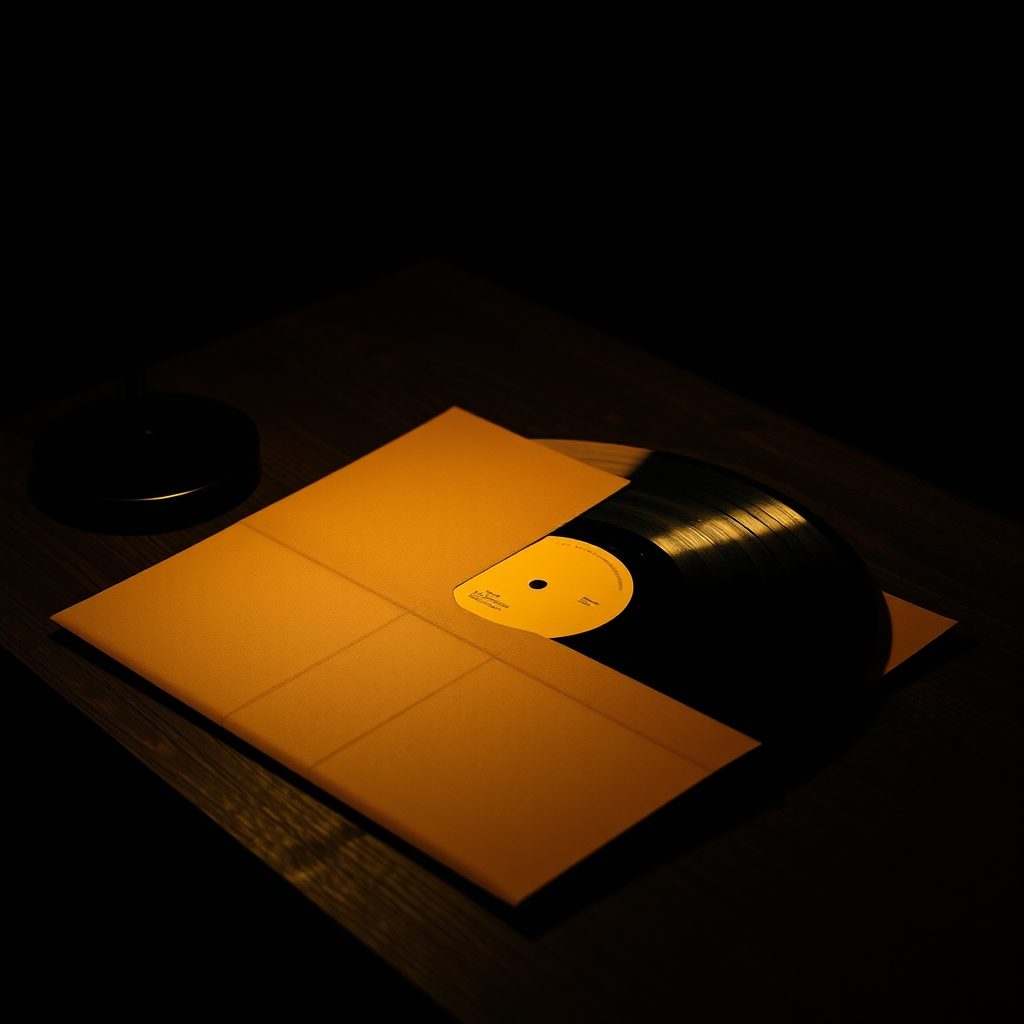
Those Melodiya pressings, often captured in murky Soviet-era sound, are the documents collectors chase. They contain a tension absent from the polished Western studio productions of the time. The physical artifacts—the worn cardboard sleeves, the Cyrillic typeface, the weight of the vinyl—carry the specific gravity of a performer who refused to be separated from his context. Richter did not record in a vacuum; he recorded in a system that simultaneously celebrated and confined him. His German roots, via both parents, added a layer of complexity to his identity as a Soviet cultural hero, a man whose father's Viennese training echoed through every note he played in Moscow's great halls.
Twenty-nine years after his death on August 1, 1997, the recorded legacy remains a battleground of interpretation. Richter died at 82 in Moscow, the city that had become the center of his world, but the discs and tapes are scattered across the globe. Collectors prize the early Melodiya pressings not for their audiophile perfection, but for their raw proximity to the event. They capture a man who approached the piano like a canvas, building terrifying climaxes in Prokofiev or finding oceanic stillness in Schubert. The crackle of a Soviet pressing becomes part of the performance, a reminder of the material reality behind the myth.
The strangest twist in the Richter story is how the painter never truly disappeared. His visual art, though far less known, existed alongside the music as a parallel pursuit, a private language. The eye that his aunt trained to mix pigments on a palette was the same eye that scanned a score and saw not just notes, but a landscape of dynamic and tonal color. His playing was never about the note itself, but about the air around it—the negative space, the silence, the decay. This is why his Bach sounds like a cathedral and his Rachmaninoff like a thunderstorm viewed from a great distance.
The boy who clutched a paintbrush in a divided country became a man who painted with sound waves. The reunion in that Odessa apartment in 1921 was not just a family's mending; it was the moment a visual artist began to translate his craft into a different medium. When Richter sat at the keyboard, he was still that child, layering washes of pedal and sharp, precise attacks of color, building a world that existed only for the duration of a phrase. The canvas is gone, but the sonic image he left on those black discs remains, a century later, as vivid as the day the needle first dropped.
Related stories
AI-generated illustration
How a Trinity College Dropout Made Afrobeat
August 4, 2026
AI-generated illustration
Liana Isakadze: The Soviet Prodigy Who Chose the Baton
August 4, 2026

Cover of “The Suburbs” by Arcade Fire. Source: Cover Art Archive (coverartarchive.org)
The Suburbs: Arcade Fire's Letter from the Edge of Town
August 2, 2026

Rob Bogaerts / Anefo, CC0, via Wikimedia Commons (https://commons.wikimedia.org/wiki/File:Opdracht_GPD_componist_John_Cage_,_kop,_Bestanddeelnr_934-2728.jpg)
The Submarine and the Silence
August 2, 2026
iOS — after Android
Android — in closed testing on Google Play