
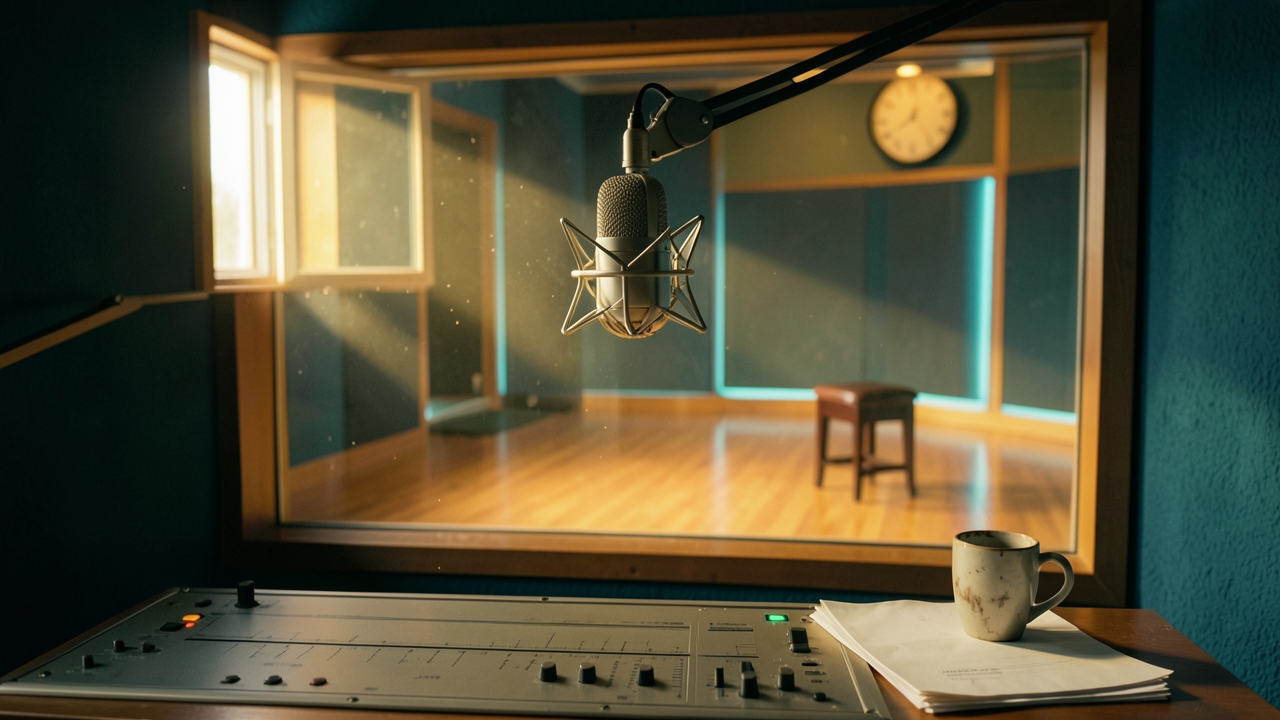
A crackling voice, barely above a whisper, asks a question that would echo through decades of slow dances and jukeboxes. That voice belonged to Barbara Mason, a Philadelphia teenager who, in 1965, walked into Virtue Recording Studios and laid down a track she had written herself. The song was "Yes, I'm Ready," and it became an improbable hit—a self-penned debut that climbed to number 5 on the Billboard Hot 100. Mason was just 18 years old, and her unguarded delivery captured something rare in pop music: the sound of genuine innocence meeting professional craft.
Mason was just 18 years old, and her unguarded delivery captured something rare in pop music: the sound of genuine innocence meeting professional craft.
Arctic Records and the Philadelphia sound
Mason was born in Philadelphia on August 9, 1947, and grew up singing in local clubs and talent shows. Her break came when producer William "Smokey" Robinson—not the Miracles frontman, but a key architect of the city's soul scene—spotted her and brought her to Arctic Records. Arctic was a small label with big ambitions, run by a team that understood the power of a well-cut 45. In an era when the seven-inch single was the currency of pop, Robinson knew that a great song needed more than a hook; it needed a feeling that could spin on a turntable and fill a room.
"Yes, I'm Ready" was written entirely by Mason, a fact that set her apart in an industry where young female artists rarely controlled their own material. The recording session at Virtue Recording Studios was likely straightforward—no elaborate overdubs, no extended jams. Instead, Robinson's arrangement leaned into a gentle, swaying rhythm, with a simple piano line and a backing chorus that answered Mason's lead like a conversation. The production was crisp and warm, a hallmark of Philadelphia soul, where the studio itself became an instrument, shaping the sound that collectors now chase on original Arctic pressings.
A million-selling 45 and a cultural moment
The single's success was staggering. It sold over a million copies and earned a gold certification, making Mason one of the first young African American women to achieve such a feat with her own song. On the R&B chart, it peaked at number 2, lodging itself in a cultural moment when soul music was both a soundtrack for romance and a statement of identity. The 45 became a staple at house parties and on radio playlists, its intimate vocal style drawing comparisons to a schoolgirl's confession. That comparison only deepened its mystique—a record that felt whispered, yet could fill a dance floor.
Mason's follow-up singles on Arctic, including "Sad, Sad Girl" and "I Need Love," never matched the commercial heights of her debut, but they cemented her reputation as a balladeer of uncommon subtlety. By the late 1960s, she moved to National General Records, where she recorded the album "Oh, How It Hurts." The title track, also a single, showcased her ability to wring pathos from a melody without ever raising her voice. These records are now prized by vinyl collectors, not just for their rarity but for the way they capture a transitional moment in soul before the genre splintered into funk and disco.
The Buddah years and an answer record
The 1970s brought a new chapter when Mason signed with Buddah Records and began working with producer Norman Harris, a master of lush, orchestrated soul. Her 1972 single "Give Me Your Love," written by Curtis Mayfield, reached number 9 on the R&B chart, proving she could still command an audience. But it was the 1973 single "From His Woman to You" that became her biggest post-"Yes, I'm Ready" hit. An answer record to Shirley Brown's "Woman to Woman," it shot to number 3 on the R&B chart, a testament to Mason's skill at inhabiting a narrative and making it her own.
Throughout the 1970s, Mason released a string of albums, including "Lady Love" and "Transition," that explored the softer side of soul. Her music became associated with the emerging "quiet storm" format, a radio style that favored slow jams and intimate vocals. Tracks like "Shackin' Up," which hit number 9 on the R&B chart in 1974, showed she could adapt to changing tastes without sacrificing her signature sincerity. For collectors, the Buddah-era LPs are a rich vein—often overlooked, but full of deep cuts that reveal a maturing artist navigating the shift from 45s to albums.
As commercial success waned in the 1980s, Mason continued to record and perform, re-recording "Yes, I'm Ready" for Society Hill Records and releasing the album "Another Man" on West End Records. The original Arctic 45, however, remained her defining artifact. Its legacy extended through covers by The Shirelles and a disco version by Teri DeSario that hit number 2 on the disco chart in 1979. Mason herself was inducted into the Soul Music Hall of Fame and received a lifetime achievement award from the National R&B Music Society in 2016, acknowledgments of a career that, while often quiet, never stopped resonating.
Today, a clean copy of the Arctic 45 of "Yes, I'm Ready" is a holy grail for soul collectors, a three-minute monument to a teenager who wrote her way out of the talent-show circuit. The record's power lies not in technical perfection but in its palpable vulnerability—a quality that no digital remaster can replicate. Barbara Mason, now in her late seventies, occasionally still performs, her voice a living connection to a time when a single piece of vinyl could change everything. That 45, spinning at 45 rpm, remains a masterclass in how to say everything by saying almost nothing.