
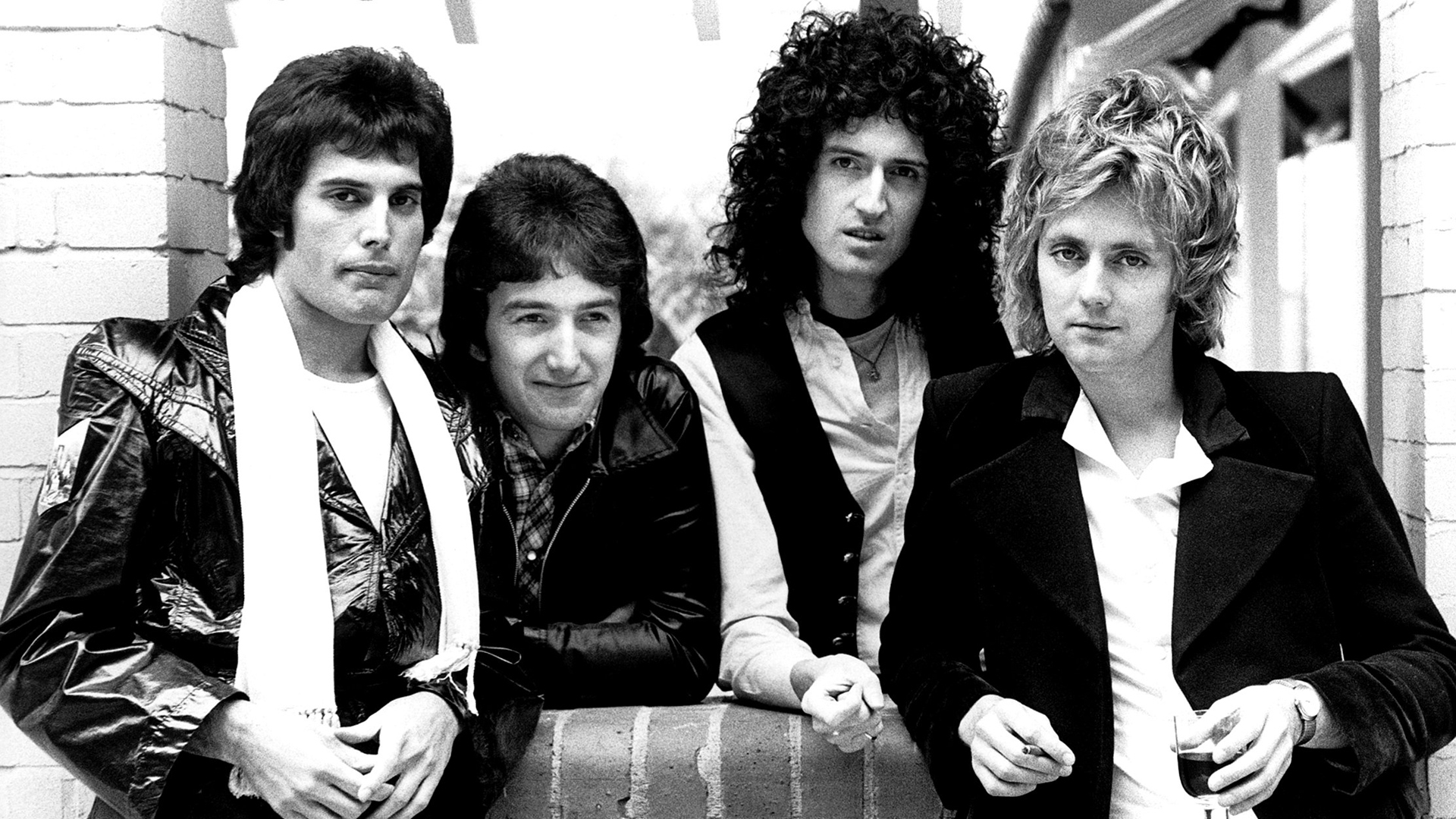
A six-minute operatic suite with no chorus, pieced together from 180 separate vocal overdubs — by every known law of pop music, it should never have worked. In August 1975, Freddie Mercury dragged Queen to a converted farmhouse in rural Wales to prove that it could. Rockfield Studios in Monmouth became ground zero for a recording session that ignored every commercial instinct of the mid‑70s industry. The band started tracking "Bohemian Rhapsody" on August 24, and what followed felt less like a recording date than a three-week siege of a tape machine.
Mercury's vocal assembly line
Mercury showed up with the song mapped out in his head — scraps of paper covered in scribbled harmonies and sudden tempo shifts. He ran the sessions with an obsessiveness that turned Rockfield into a laboratory. Brian May and Roger Taylor were conscripted onto a vocal assembly line, singing their parts ten to twelve hours a day until their voices frayed. The physical toll was secondary to Mercury’s single demand: every harmony stack had to feel like a cathedral collapsing in slow motion.
The process ate tape. Analog machines were pushed to their limits as Mercury, May, and Taylor layered take upon take, the oxide coating wearing thin under the relentless cycle of rewinding and recording. By the end of those three weeks, the multitrack reels held 180 individual vocal overdubs. The sheer density of voices made the control-room monitors behave unpredictably — speakers vibrating at frequencies they were never built to reproduce.
Isolation as a creative weapon
Rockfield’s isolation was a weapon. No A&R men dropping by, no label executives pacing the hallway. Just a band and producer Roy Thomas Baker navigating a composition that refused to settle into a single genre. The song opened as a piano ballad, lunged into hard rock, collapsed into mock-operatic Italian, and resurfaced as a double-kick-drum assault. Mercury’s six-minute suite had no precedent on British radio, and that was exactly the point.
The opera section alone was a logistical nightmare. Mercury, May, and Taylor became a choir of dozens, their voices pitched into characters — Scaramouche, Galileo, Beelzebub — none of whom existed beyond the tape. Each overdub demanded absolute precision; a single flat syllable could shatter the illusion of massed voices. The band worked until the tape itself became a physical artifact of exhaustion, spliced and held together by tension and sheer will.
The DJ who broke the rules
When the mix was done, EMI executives heard a song that ran twice the length of any standard single. Their skepticism was immediate and practical: radio would never touch it. Mercury refused to make cuts. He handed a personal copy to London DJ Kenny Everett, telling him to play only fragments on air. Everett ignored the instruction entirely, broadcasting the full track fourteen times in a single weekend. Listener calls jammed the switchboard.
The release forced a confrontation between art and industry. "Bohemian Rhapsody" became the defining song of Queen’s career, a piece of studio excess that somehow ruled the pop charts. Decades later, the song was named the most-streamed track of the twentieth century and inducted into the Grammy Hall of Fame. The same tape-caked monstrosity that terrified the record label became the benchmark for what a rock band could attempt inside four walls.
Fifty-one years separate 1975 from 2026, and the studio math still looks absurd. One hundred and eighty vocal overdubs. Three weeks of ten-to-twelve-hour days. A six-minute structure that begins at a piano and ends with a gong. No algorithm would greenlight it today. No focus group would survive the pitch meeting. The whole enterprise was a gamble staked on a single conviction: that density and strangeness could generate their own gravity.
Rockfield Studios still stands in Monmouth, its farmyard exterior betraying nothing of the summer when Queen turned a control room into a pressure cooker. The tape machines that groaned under 180 vocal tracks are long gone, replaced by digital workstations that would never break a sweat. But the physical limits of that 1975 session left their mark on the recording itself — a faint tape hiss buried beneath the final gong strike, the ghost of analog machinery pushed past its breaking point.