
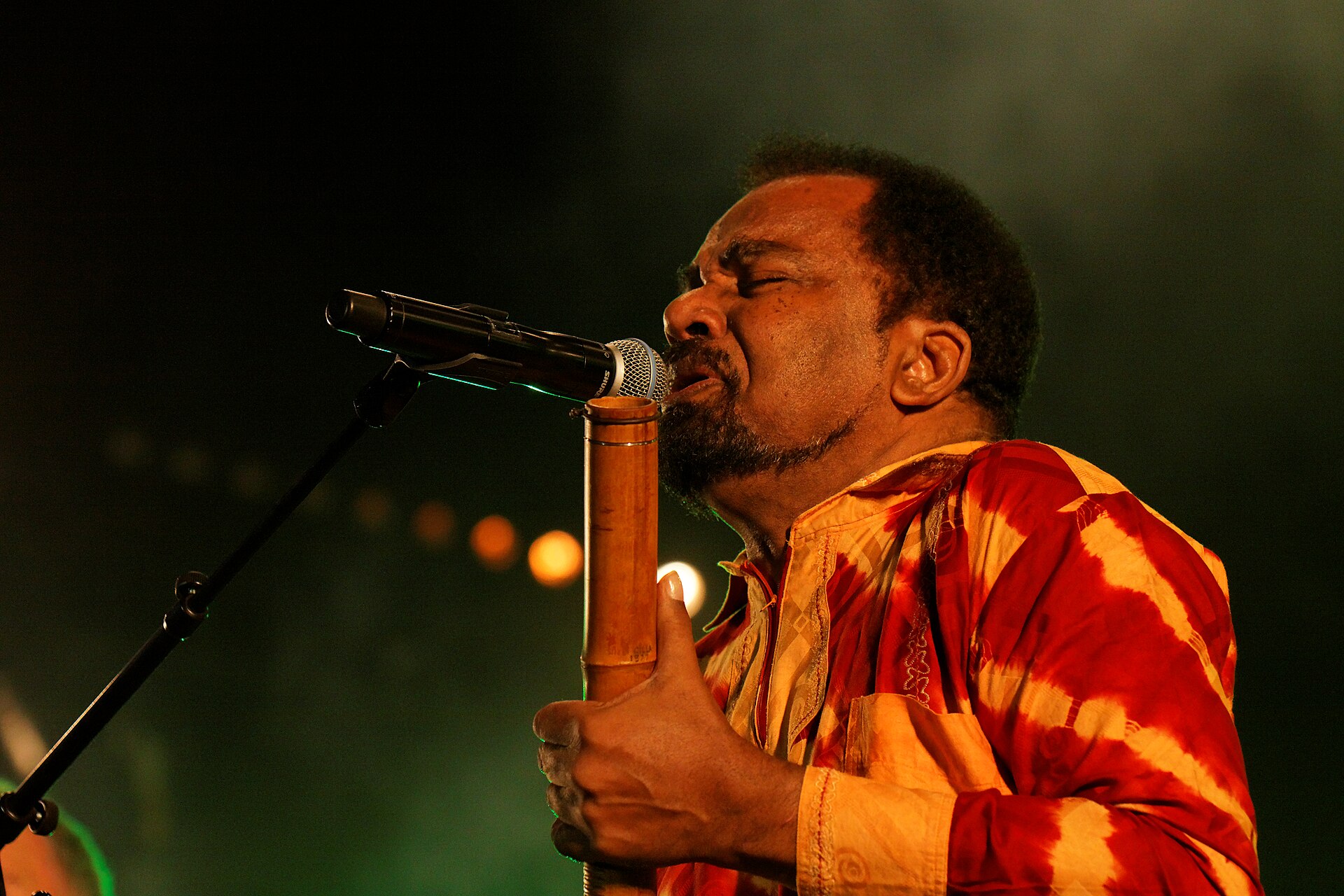
One man shattered Portuguese national records on the track, and another was deported for singing about independence. They shared the same body. Few artists have ever traded the explosiveness of a quarter‑mile sprint for the rhythmic pulse of a dikanza, but Angola’s José Adelino Barceló de Carvalho — known to millions as Bonga — did exactly that, and his 84th birthday is here to remind us what a collision of disciplines can produce.
From village accordion to semba’s future
Born in Kipiri, Bengo province, on 5 September 1942, the boy his family called FRogeiru — short for Francisco Rogeiru — absorbed music before he could run. His father played accordion rebita at village dances and taught the kid how to accompany him. By 15, Bonga was already singing, his voice forming around the melodies and rhythms that would later carry semba far beyond Angola’s borders.
Then came a swerve no biographer would invent. At 23 he left Angola for Portugal, not to cut records but to cut seconds off the 400 meters. Angola was still one of Portugal’s five African colonies, and sport offered a rare portal. He became the Portuguese record holder in the 400‑meter dash — a colonial subject wearing the metropole’s colors and rewriting its record books.
Music, however, refused to be a footnote. By 1972, a full 54 years ago now, he quit athletics entirely and poured everything into song. Angola and Portugal both noticed quickly — his raw, percussive sound bridged a gap no ambassadorial speech could touch. But the Estado Novo regime ruling Portugal heard more than melody; they heard dissent.
Exile and the songs the regime feared
Bonga was not merely a singer dabbling in politics. He was an open advocate for Angolan independence, a stance that made him a target under an authoritarian government still fighting to keep its African possessions. In the early 1970s, the colonial authorities expelled him from his homeland. A national sports hero was now an exile, his records physically far from the country that revered them.
The exile backfired beautifully on the regime. After the Carnation Revolution of April 1974 toppled Estado Novo, Bonga’s songs surged among immigrants from former colonies and Portuguese listeners of every stripe. That moment — 52 years ago — rewired his audience from niche dissident to broad cultural force. He was no longer just an Angolan icon; he belonged to a Lisbon tenement, a Luanda backyard, a Paris apartment.
A discography that refuses one genre
Discography counts more than 30 albums, sung in Portuguese and his native Kimbundu, with forays into Umbundu and the Luanda street jargon that keeps his lyrics rooted in real talk. Bonga composes, writes lyrics, and channels the dikanza — his favorite instrument — through everything from modern arrangements to centuries‑old folk tunes. The catalog refuses to sit neatly inside one genre, though semba remains its heartbeat.
Angolans call him "kota" — a Kimbundu word meaning elder, sage, lodestar. His full name, Bonga Kwenda, translates as "he who sees and strides ahead, always moving." Unofficially, he carries the title "ambassador of Angolan music." None of this arrived through a ministry decree; it accumulated over decades of carrying semba into Parisian halls, Lisbon clubs, and recording sessions for Lusafrica.
Two numbers hover over his story: 400 and 84. One is fleeting — a race clock stopped at a mark long since eclipsed. The other is a human body still speaking through wood and voice, a dikanza buzzing against a palm. The man who once exploded from the blocks now moves in perpetual rhythm, singing Kimbundu proverbs over grooves that outlast any stopwatch.