← Feed
When Led Zeppelin Stormed Oakland's Blueberry Hill
August 4, 2026
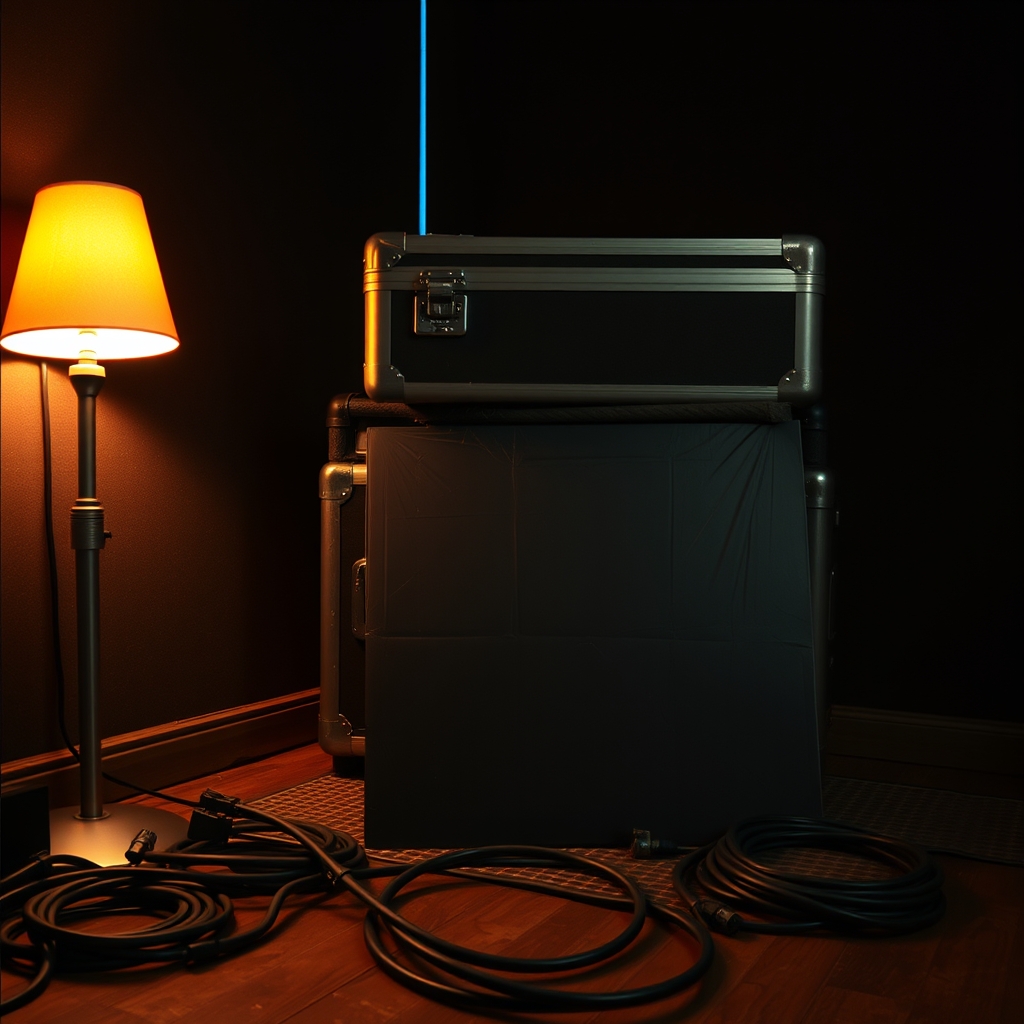
AI-generated illustration
A lone microphone stand on a California stage captured the sound of a band ripping through the walls of rock music itself. The tape that surfaced from the Oakland Coliseum on August 4, 1970, is a paradox: a raw, unauthorized document that breathes with more life than most official live albums. Led Zeppelin were barreling toward the release of their third album, yet on this night they were already a completely different animal. The show became the source for 'Live on Blueberry Hill,' a bootleg that would define the underground economy of fandom for decades to come.
The recording achieved its startling clarity through an audacious setup: microphones placed directly on the stage, capturing the band's internal dynamics rather than the distant roar of the crowd. This technique put Jimmy Page's guitar and John Bonham's drums in the same sonic space, creating an intimacy that most audience tapes sorely lacked. The bootleg, circulating first on vinyl and later on CD, quickly earned a reputation as one of the most essential unofficial documents in rock history. Collectors learned to hunt for it by its fruit-strewn cover art, a strange visual for such a heavy night.
The setlist was a masterclass in controlled violence and sudden tenderness. The show opened with the galloping menace of 'Immigrant Song,' a track so new it wouldn't appear on vinyl for months. From that first riff, the band lunged into a performance that stretched past two hours, moving from the blues-metal assault of 'Heartbreaker' into the sprawling psychedelic theater of 'Dazed and Confused.' Page drew a violin bow across his guitar strings, dragging unearthly sounds from the instrument while the arena sat in darkness, the group's minimal stage lighting leaving the music as the only spectacle.
What makes this particular bootleg a cornerstone for collectors is its capture of the band's experimental range. Mid-show, the amplifiers cooled as Robert Plant introduced an acoustic set featuring 'That's the Way' and 'Bron-Yr-Aur,' folk sketches that would soon appear on the forthcoming Led Zeppelin III. The dynamic whiplash was deliberate. One moment, John Bonham was detonating his extended drum solo during 'Moby Dick'; minutes later, the group was weaving delicate, pastoral textures that owed more to the English countryside than the California concrete.
The heart of the performance lay in its improvisational risks. 'Whole Lotta Love' abandoned its studio structure entirely, morphing into a long medley that wandered through rock and roll history. Plant's between-song banter cracked jokes with the crowd, loosening the tension before the band slammed back into another riff. The rare cover of Fats Domino's 'Blueberry Hill,' which gave the bootleg its name, surfaced as a moment of pure mischief. A doo-wop standard filtered through the hands of a band on a blues-rock rampage became a collector's obsession precisely because it didn't belong on any official release.
Manager Peter Grant waged a notorious war against bootleggers, confiscating tapes and equipment with his formidable physical presence. Yet the culture was already a self-sustaining organism. Fans traded cassettes and vinyl pressings through underground networks, creating a shadow discography that rivaled the band's official output. The quality of these recordings varied wildly, from muffled audience captures to near-soundboard clarity. The Oakland tape fell into the latter category, a fact that made its legend grow faster than Grant could stamp it out.
The historical weight of the recording is inseparable from its timing. The concert landed in a summer when Led Zeppelin were actively conquering America, playing with a hunger that their later arena tours would replace with sheer scale. Songs destined for the band's third album were still being tested under live fire, their edges sharp and unpolished. The bootleg preserved a transition point: the blues foundation of their early work was cracking open to reveal the folk and acoustic experiments that would baffle some critics upon the album's official release.
For the vinyl hunter, the original pressings of 'Live on Blueberry Hill' are artifacts of a pre-digital resistance. The bootleg appeared under multiple titles and with a variety of handmade or generic sleeves, its illegality forcing it into the margins of record store bins. Each reissue, each remastered CD edition, only deepened the mythology surrounding that specific August night. Holding an early pressing means possessing a physical link to a network of fans who valued the raw document over the polished product, who built a library of live recordings one smuggled tape at a time.
Fifty-six years later, the tape remains a testament to the fact that a band's truest sound is often captured by accident. The Oakland Coliseum recording helped cement Led Zeppelin's reputation not through a hit single or a magazine cover, but through the whispered recommendations of fans passing a crackling LP between each other. The bootleg's ultimate victory is its permanence: a piece of magnetic tape that refused to disappear, outliving the legal battles and format wars to become an inseparable part of the group's recorded legacy.
Related stories
AI-generated illustration
Mojo Nixon: The Man Who Made Henley Sing His Own Demise
August 4, 2026
AI-generated illustration
How a £4,000 Punk Shop Taught the Majors to Listen
August 4, 2026
AI-generated illustration
The Forgotten Festival Before Woodstock
August 4, 2026
AI-generated illustration
The Sound City Sessions That Shaped a CD Decade
August 4, 2026
iOS — after Android
Android — in closed testing on Google Play
 Crate
Crate