← Feed · Читать эту историю по-русски →
The Number One and the Night Shift
July 26, 2026
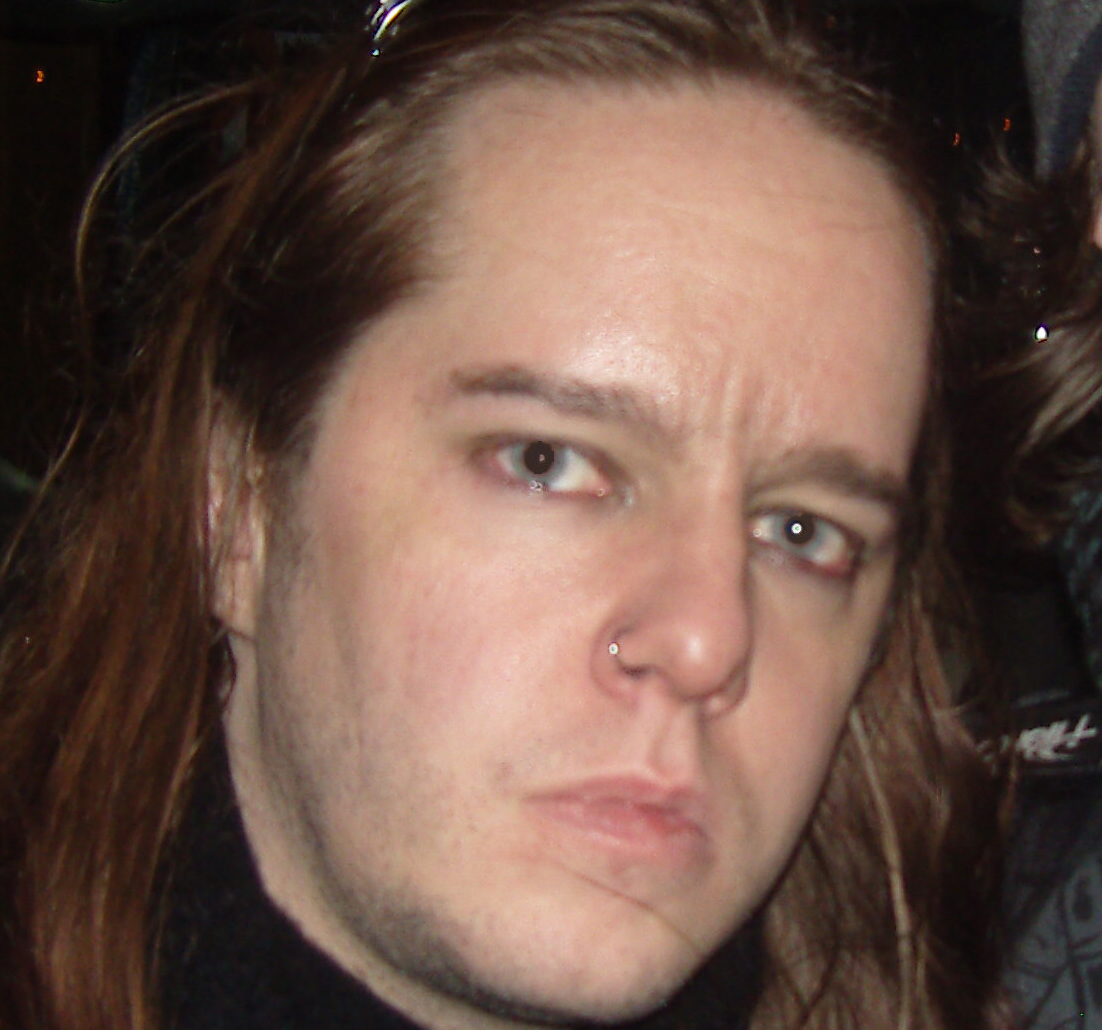
Rezter, CC BY-SA 3.0, via Wikimedia Commons (https://commons.wikimedia.org/wiki/File:JoeyJordison_(headshot).jpg)
A rotating hydraulic drum kit, tilting at violent angles above a sea of masked faces, became one of metal’s defining images of the 2000s. The man behind that spectacle was Joey Jordison, the shortest figure on stage but the rhythmic engine of Slipknot, who died five years ago on July 26, 2021 at just 46. His setup, a custom Pearl rig that spun and elevated, turned drumming into a physical performance art, mirroring the chaotic energy of the band he co-founded. That machinery was a long way from the night shifts at a Des Moines gas station where Jordison worked to fund the group’s earliest recordings.
Born in Des Moines, Iowa, Jordison started on guitar before switching to drums, receiving his first kit from his parents in fifth grade. By 1995, he was one of the first members to join a nascent project that would become Slipknot, a collective built on percussive assault and theatrical anonymity. The band adopted masks and boiler suits, each member assigned a number—Jordison wore the number 1. This visual identity, combined with a sound drawing from death metal and thrash metal influences, set them apart before a single CD was pressed.
The self-titled debut album arrived in 1999, a relentless blast of down-tuned guitars and dual-percussion chaos that caught the metal world off guard. Jordison’s playing was a blur of double-bass precision and blast beats, a style shaped by his admiration for Slayer’s Dave Lombardo and Rush’s Neil Peart. The CD became a slow-burning phenomenon, eventually going double platinum in the United States and establishing Slipknot as a band whose physical product fans wanted to own, not just stream. The artwork, the liner notes, the disc itself—it was a complete object.
The turn of the millennium saw metal CD sales explode, and Slipknot were at the center of that commercial wave. Their second album, *Iowa*, landed in 2001 and debuted at number three on the Billboard 200, a stark, punishing record that went platinum. The CD format was the primary vehicle for this aggression, traded in school hallways and blasted from portable players. Jordison’s drumming on tracks from this era pushed the limits of speed and technicality, a performance that earned him the title of best drummer of the previous 25 years from *Rhythm* magazine’s readers in August 2010.
While Slipknot dominated the metal landscape, Jordison channeled a different kind of darkness into the horror-punk side project Murderdolls, which he launched in 2002. Playing guitar instead of drums, he helped craft the sleazy riffs of *Beyond the Valley of the Murderdolls*. This duality—the technical metal drummer and the punk guitarist—showed a collector’s instinct for genre artifacts, understanding the visual and sonic language of each format. A Murderdolls CD on Roadrunner Records felt like a grimy cult object, distinct from the industrial-grade packaging of a Slipknot release.
The band’s third album, *Vol. 3: (The Subliminal Verses)*, arrived in 2004 and marked a platinum-certified shift toward melody without sacrificing heaviness. Jordison’s work here was more dynamic, proving his range beyond sheer velocity. He also stepped out as a touring musician, filling in on drums for Ministry in 2006 and producing an album for 3 Inches of Blood. Each of these projects added a new spine to a record collection, a different catalog number linking back to his core discography.
Slipknot’s commercial peak on CD came with 2008’s *All Hope Is Gone*, which debuted at number one on the Billboard 200. The physical release was a major event, with special editions featuring elaborate packaging that rewarded the dedicated buyer. Jordison was at his peak, voted the best metal drummer by *Rhythm* in 2010 and inducted into the *Modern Drummer* Hall of Fame in 2014. His setup of Pearl drums and Paiste cymbals became a benchmark for aspiring players, a specific gear combination documented in magazine spreads and live DVDs like 2001’s *Disasterpieces*.
The machinery stopped in December 2013 when Jordison left Slipknot. He initially cited transverse myelitis, a neurological disease that attacked his spinal cord and temporarily robbed him of his ability to play. He later stated he was fired from the band he helped build. He channeled that rupture into new projects, forming Scar the Martyr and releasing a self-titled album in 2013, followed by work with supergroups Vimic and Sinsaenum. By 2016, he announced he had completed treatment and could play again, a recovery that made his death five years later even more jarring.
The CD era that Slipknot dominated has faded, but the artifacts remain in crates and on shelves—the embossed covers, the transparent trays, the Roadrunner Records logos from a specific pressing plant. Jordison’s legacy is locked into those plastic discs, a record of a drummer who stood 160 centimeters tall and played with the force of a machine. His number was 1, and for a generation of metal fans flipping through jewel cases, that first Slipknot album was often the heaviest thing they owned.