
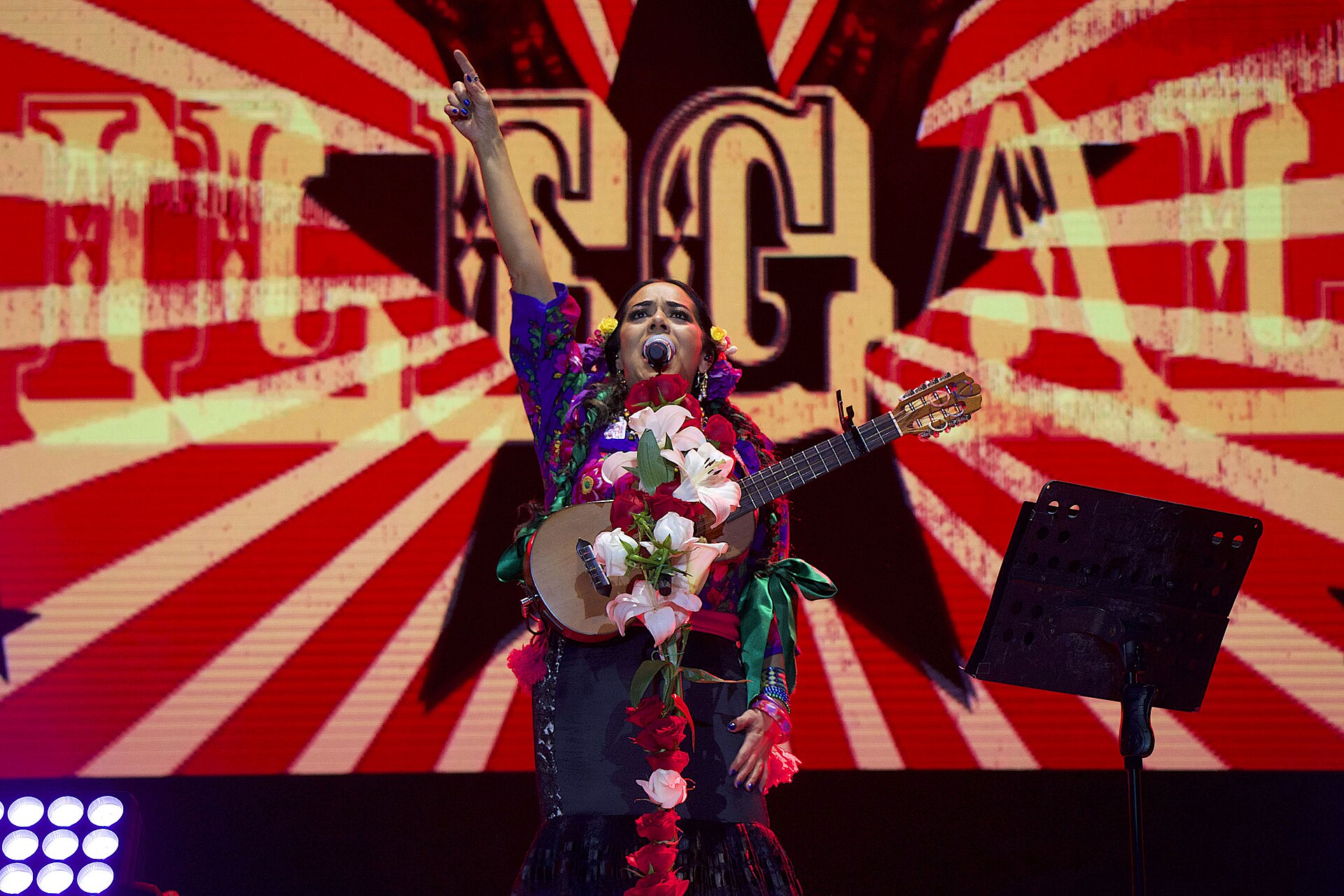
A cabaret singer's daughter and a Minnesota film professor's kid walk into a Oaxacan folk scene — and out comes an artist who can pivot from a Grammy-winning ranchera to a klezmer-inflected blues without flinching. Lila Downs, born Ana Lila Downs Sánchez on September 19, 1968, in Heroica Ciudad de Tlaxiaco, Oaxaca, turned 58 this year. Her music stitches together indigenous Mixtec roots, jazz, soul, and even the occasional iguana-like squeak. That last detail isn't a gimmick; it's a thread in a fabric woven from two very different Americas.
A tricultural upbringing across three regions
Downs grew up bouncing between Oaxaca, California, and Minnesota — a tricultural upbringing that would later explain why her band La Misteriosa can sound equally at home with cumbia and rap poetry. Her mother, Anita Sánchez, was a Mixtec cabaret singer; her father, Allen Downs, taught cinematography and hailed from Minnesota. This collision of worlds pushed her toward anthropology and vocal performance at the University of Minnesota, where she studied before dropping out to chase music full-time. She also trained at the Oaxaca Institute of Arts, sharpening the raw material that would define her sound.
The early years were spent on the traditional music circuit of Oaxaca City, where Downs learned to command a room with nothing but her voice and a story. Her first independent album, Ofrenda, arrived in 1994 — 32 years ago now — a quiet, self-released document of an artist still mapping her territory. It wasn't until 1999, with the studio debut La Sandunga, that critics and audiences alike took serious notice. The album's mix of traditional Mexican forms and contemporary arrangements clicked commercially, setting the stage for something bigger.
Border and the cultural translator
That bigger moment came in 2001 with Border, the record that pushed Lila Downs beyond Mexico and Latin America. Released just as the new millennium's identity politics were heating up, Border framed the U.S.–Mexico divide not as a wall but as a membrane — permeable, painful, and full of music. Downs sang in Spanish and English, sometimes switching mid-verse, and the album's themes of migration and memory resonated far beyond the regional Mexican charts. She was no longer a folk singer; she was a cultural translator.
Border framed the U.S.–Mexico divide not as a wall but as a membrane — permeable, painful, and full of music.
By 2011, Downs had turned that role into a headlining act. Her seventh album, Pecados y Milagros, shot to the top of charts across most major markets — 15 years ago, but the songs still feel like live wires. The album spawned a wave of ethnic music projects that dominated charts, proving that indigenous languages and electronic beats could share a stage. Downs recorded in Mixtec, Zapotec, Maya, Nahuatl, and Purépecha, refusing to treat those tongues as museum pieces. They were living, breathing instruments.
Balas y Chocolate and the traveling sonic embassy
Her eighth album, Balas y Chocolate, arrived in 2015 — 11 years back — and doubled down on that mission. The title alone, 'Bullets and Chocolate,' hints at the bittersweet political commentary inside. Downs has always used her platform to address injustice, but never at the expense of groove. Her band La Misteriosa, featuring her partner, producer, and husband Paul Cohen, brings an arsenal of instruments from different cultures, turning each concert into a traveling sonic embassy.
The genre map of Lila Downs is deliberately messy. Folk music and regional Mexican forms are the bedrock, but blues, jazz, soul, African rhythms, and even klezmer all surface in her arrangements. She covers other composers and writes her own material, often in the same set. The iguana squeak — a sound she's been known to mimic — isn't a novelty; it's a reminder that her sonic palette includes the animal world, the indigenous imagination, and the absurdity of borders. She won a Grammy and two Latin Grammys along the way, but the awards feel secondary to the sheer range.
Her work as a film actor and opera singer adds another layer. She appeared in The Life and Times..., a title that itself suggests the sprawling, unfinished quality of her career. But the core remains the voice — a contralto that can growl like a jaguar or float like a prayer. Sony Music has been her label home for years, yet the music never sounds corporately smoothed. It's raw, polyglot, and rooted in the Oaxacan soil where her mother once sang in cabarets.
Fifty-eight years in, Lila Downs is still translating between worlds. She dropped out of the University of Minnesota to follow music, and that decision — made decades ago — still echoes in every Mixtec phrase, every cumbia breakdown, every iguana squeak. The anniversary isn't a milestone to admire from a distance; it's a live frequency, still humming.