
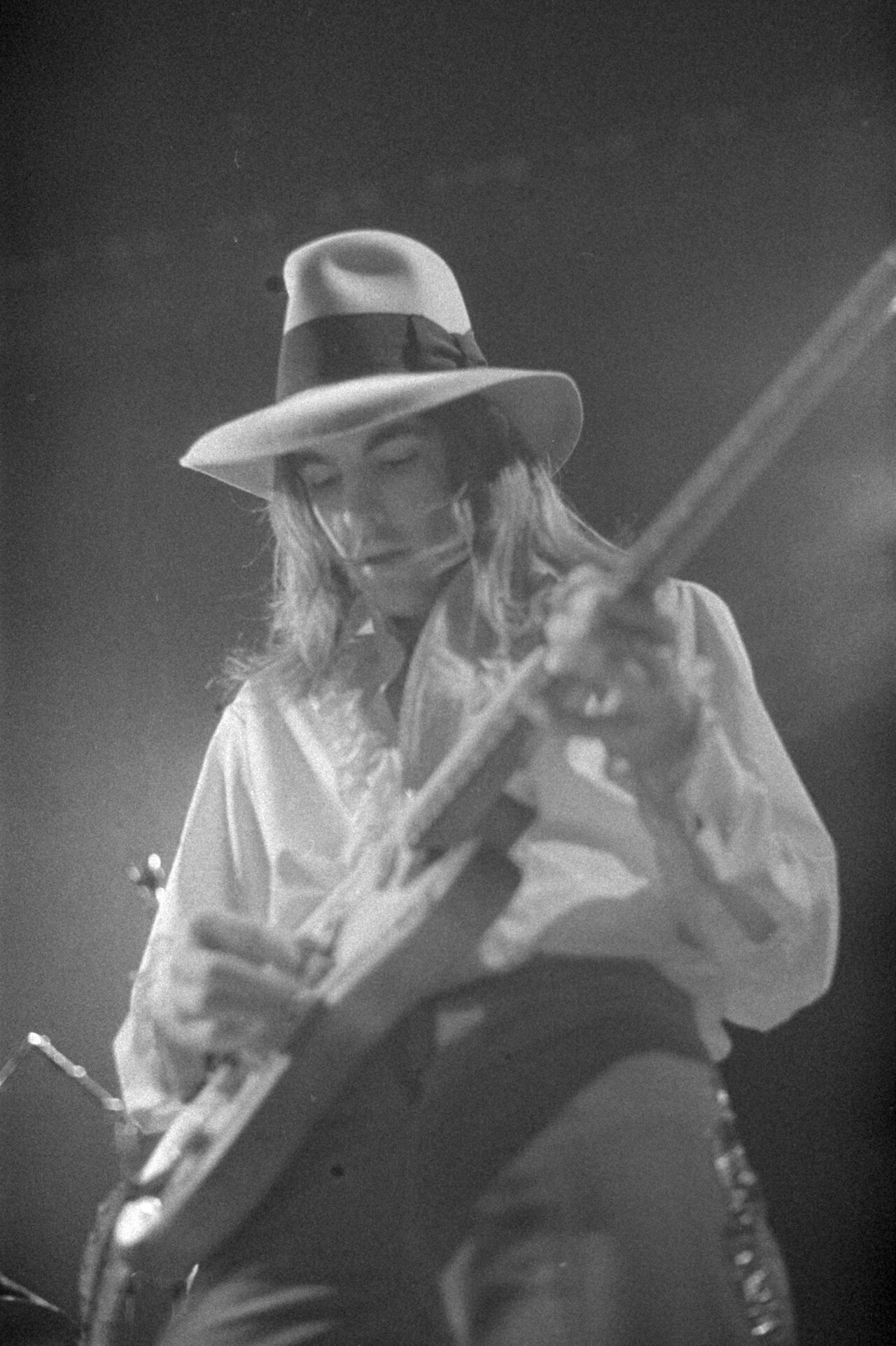
The wah-wah pedal wails, the Echoplex trails a ghost note into the void, and a Fender Stratocaster screams through a fuzz box in a Miami hotel room. It is the sound of a musician who refused to stay in one lane, a guitarist who moved from local Iowa bands to the world stage, only to have the story cut brutally short. Tommy Bolin, born on August 1, 1951, in Sioux City, Iowa, packed more musical exploration into his 25 years than most artists manage in a lifetime. His journey is not just a biography; it is a crate-digger’s treasure map, scattered with rare LPs, fusion experiments, and the heavy vinyl reissues that keep his flame burning.
Tommy Bolin, born on August 1, 1951, in Sioux City, Iowa, packed more musical exploration into his 25 years than most artists manage in a lifetime.
The Zephyr years and the Echoplex
The trail starts long before the arenas, in the mid-60s with a teenager grinding it out in local combos like Denny and the Triumphs and Patch of Blue. By 1969, the pull of a bigger scene dragged him to Denver, where he plugged into the blues-rock powerhouse Zephyr. The band’s self-titled debut that year and the 1971 follow-up Going Back to Colorado are the first artifacts. These albums capture a young player already pushing beyond standard blues licks, using the Echoplex not as a gimmick but as a textural paintbrush. For collectors, early Zephyr vinyl is the origin point, a raw document of a prodigy before the fusion fireworks truly began.
Restlessness defined him. Leaving Zephyr in 1971, he formed Energy, a unit soon renamed the Tommy Bolin Band, signaling a leader stepping out on his own. But the real left turn came in 1973 when he replaced Domenic Troiano in The James Gang. The resulting albums, Bang and Miami, are a shock to the system for anyone expecting straight-ahead boogie rock. Bolin injected a fluid, jazz-informed phrasing into the power-trio format. The Miami LP, in particular, is a sought-after piece, a document of a band in flux, caught between its gritty past and a more sophisticated, groove-laden future.
Fusion credibility with Cobham and Mouzon
That same year, 1973, Bolin made a move that cemented his credibility far beyond the rock circuit. He walked into the studio with jazz-fusion drummer Billy Cobham and laid down guitar parts for the landmark album Spectrum. His solos on tracks like 'Quadrant 4' and the hypnotic 'Stratus' are masterclasses in controlled fire, weaving through complex time signatures with a rock guitarist’s instinct for melody. A year later, he applied that same alchemy to Alphonse Mouzon’s Mind Transplant. These are not side projects; they are essential fusion documents, and original pressings are holy grails for those who understand Bolin’s full range.
The solo debut was inevitable. In 1975, Teaser arrived on Nemperor Records, a kaleidoscopic statement that mashed hard rock, funk, jazz, and Latin rhythms into a single, cohesive vision. The guest list alone is a crate-core fantasy: David Sanborn on sax, Jan Hammer on synthesizer, and future Deep Purple bandmate Glenn Hughes lending vocals. The album is a glorious, unclassifiable sprawl. For the modern collector, the 2013 Friday Music reissue on 180-gram vinyl is the definitive way to experience it, but the 2017 box set, The Definitive Teaser Collector’s Edition, is the ultimate prize, packed with unreleased tracks and live recordings that deepen the album’s mystique.
Replacing Blackmore in Deep Purple
The call from Deep Purple came the same year. Replacing Ritchie Blackmore was a seemingly impossible task, but Bolin didn’t try to imitate his predecessor. Instead, he steered the hard rock titans toward funk and soul on Come Taste the Band, released in October 1975. The album baffled some fans upon release, but its reputation has grown immensely, a unique entry in the Purple catalog driven by Bolin’s slippery, groove-centric riffs. As the band embarked on a world tour, the cracks appeared. Bolin’s struggle with heroin addiction deepened, a private battle playing out on the world’s biggest stages.
When Deep Purple imploded in 1976, Bolin immediately returned to his own work. The second solo album, Private Eyes, came out that year, featuring the powerhouse rhythm section of Carmine Appice and Bobby Berge. It is a tighter, more focused record than Teaser, and its 2014 vinyl reissue on the Culture Factory label made a long-out-of-print classic accessible again. He hit the road, opening for giants like Peter Frampton and Jeff Beck, his guitar work still dazzling, still searching. The music from this period, captured on posthumous live releases like 1997’s Live at Ebbets Field 1974, shows an artist in complete command of his instrument, even as his life spiraled.
The final, tragic note came on December 4, 1976, in Miami. A lethal combination of heroin and alcohol shut down the amplifier for good. He was 25. The silence that followed was filled by the archival work that defines a cult artist’s afterlife. The compilation The Bottom Shelf arrived in 1977, followed years later by The Ultimate: The Best of Tommy Bolin in 1989. Greg Prato’s 1996 biography, Touched by Magic: The Tommy Bolin Story, provided the narrative backbone, while the Tommy Bolin Foundation, established in 1999, ensured his legacy would offer practical support to musicians in need.
Today, 75 years after his birth in Sioux City, where a memorial plaque has stood since 2008, the physical artifacts of Tommy Bolin’s career are more alive than ever. His influence echoes in the playing of John Frusciante and Warren Haynes, but the real conversation happens on the turntable. A clean original pressing of Spectrum, a 180-gram Teaser, or a rare Zephyr LP is not just a record; it is a piece of a fusion language he helped invent. His was a career of connections—between rock and jazz, between the Fender and the Gibson Les Paul, between a small town in Iowa and the infinite possibilities of a single, sustained note.