← Feed · Читать эту историю по-русски →
The Electric Chair Was a Bassist's Idea
July 27, 2026
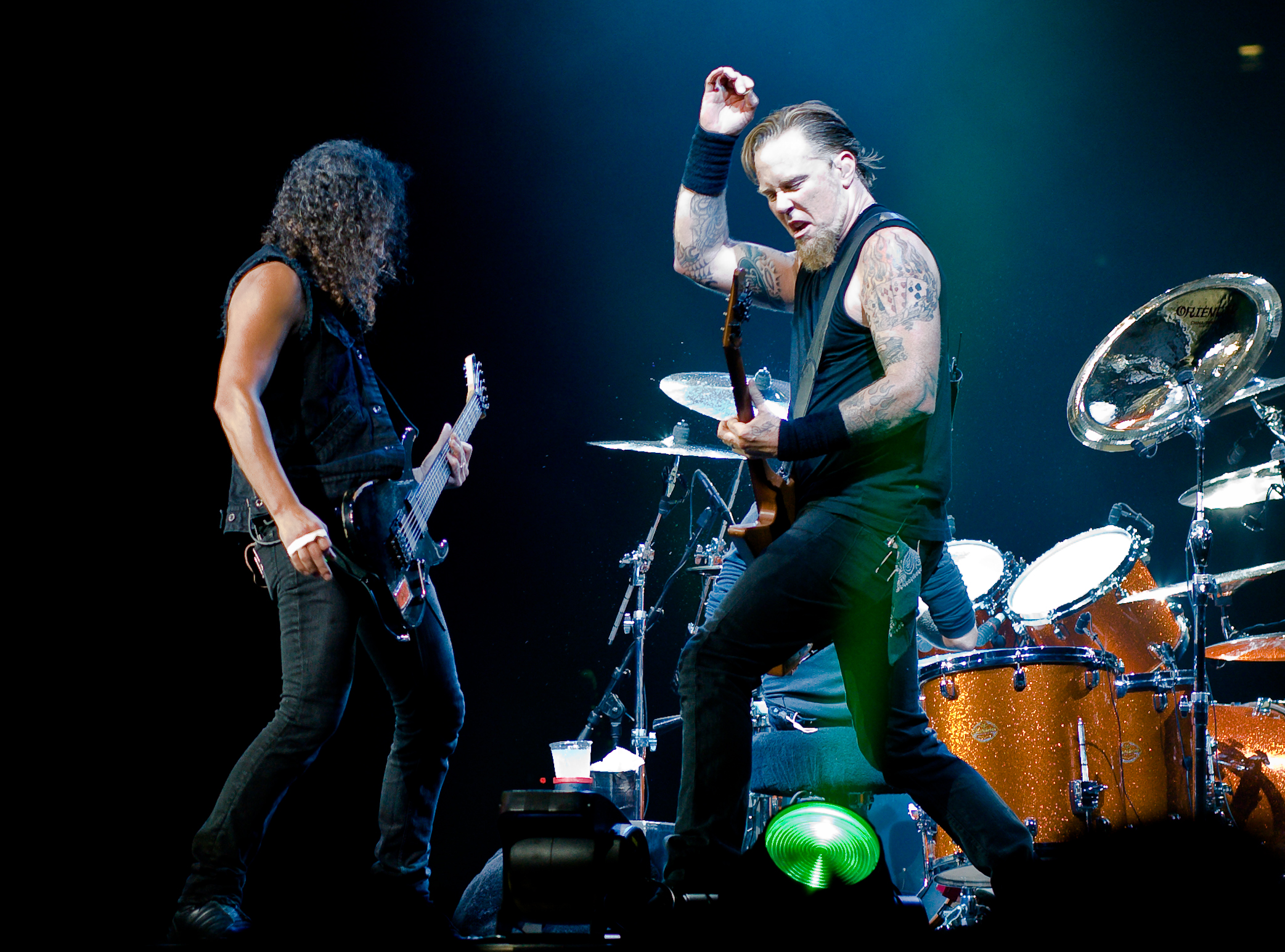
Фото: CrateCore
An acoustic guitar gently weeps for a few bars, then a wall of distortion swallows it whole. That violent shift opens an album whose title was dreamed up not by its frontman, but by its classically trained bass player. Metallica's second album, Ride the Lightning, arrived on July 27, 1984, and it immediately shattered the rulebook they had just helped write with their debut. Where Kill 'Em All was a raw sprint, this was a calculated drama in eight acts.
The band self-financed the recording after Megaforce Records failed to provide sufficient funds, scraping together roughly 30,000 dollars. They flew to Copenhagen and holed up in Sweet Silence Studios with producer Flemming Rasmussen. The lineup featured James Hetfield on vocals and rhythm guitar, Lars Ulrich on drums, Cliff Burton on bass, and for the first time, Kirk Hammett on lead guitar, who had replaced Dave Mustaine. Hammett was so new that Hetfield performed all the rhythm guitar parts himself, laying the foundation while the new soloist found his footing.
Burton's fingerprints are all over the record's expanded emotional palette. He brought a deep knowledge of classical music and harmony, pushing the band far beyond the thrash orthodoxy. It was Burton who suggested the album's title, and his bass work became a lead instrument in its own right. On For Whom the Bell Tolls, he ran his bass through distortion and a wah-wah pedal, crafting an intro that mimicked a death knell before the song, inspired by Ernest Hemingway's novel, crashes in.
The songwriting stretched into genuinely transgressive territory. Fade to Black was the band's first ballad, a slow-burning meditation on suicidal thoughts that scandalized a scene built on pure aggression. Fans accused them of selling out before the album even had a chance to chart. The accusation seems absurd now, but in 1984, a thrash band daring to be vulnerable was a confrontation all its own. The album's eight tracks were recorded in a blistering three-week sprint on analog equipment, giving the sound an organic warmth that digital recording of the era could not replicate.
The cover, created by AD Artists, fixed a single, chilling image in the mind: an electric chair strapped to a bolt of lightning in a storm-racked sky. Inside the sleeve, the lyrical themes were equally charged. The title track dissected the horror of the death penalty from a first-person perspective. Escape, a song the band openly disdained, was written under direct pressure from the label, who demanded something more commercial. The tension between artistic ambition and market expectation was already pulling at the seams.
The album's bookends show the full range of their new ambition. Fight Fire with Fire opens with that deceptive acoustic prelude before accelerating into a nuclear-thrash warning. The Call of Ktulu closes the record as an instrumental epic, its title a nod to H.P. Lovecraft, with Hammett's solos soaring over a churning rhythmic sea. Between them, Trapped Under Ice delivered pure panic about a man awakening from cryogenic suspension, while Creeping Death retold the biblical plagues of Egypt with a mosh-pit decree: the Die! Die! Die! bridge became an instant live ritual.
Creeping Death also yielded the group's first music video, a grainy artifact of a band still operating far from the mainstream. Ride the Lightning only crawled to number 100 on the Billboard 200 upon release. The commercial machinery of metal had not yet caught up to the music. Yet the album's influence was immediate and irreversible, proving thrash could hold melody, complex structures, and genuine pathos without sacrificing a single ounce of power. It forged a path that countless bands would follow through the rest of the decade.
The recording had a ghost in the machine. The title track was co-written with the ousted Dave Mustaine, though he received no credit. You can hear the DNA of a band in violent transition, one sound bleeding into another. Hammett tracked many of his solos on a Gibson Flying V, carving out a lead voice distinct from his predecessor's. By the time the final note of Ktulu faded, Metallica had not just made a second album; they had fundamentally redefined what a thrash metal record could be.
By 2012, the album had been certified six-times platinum in the United States, and Rolling Stone enshrined it among the 500 greatest albums of all time. A 2016 remastered reissue added bonus material for crate-diggers, but the original 47-minute sequence remains the definitive text. Forty-two years after its release, the electric chair still crackles with voltage, a testament to a moment when a young band paid for its own vision and wrote drama into a genre that had only known how to sprint.