← Feed · Читать эту историю по-русски →
The Day Pantera's Glam Died a Texas Death
July 24, 2026
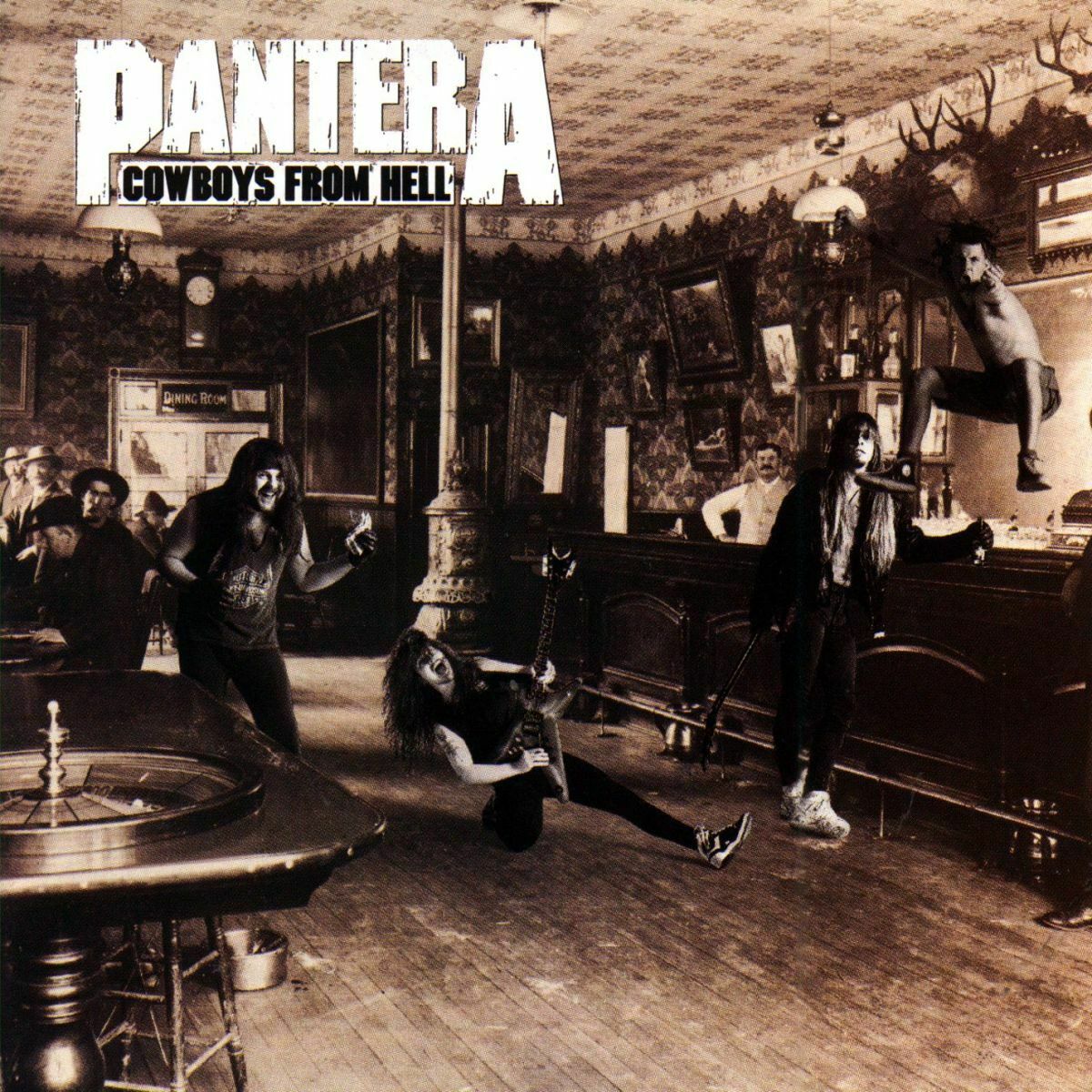
Фото: CrateCore
Inside Pantego Sound Studio, the air was thick with the smell of hot amplifiers and the tension of a band severing its own past. It was late 1989, and the four members of Pantera were laying down tracks for what would become their fifth studio album, 'Cowboys from Hell'. The group had spent the decade releasing glam-tinged metal on independent labels, a path that had earned them underground respect but no commercial breakthrough. This session, however, was different. It was their first for a major label, Atco Records, and the sound bleeding from the monitors was a deliberate, violent departure from the hairspray anthems of their early years.
The transformation was absolute. Formed in 1981, the band had once performed under the names Gemini and Eternity before settling on Pantera, carving out a niche in the underground scene with a style that borrowed heavily from the era's pop-metal excess. By the time they entered the studio with producer Terry Date, that identity was a corpse. The new material was heavier, meaner, and soaked in the aggression of thrash metal. A specific influence loomed large: Overkill's 1989 album 'The Years of Decay' had shown the band a path toward a pummeling, groove-laden attack that would define their new direction.
The recording sessions stretched from the end of 1989 into April 1990, a period of intense creative alchemy. Terry Date, who would become a long-term collaborator, co-produced and engineered the record alongside the band, with Matt Lane assisting as engineer. The lineup on the floor was a family affair of sonic destruction. Vocalist Philip Anselmo delivered a performance that was a world away from his earlier, higher-register style, while guitarist Dimebag Darrell, who also provided backing vocals, forged the dense, churning riffs that became the album's signature. The rhythm section was anchored by bassist Rex 'Rocker' Brown, who also contributed backing vocals, acoustic guitar, and piano, and drummer Vinnie Paul, whose thunderous footwork was captured with surgical precision.
When 'Cowboys from Hell' finally arrived on July 24, 1990, the immediate reaction was a slow burn rather than an explosion. The record, which marked the band's definitive break from glam metal, did not chart upon its release. It was a confounding silence for a major-label debut, but the music itself was a statement that refused to be ignored. The album didn't just lean into heaviness; it pioneered a new rhythmic sensibility. The locked-in, syncopated riffs moved away from thrash's breakneck speed, creating a head-nodding, punishing swagger that would later be canonized as the birth of groove metal.
The album's title track, translating to 'Cowboys from Hell', became an anthem of this new metal frontier. The songs were not just a collection of riffs but a manifesto of a band reclaiming its own identity. Both the musicians and the fanbase quickly began to regard this record as the group's unofficial debut, a hard reset that erased the four independent albums that came before it. The earlier work, recorded under the shadow of a different musical era, was rendered a prologue to the main event that began with this single, seismic release.
The commercial world eventually caught up with the noise. A full two years after its release, the album finally entered the charts in 1992, a delayed but undeniable validation. The slow build was a testament to the power of word-of-mouth and relentless touring. The album's reputation grew from the underground out, eventually earning double platinum status in the United States. This trajectory from a chartless debut to a multi-platinum landmark is a crucial part of the record's mythology, a story of conviction over immediate gratification.
The physical artifact itself has evolved into a collector's obsession. The original Atco Records vinyl and CD pressings are holy grails, but the expanded editions offer a deeper dive into the album's creation. A deluxe reissue includes a bonus CD featuring a live recording from the Foundations Forum, capturing the raw, onstage translation of the studio's power. The 'Alive and Hostile E.P.' is also included, but the most coveted treasure is the third disc in the Deluxe and Ultimate versions, which contains the original demo recordings of the 'Cowboys from Hell' tracks, offering a direct line to the sound being forged in that Texas studio.
The sonic architecture of the album, mastered by Howie Weinberg, is a key reason for its enduring legacy. The production is a massive, clean, and punishingly precise document of a band at its peak. The guitar tone Dimebag Darrell achieved, a solid-state, razor-sharp assault, became one of the most imitated sounds in heavy music. The rhythm section of Rex Brown and Vinnie Paul was not just a backing unit but a lead instrument, their interplay creating a groove that was both mathematically tight and viscerally loose. This recording is a masterclass in metal engineering, a benchmark for the genre's sound in the 1990s.
Thirty-five years after its release, the album is no longer just a record; it is a dividing line in heavy metal history. It is widely acknowledged as one of the greatest metal albums of the 1990s and one of the most influential of all time, a work that fundamentally altered the genre's direction. 'Cowboys from Hell' is the sound of a band killing its former self to become a monolith. The moment the needle drops on that opening riff, you are hearing not just a song, but the precise, violent moment when Pantera truly began.