
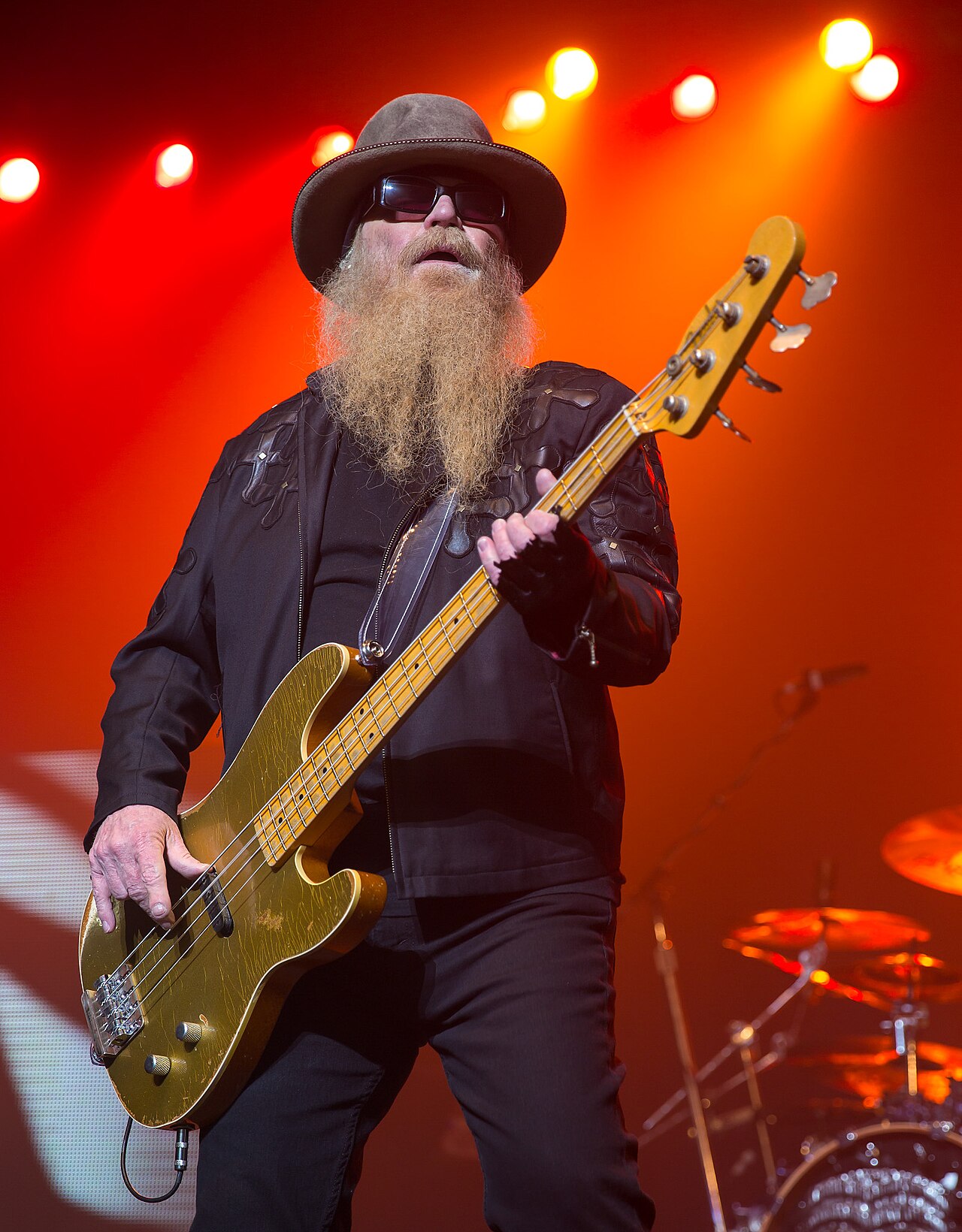
On a quiet night in Houston, Texas, Dusty Hill drifted into a sleep from which he never woke. It was July 28, 2021, and the bassist who had anchored ZZ Top for over five decades was gone at 72. His death, peaceful and sudden, closed a chapter that began in 1969 when he and drummer Frank Beard joined Billy Gibbons to form a trio that would sell 50 million records worldwide. Hill’s final wish was that the band continue, a command Gibbons and Beard still honor five years later.
The Dallas roots before the beards
Before the beards and the hot rods, Hill cut his teeth in the Dallas scene alongside his brother Rocky. They played in local Texas bands, most notably American Blues, a psychedelic outfit that also featured a young Frank Beard. When Gibbons’ own group, Moving Sidewalks, dissolved, the three musicians converged. The chemistry was immediate: Hill’s thick, overdriven bass tone, played with a pick, locked into Beard’s drums with a minimalist precision that would define ZZ Top’s sound.
The early years were a grind of Texas roadhouses and regional fame. Then came 'Tres Hombres' in 1973, the third album that changed everything. Its raw, blues-rock swagger caught fire, pulling the band from Lone Star bars onto national stages. The record’s success wasn’t just about Gibbons’ guitar heroics; it was Hill’s bass lines, simple and unshakeable, that gave songs their swagger. He understood that a single note, placed right, could move a crowd more than a flurry of them.
He understood that a single note, placed right, could move a crowd more than a flurry of them.
By the mid-1970s, the band’s visual identity began to solidify. Hill grew his iconic beard around the end of the decade, joining Gibbons in a follicular pact that became as famous as their music. The irony was never lost on fans: the only clean-shaven member was Frank Beard. Hill’s stage presence mirrored his playing—calm, almost motionless, a stark contrast to the pyrotechnics around him. He stood like a statue, letting his bass do the dancing.
The rare lead vocal on 'Tush'
In 1975, 'Fandango!' delivered one of the band’s most enduring anthems: 'Tush.' It was a rare moment for Hill, who stepped up to the microphone for lead vocals. His voice, gritty and unpretentious, was the perfect vehicle for the song’s barroom philosophy. The track became a live staple, a testament to Hill’s versatility in a band where Gibbons usually handled frontman duties. It remains a collector’s favorite, a raw slice of mid-70s vinyl that captures the trio at their loosest.
The 1980s brought a seismic shift. With producer Bill Ham still at the helm, ZZ Top embraced synthesizers and sequencers on 1983’s 'Eliminator.' The album was a commercial juggernaut, spawning hits like 'Gimme All Your Lovin’' and 'Legs,' both cracking the US Top 40. Hill’s bass adapted seamlessly, his tone now processed but still rooted in that gut-punching groove. The accompanying music videos, heavy on MTV rotation, turned the band into unlikely pop culture icons, their beards and a cherry-red hot rod becoming visual shorthand for the decade.
For vinyl collectors, 'Eliminator' is a fascinating artifact. Original pressings on Warner Bros. Records feature a stark, minimalist cover with the band’s signature car, a design that looked as sleek as the music inside. The album’s production, crisp and layered, was a departure from the rawer sound of 'Tres Hombres,' but Hill’s bass remained the anchor. Tracks like 'Legs' showcase his ability to drive a song with a single, hypnotic riff, proving that less is often more in the hands of a master.
Quiet passions and offstage life
Offstage, Hill was a man of quiet passions. He amassed a staggering collection of stage boots, hundreds of pairs filling his closets, each pair a relic of a show played. In 2000, he faced a health scare with a hepatitis C diagnosis, undergoing successful treatment that kept him on the road. A hip injury later in life forced him to miss a handful of concerts, with guitar tech Elwood Francis stepping in—a temporary fix that underscored Hill’s irreplaceability. His cameos in 'Back to the Future Part III' and the TV series 'Bones' revealed a sly sense of humor beneath the stoic exterior.
In 2004, ZZ Top entered the Rock and Roll Hall of Fame, a long-overdue recognition of their influence. The induction ceremony was a rare moment of public reflection for Hill, who typically let his bass do the talking. The 2012 documentary 'That Little Ol’ Band from Texas' offered fans a deeper look at the trio’s dynamic, capturing Hill’s dry wit and unshakeable calm. Today, his legacy lives on not just in the 15 studio albums he helped create, but in the feel of every bass line that chooses groove over flash.
Five years after his passing, Dusty Hill’s absence is still felt in the spaces between the notes. Gibbons and Beard continue to tour, honoring a promise made to a bandmate who never sought the spotlight but held the whole enterprise together. For crate diggers, a well-worn copy of 'Fandango!' or a pristine 'Eliminator' isn’t just a record—it’s a piece of that unbreakable rhythm section, a reminder that the quietest member often makes the loudest noise.