← Feed
Pyotr Mamonov: The Explosive Poet of Soviet Underground Rock
July 15, 2026
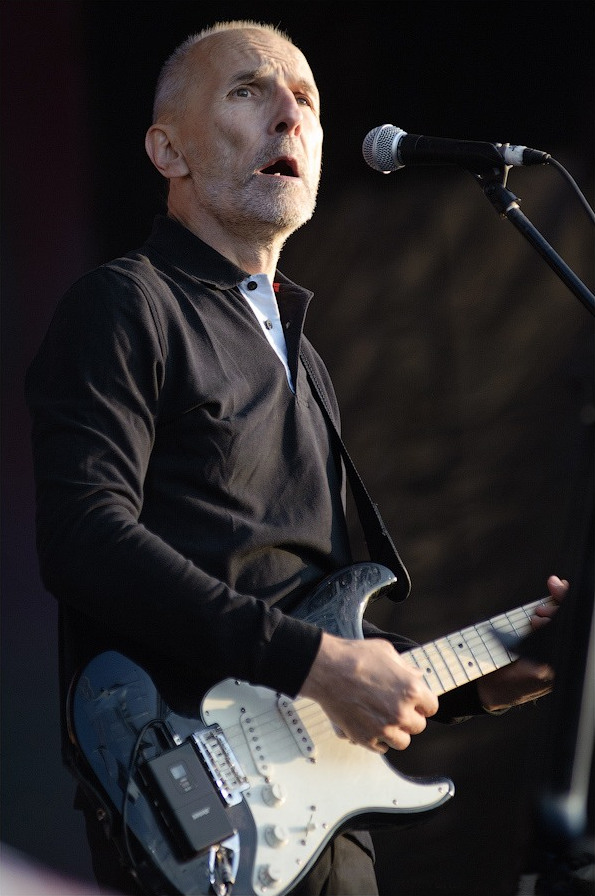
Дмитрий Рузов, CC BY-SA 3.0, via Wikimedia Commons (https://commons.wikimedia.org/wiki/File:Petr_Mamonov.jpg)
The boy who blew up his school’s chemistry lab would later become the voice of Soviet underground rock. Pyotr Mamonov, who died five years ago today, was a paradox incarnate — a street brawler with a poet’s soul, a lo-fi experimentalist who danced like Elvis, and a delinquent expelled from two schools who somehow became one of Russia’s most revered cultural figures. From the same courtyard where Vladimir Vysotsky grew up in Moscow’s Bolshoy Karetny Lane, Mamonov carved his own path through sound and fury.
Born in 1951 to an engineer father and Scandinavian languages translator mother, Mamonov’s childhood was marked by turbulence. His parents divorced when he was young, and his mother soon remarried Nikolai Bortnichuk, giving Mamonov a half-brother Alexei in 1958. The restless teenager channeled his energy into music, forming his first band Express — a group that twisted Western rock covers into something distinctly their own. Their renditions of Beatles and Rolling Stones songs carried an edge that foreshadowed Mamonov’s future sonic experiments.
The 1970s found Mamonov adrift in depression, but also on the cusp of his creative breakthrough. His childhood love of black R&B and soul fused with post-punk energy when he formed Zvuki Mu (Sounds of Mu) — the band that would define Soviet alternative rock. Their lo-fi aesthetic and experimental approach became legendary in underground circles, with Mamonov’s raw vocals and poetic lyrics cutting through the Iron Curtain’s cultural stagnation. His artistic restlessness knew no bounds, extending into poetry, translation, and eventually film.
A scar from his youth — the result of a vicious street fight — would later become visible in his unexpected acting debut. Twenty years after acquiring that abdominal wound, Mamonov appeared in the cult film 'The Needle', bringing the same intense physicality he’d shown since childhood. Whether dancing the twist with uncanny flexibility or channeling raw emotion on stage, his body was always an instrument of expression. This performance earned him critical acclaim, including the prestigious Nika and Golden Eagle awards in 2006.
Mamonov’s musical journey began in courtyard ensembles, where he perfected his rock and roll moves alongside childhood friend Alexander Lipnitsky. Even as a schoolboy, his explosive personality manifested literally — the homemade bomb he detonated near his chemistry classroom was just one of many stunts that got him expelled. Yet beneath the rebellious surface lay a deep artistic sensibility that found voice through multiple mediums, from his radio shows on Otdelenie VYHOD to his boundary-pushing musical compositions.
Zvuki Mu’s music defied easy categorization, blending elements of alternative rock, post-punk, and experimental noise into a uniquely Soviet sound. Mamonov’s lyrics, delivered with his signature growl, explored themes of alienation and existential dread that resonated powerfully with audiences living under late Soviet rule. The band’s DIY aesthetic and uncompromising vision made them icons of the underground, their influence growing even as official channels ignored them.
Mamonov’s personal style mirrored his artistic eclecticism. The teenage 'stilyaga' who once sported flashy Western-inspired outfits evolved into a bohemian figure whose very presence commanded attention. His physicality remained striking throughout his life — whether performing on stage, where his dance moves channeled the energy of his musical heroes, or on screen, where his intense gaze and weathered features told stories beyond the script.
Until his death in Moscow on July 15, 2021, Mamonov remained creatively restless. He continued recording music, performing, and exploring new artistic frontiers well into his later years. His legacy spans multiple disciplines — from the raw power of Zvuki Mu’s recordings to his acclaimed acting work, from his poetic translations to his influential radio programs. The rebellious boy from Bolshoy Karetny Lane had become a multidimensional artist whose work continues to challenge and inspire.
Five years after his passing, Mamonov’s influence remains palpable in Russian alternative music and beyond. His life embodied the contradictions of his era — the official Soviet narrative versus underground reality, Western influences filtered through Eastern sensibilities, violence and poetry coexisting in one explosive personality. From schoolyard brawls to cinematic acclaim, from distorted rock covers to genre-defining original compositions, Pyotr Mamonov’s journey was as unpredictable as it was impactful.