
A semi-truck plowed into her tour bus on a snowy Pennsylvania highway, snapping her spine. She was at the absolute peak — three Billboard Hot 100 number ones, a global crossover smash still ringing in every club, and a tour selling out arenas. That was March 20, 1990. Gloria Estefan, born Gloria María Milagrosa Fajardo García in Havana on September 1, 1957, lay in a hospital bed with a fractured cervical vertebra, facing a prognosis that didn't include walking, let alone dancing.
From Havana to Miami
She had already been pulled from one world. At sixteen months old, her family spirited her out of Cuba as the communist revolution consumed the island. Her father had been a bodyguard for the wife of President Fulgencio Batista — a detail that made staying behind unthinkable. Miami became the new ground. Decades later, the rhythms she carried from that lost Havana would reshape American pop radio, but first she had to learn English and navigate a city teeming with exiles.
The Miami Latin Boys were a wedding-band operation when she joined as lead vocalist. Emilio Estefan, the group's founder, saw something in her contralto that cut through the noise of late-night gigs. They married, renamed the act Miami Sound Machine, and spent years grinding through Spanish-language material. The switch to English wasn't a sellout — it was a calculation. By 1984, she was already headlining solo shows across the US and Latin America, testing how far that voice could travel.
The drum break that changed everything
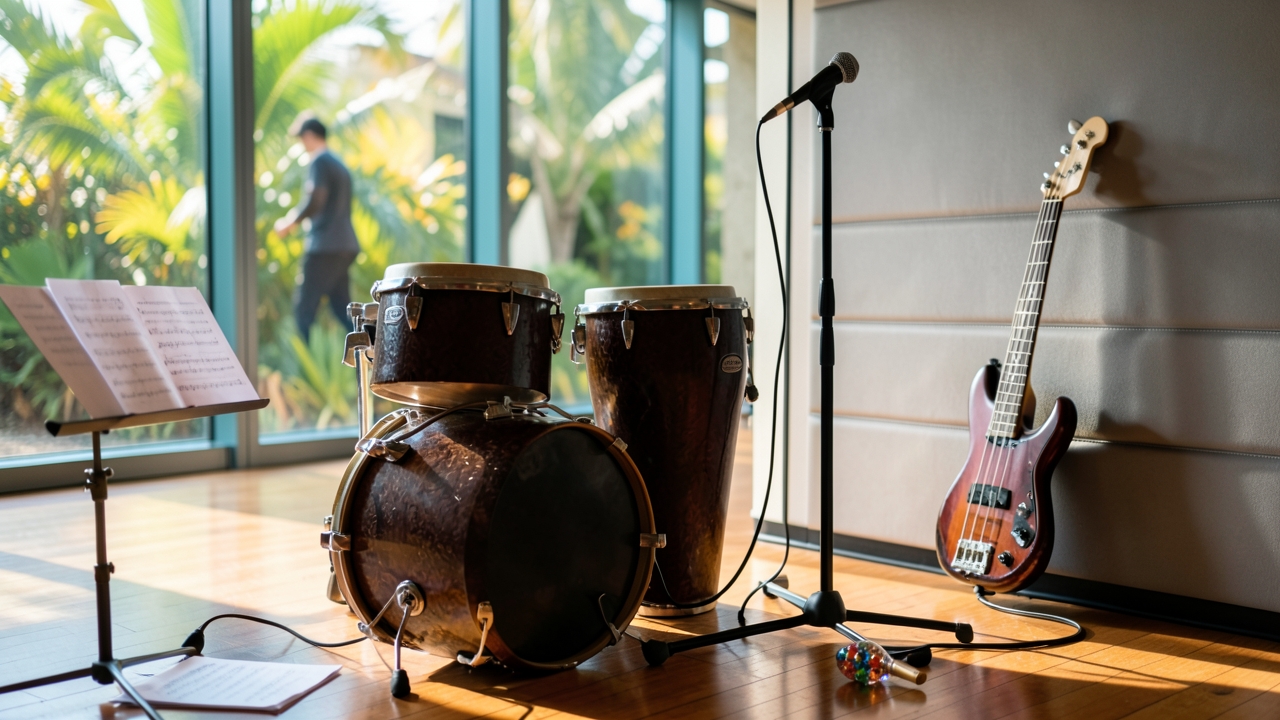
Then came the drum break. 'Conga' detonated in 1985 — a relentless, syncopated charge that fused Latin percussion with dance-pop architecture. It wasn't just a hit; it was a border incursion. The single dragged a whole hemisphere's rhythm onto mainstream American airwaves, and the follow-ups came fast: 'Bad Boy,' 'Anything for You,' '1-2-3.' Each one tightened the grip. By 1987, the album Let It Loose officially rebranded the project as Gloria Estefan and Miami Sound Machine.
The solo leap arrived in 1989 with Cuts Both Ways. The title was a quiet thesis statement — an artist fluent in two languages, two cultures, two emotional registers. The record spun off 'Don't Wanna Lose You,' a ballad that climbed to the top of the Hot 100. She was a five-time Grammy winner by this point, a designation that barely captures the machinery she'd built: over 120 million records sold worldwide, a figure that places her among the best-selling music artists in history.
The crash and the titanium rods
Then the highway. The crash fractured her cervical spine in a way that threatened paralysis or death. Surgeons implanted two titanium rods to stabilize her vertebrae. The rehabilitation was grueling, measured in months of silence and incremental movement. The industry assumed the story was over — a brilliant arc cut short at thirty-two. But the woman who had crossed from Havana to Miami as a toddler had already survived one impossible transition.
The industry assumed the story was over — a brilliant arc cut short at thirty-two.
She returned to the stage less than a year later, walking. The comeback tour was a defiance of medical expectation, and the albums that followed — Into the Light, Mi Tierra, Abriendo Puertas — expanded her reach further. The Spanish-language Mi Tierra became a landmark, earning a Grammy and proving that the English crossover had never erased the foundation. VH1 and Billboard both enshrined her among the 100 greatest artists of all time, a recognition that spans genres and languages.
Her voice is a contralto, an instrument with a dusky warmth that can pivot from a whisper to a full-throated belt without breaking texture. That voice has carried her into film, television, and a business empire built alongside Emilio. She holds the Presidential Medal of Freedom. She has sold more than 100 million records. The numbers are staggering, but they flatten the real architecture: a career built on a fault line between two cultures, then rebuilt after a near-fatal collision.
Epic Records pressed Cuts Both Ways in 1989, and those original vinyl copies carry a peculiar weight now — a document of the moment right before everything nearly ended. She turns 69 today, in 2026, a lifetime removed from the Havana of 1957 and thirty-six years past the crash that should have silenced her. The question that lingers isn't how she survived the truck or the exile or the industry's appetite for reinvention. It's what she heard in that 'Conga' drum break back in 1985 that made the rest of the world finally start listening.