
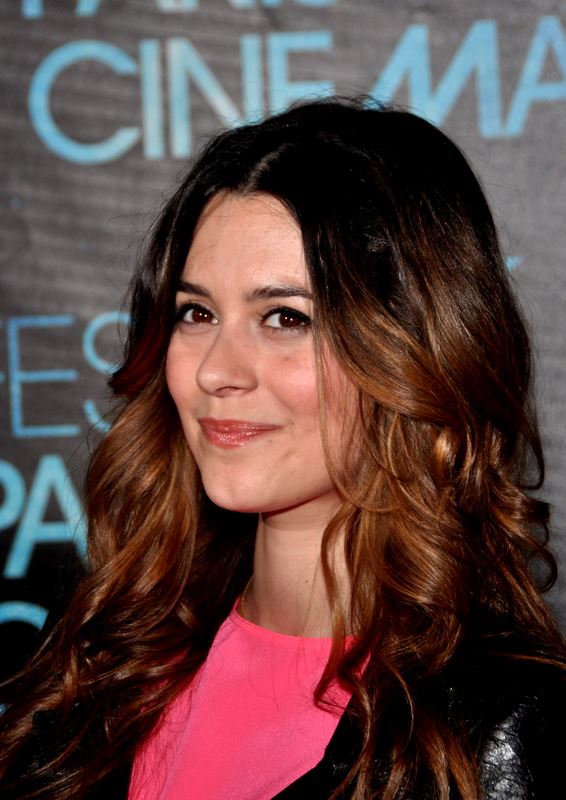
A conservatory-trained opera singer crafting glitchy electronic pop — Émilie Simon shattered expectations from her debut. Born in 1978 in Montpellier to a sound engineer father and concert pianist mother, she spent seven years studying classical voice before diving into musique concrète at IRCAM. This collision of disciplines would define her sound: pristine vocal technique meets synthetic textures and pulsing rhythms.
This collision of disciplines would define her sound: pristine vocal technique meets synthetic textures and pulsing rhythms.
A debut that charted for years
Simon's self-titled 2003 debut became an instant cult classic, blending trip-hop beats with whispered French lyrics about deserts and flowers. The album's lead single 'Désert' showcased her signature duality — a bilingual track sharing one hypnotic music video across language versions. Critics praised its icy sophistication, while French audiences kept it charting for nearly four years.
What set Émilie Simon apart was her academic rigor. After conservatory training, she pursued musicology at Sorbonne before specializing in electronic composition. This technical foundation allowed her to treat synthesizers like classical instruments, layering complex arrangements beneath deceptively simple pop melodies. Universal Records took notice, signing her as both artist and music executive.
From Victoire de la Musique to national icon
2004 brought unexpected validation — the Victoire de la Musique for Best Electronic Album, France's equivalent of a Grammy. Suddenly the experimental composer became a national icon. She capitalized on this momentum with relentless touring across France and avant-garde television appearances, bringing left-field electronica to mainstream audiences.
By 2006, Simon set her sights on America. Her November release 'The Flower Book' repackaged early work for U.S. listeners, followed by a minimalist tour through New York and Los Angeles. Stateside critics marveled at how her French intellectualism translated into visceral electronic landscapes. The album became a vinyl collector's gem for its lush packaging.
Multimedia ambitions and film scoring
Her 2007 sophomore effort 'La Marche De l’Empereur' revealed new ambitions — fusing documentary film scoring with her signature electronic pop. Simon began treating albums as multimedia projects, with each vinyl release including elaborate visual components. This period marked her shift from musician to full-fledged auteur.
What makes Simon's records endure is their tactile quality. In an age of digital streaming, her LPs reward physical interaction — gatefold sleeves with embossed lettering, lyric sheets resembling poetry collections. The crackle of vinyl perfectly complements her grainy synth textures and intimate vocal delivery.
Now turning 48, Simon continues evolving. Recent years have seen her scoring films while maintaining an experimental pop career across continents. Her influence resurfaces in artists like L’Impératrice and Charlotte Gainsbourg, who blend literary French lyricism with electronic production. Yet no one replicates her particular alchemy of conservatory precision and synthetic playfulness.
For collectors, early Émilie Simon pressings remain holy grails — particularly the original 2003 LP with its minimalist cover depicting the singer half-submerged in water. It captures her essence: part human vulnerability, part otherworldly machine. As vinyl culture revives, a new generation discovers how she anticipated today's genre-fluid landscape.