
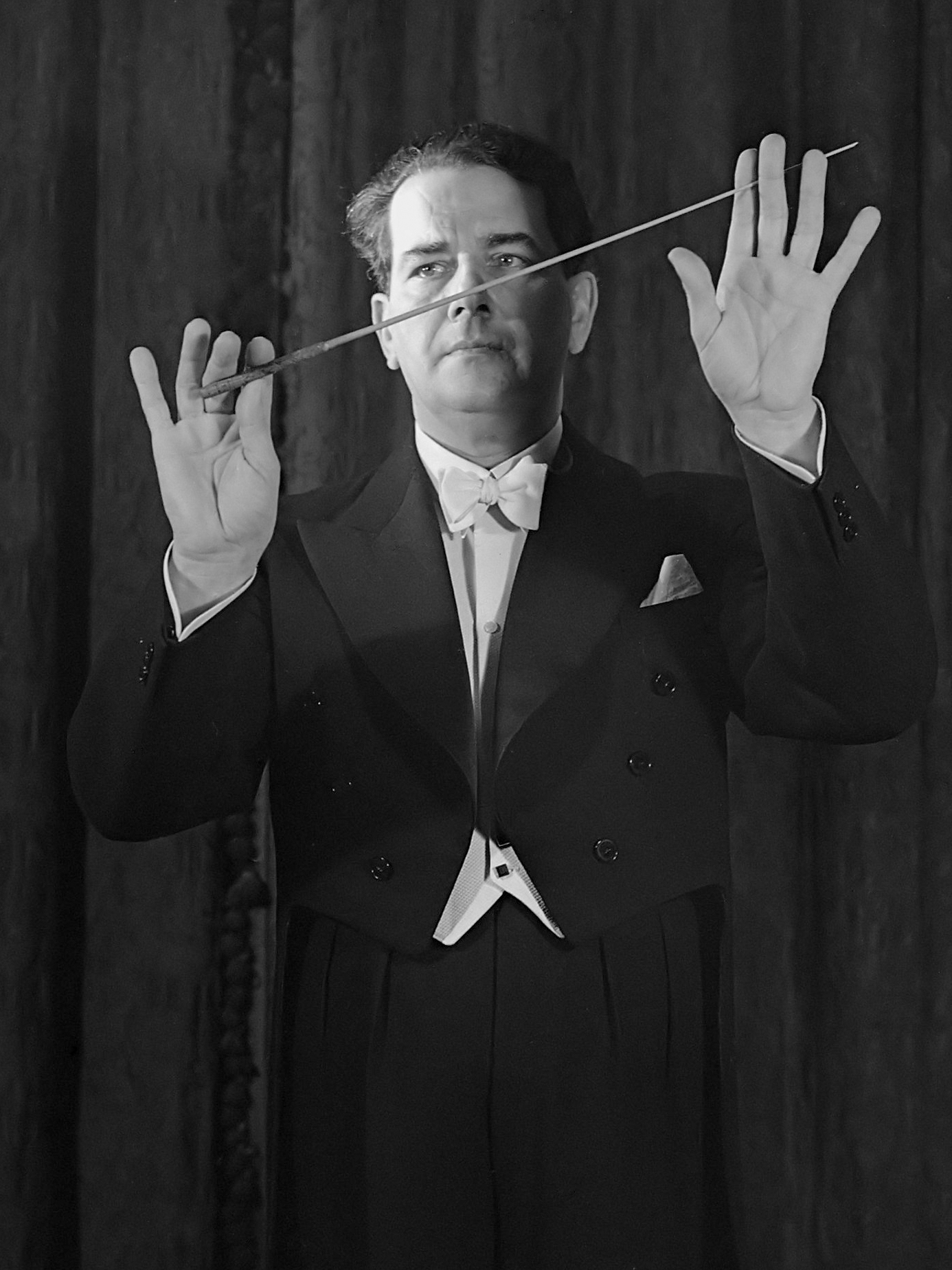
In 1943, a charity concert in occupied Amsterdam came with a condition no musician could ignore — and one conductor chose to reject it outright. Eduard van Beinum, then co-chief conductor of the Concertgebouw Orchestra, refused to lead a benefit performance for the Nazi regime. He threatened to resign if forced. It was a quiet, career-threatening act of defiance from a man whose entire life had been shaped inside Dutch orchestras, and it would define the moral weight he carried into the postwar era.
A family trade in Arnhem
Born in Arnhem on September 3, 1900 — 126 years ago this year — Eduard Alexander van Beinum grew up in a household where music was the family trade. His grandfather conducted a military band. His father played double bass in the Arnhemse Orkest, the local symphony orchestra. Three brothers would also become musicians. The boy took violin and piano lessons early, absorbing the discipline and repertoire that would carry him from the string section to the podium.
By 1918, van Beinum was a violinist in the Arnhem Orchestra, the same ensemble where his father had performed. He and his brother Ko, a violinist, formed a duo — violin and piano — that gave them a chamber music partnership lasting years. But van Beinum was already reaching beyond the bow. While studying at the Amsterdam Conservatory, he began conducting amateur ensembles in Schiedam and Zutphen, and took charge of the choir at Amsterdam's St. Nicholas Church.
The path to the Concertgebouw podium
His first official conducting post came in 1925 in Zutphen, where he led both the Zutphensche Orkest Vereeniging and the Toonkunstkoor choir. Two years later, he moved to the Haarlem Orchestral Society, a step up that brought him closer to the country's musical center. The real breakthrough arrived in 1929, when he was invited to guest-conduct the Concertgebouw Orchestra for the first time. The invitation was a signal: the young conductor from the provinces had caught the attention of the institution that would define his life.
In 1931, van Beinum joined the Concertgebouw Orchestra officially as second conductor, working under the formidable Willem Mengelberg. By 1938, he had been elevated to share the chief conductor's post with Mengelberg himself. The arrangement placed him at the heart of one of Europe's great orchestras, but it also positioned him directly alongside a figure whose wartime choices would soon cast a long shadow over Dutch musical life.
The 1943 stand and its aftermath
The 1943 refusal to conduct the Nazi benefit concert was not van Beinum's only moment of friction with the occupation, but it was the most explicit. He made his position clear: force the performance, and he would walk away from the orchestra entirely. The concert did not happen with him on the podium. When the war ended and denazification proceedings began, Mengelberg was banned from conducting in the Netherlands. Van Beinum received a reprimand — and kept his post.
From 1945 until his death, van Beinum led the Concertgebouw Orchestra as its sole chief conductor. The postwar years were a period of rebuilding, and his steady, unflashy leadership suited the moment. He was not a showman in the Mengelberg mold. His interpretations favored clarity, warmth, and structural integrity over grand rhetorical gestures. The Decca label captured much of this work, building a recorded legacy that documented his long tenure with the orchestra.
The recordings reveal a conductor who trusted the music to speak without excessive intervention. His Bruckner symphonies with the Concertgebouw have a patient, luminous quality. The Brahms cycle breathes naturally. Even in the monaural era, the sound Decca engineers achieved with van Beinum had a transparency that matched his interpretive approach. These were not performances that demanded attention — they simply held it.
He died in Amsterdam on April 13, 1959, at 58, still in the post he had refused to surrender under pressure sixteen years earlier. His brother Ko, the violinist who had been his duo partner since their Arnhem days, outlived him. The question that lingers is not about the music van Beinum made, but about the silence he imposed on himself after the war — he rarely spoke publicly about the 1943 stand, leaving it as a private line drawn in a dark time, never to be retraced.