
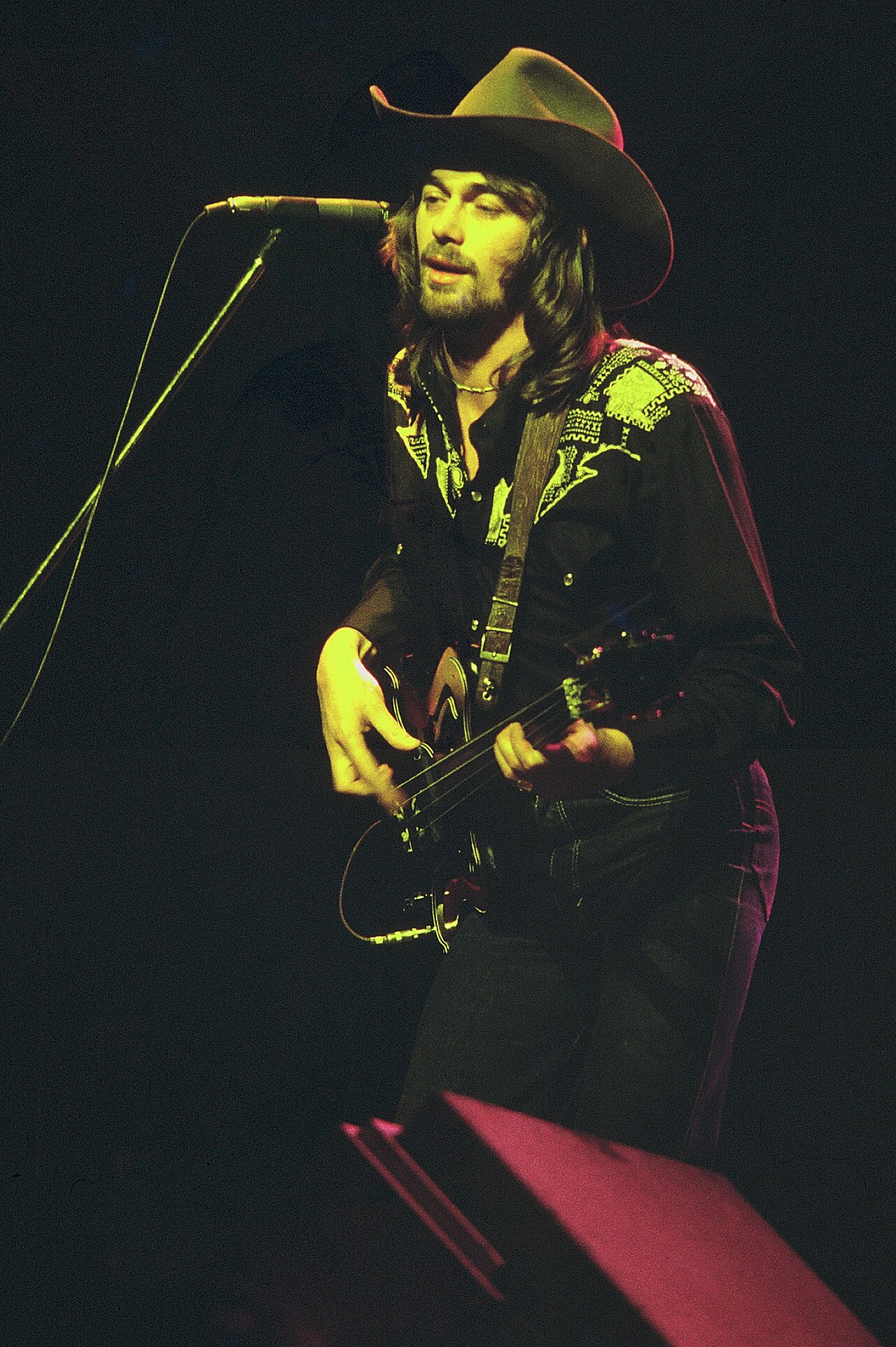
A Fender Precision Bass, a request from Robert Fripp, and a man who had never played the instrument before. That was the starting point for Boz Burrell’s unlikely journey into progressive rock history. Born on August 1, 1946, Burrell was a vocalist by trade, having fronted the jazz project Centipede under Keith Tippett. But in 1971, when he joined King Crimson, everything changed. Fripp, the band’s guitarist and mastermind, needed a bassist, and he saw something in Burrell. The catch? Burrell didn’t know how to play bass. The solution was as bold as it was absurd: he would learn on the job.
Learning bass while the tape rolled
King Crimson was in flux. They had just parted ways with vocalist Gordon Haskell, and Burrell was brought in to sing. But the bass chair remained empty, and Fripp, known for his exacting standards and unconventional methods, decided to mold Burrell into the role. Rehearsals and recording sessions became a crash course in bass guitar. Burrell absorbed the instrument in real time, his fingers finding the fretboard as the tape rolled. The result was 'Islands,' the 1971 album that stands as his only studio release with the group. It’s a record where vulnerability and ambition collide, and Burrell’s nascent basslines carry a raw, unpolished charm.
The 'Islands' sessions were a trial by fire. Burrell’s bass parts are simple but effective, supporting the album’s melancholic textures and Fripp’s intricate guitar work. Tracks like 'Formentera Lady' showcase a player feeling his way through the music, locking in with drummer Ian Wallace. That same lineup also produced the live album 'Earthbound,' released in 1972, capturing the band’s chaotic energy on stage. Burrell’s time in King Crimson was brief—he left the group in 1972—but it forged a bassist out of a singer, a transformation that remains one of progressive rock’s most curious footnotes.
From prog complexity to stadium rock
After the Crimson experiment, Burrell didn’t retreat to vocals. Instead, he co-founded Bad Company in 1973, a supergroup of sorts that paired him with former Free members: vocalist Paul Rodgers, guitarist Mick Ralphs, and drummer Simon Kirk. The band’s chemistry was immediate. Where King Crimson was cerebral and experimental, Bad Company was all about groove and muscle. Burrell’s bass became the anchor for a sound that blended hard rock with blues-rock swagger. It was a complete reinvention, and it would soon dominate stadiums across the globe.
The debut album, simply titled 'Bad Company,' arrived in 1974 and hit number one on the Billboard 200. Recorded in just two weeks and self-produced, it’s a masterclass in efficiency and power. Burrell’s basslines on hits like 'Can’t Get Enough' and the moody 'Bad Company' are deceptively simple, yet they drive the songs with a melodic punch. His playing on the album reflects his rapid evolution from a novice in Crimson to a confident rock sideman. The record’s success cemented the group as one of the biggest stadium acts of the 1970s, and Burrell’s low-end rumble was a key ingredient.
The classic Bad Company run
Throughout the decade, Burrell laid down bass for every classic Bad Company album. 'Straight Shooter' in 1975, 'Run with the Pack' in 1976, 'Burnin’ Sky' in 1977, and 'Desolation Angels' in 1979 all feature his work. His style was never flashy; instead, it was defined by melodic sensibility and a thick, warm tone from his Fender Precision Bass. Songs like 'Feel Like Makin’ Love' and 'Shooting Star' benefit from his ability to serve the song, a skill honed in the pressure cooker of King Crimson. These records sold millions, and Burrell’s bass was the glue holding together Rodgers’s soaring vocals and Ralphs’s gritty riffs.
Bad Company’s reign lasted into the early 1980s, with Burrell remaining a core member of the classic lineup. But the story didn’t end there. In 1999, he reunited with the band for new recordings and a tour, proving that the chemistry was still intact. The reunion brought his bass back to the forefront, reminding fans of the instrument’s role in the group’s sound. It was a full-circle moment for a musician who had once been thrust into the bass role out of necessity. By then, his legacy was secure, both with prog enthusiasts and rock fans who packed arenas.
Burrell’s career is a study in contrasts. He moved from the avant-garde jazz of Centipede to the complex prog of King Crimson and then to the straightforward rock of Bad Company, all while switching from vocals to bass. His death on September 21, 2006, from a heart attack at his home in Spain at age 60, closed the book on a life defined by adaptation. For collectors, his work is spread across a handful of essential vinyl artifacts: the textured gatefold of 'Islands,' the iconic sleeve of 'Bad Company,' and the string of 1970s LPs that charted a band’s rise to fame.
Eighty years after his birth in 1946, Boz Burrell’s story resonates with a simple truth: sometimes the best musicians are made, not born. His bass playing, forged in the crucible of Robert Fripp’s demands, became the foundation for some of rock’s most enduring anthems. Whether it’s the quiet menace of 'Bad Company' or the driving pulse of 'Can’t Get Enough,' his lines are etched into vinyl history. That Fender Precision Bass, once an unfamiliar tool, ended up speaking a language that millions understood.
His bass playing, forged in the crucible of Robert Fripp’s demands, became the foundation for some of rock’s most enduring anthems.