← Feed · Читать эту историю по-русски →
Before the Algorithm Knew the Word Indie
July 27, 2026
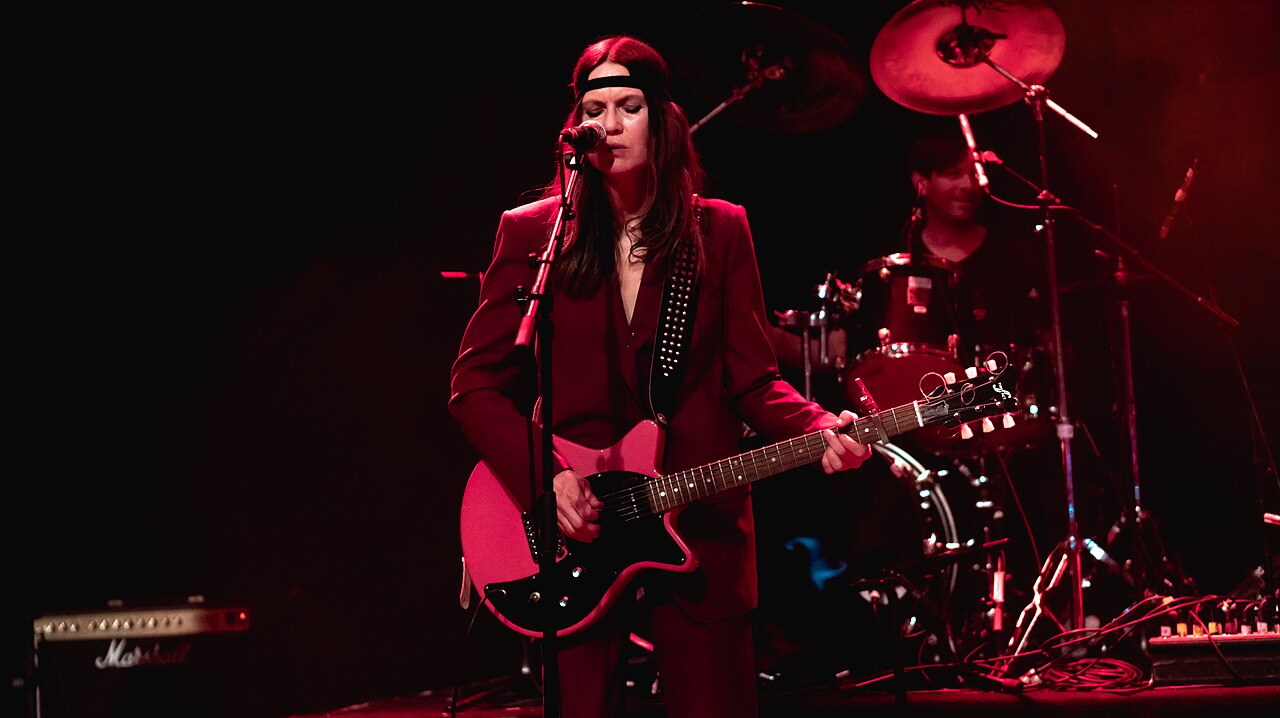
Фото: CrateCore
The sticker on the 1992 Mammoth Records cassette of 'Hey Babe' didn't promise a movement. It just had a black-and-white photo of a woman with wide eyes, holding a guitar like a shield. Juliana Hatfield, born on July 27, 1967, in Boston, was already a known quantity in certain dorm rooms and basement shows from her time in Blake Babies. But this solo debut was a different kind of artifact. It was a lo-fi transmission from a bedroom that felt like a bunker, a record that defined indie before the word became a playlist mood. The sound was raw, the lyrics were disarmingly direct, and the physical object itself felt like a secret you'd mail to a friend.
The Blake Babies story is a masterclass in the pre-internet indie hustle. Formed in 1987 in Boston, the trio of Hatfield, John Strohm, and Freda Love built a catalog of jangly, bittersweet guitar pop that was out of step with the hair metal and nascent grunge of the era. Their three albums—'Nicely, Nicely' (1987), 'Earwig' (1989), and 'Sunburn' (1990)—are now crate-digger gold, especially the early pressings on small labels. By 1991, the band dissolved, leaving behind a discography that sounded like the last days of summer. For Hatfield, it was a prologue. The real excavation of self was about to begin, and it would be captured on a solo record that felt like a diary left open on a four-track.
'Hey Babe' emerged in 1992, a 34-year-old artifact that still sounds startlingly present. Produced by Gary Smith, the album was a nexus of the early '90s Boston scene. The credits read like a who's-who of college rock royalty: members of Pixies and Lemonheads drifted through the sessions, adding texture but never overpowering Hatfield's singular vision. The single 'Everybody Loves Me But You' was a sharp, almost uncomfortably honest plea wrapped in a fuzz-toned melody. Lyrically, it established her territory—the quiet anxieties and awkward confessions that mainstream pop ignored. The vinyl edition of this record is a particular prize, a snapshot of a moment when an artist could build a world with a few chords and a lot of nerve.
If 'Hey Babe' was a whisper, 'Become What You Are' was a statement. Released in 1993, the album was credited to The Juliana Hatfield Three, a power trio featuring Todd Philips on drums and Dean Fisher on bass. This was no longer a solo project with guests; it was a band with a gut-punch sound. The record became her most commercially successful, driven by the single 'My Sister'. The song was a kinetic blast of unresolved sibling tension that somehow hit number one on the Modern Rock Tracks chart. For collectors, finding a clean original pressing of this album is a rite of passage—it's the sound of alternative rock's last golden moment before the major label feeding frenzy.
The raw nerve of 'My Sister' resonated because it wasn't a metaphor. Hatfield's songwriting on 'Become What You Are' dissected personal relationships with a forensic, almost uncomfortable clarity. This was not the detached irony of many of her peers. The album's production, crisp but never slick, gave her voice a central, vulnerable presence. The trio format stripped away any excess, leaving a rhythm section that pushed her guitar playing into sharper focus. It is a record that feels like a conversation you can't escape, and on vinyl, the warmth of the mastering envelops that tension in a way digital files never quite capture.
The commercial peak was followed by a swift, brutal comedown. The 1995 album 'Only Everything' was a darker, more abrasive record, and its release coincided with a personal unraveling. Hatfield stepped away from the machine, grappling with depression and a draining label dispute. The silence that followed was not a retirement but a necessary collapse. When she finally returned in 1998 with 'Bed' on Zoë Records, the landscape had changed. The album was a hushed, fragile collection of songs that traded the fuzz of her earlier work for a more spacious, haunted sound. It is a crucial, often overlooked piece of her discography that reveals the cost of the earlier noise.
The 2000s became a study in creative survival, a period that makes her catalog a fascinating labyrinth for collectors. In 2000, she pulled a rare trick, releasing the introspective 'Beautiful Creature' while simultaneously unleashing 'Total System Failure' under the noisy alter ego Juliana's Pony, recorded with the band Some Girls. This duality—the melodic and the abrasive—was not a contradiction but a core feature. The reunion with Blake Babies for 2002's 'God Bless the Blake Babies' and the raw, self-produced 'Made in China' in 2005 showed an artist refusing to be a nostalgia act.
The 2010s brought a startling second act defined by ferocious clarity. The 2014 reunion with The Juliana Hatfield Three for 'Whatever, My Love' recaptured the feral energy of 'Become What You Are' without a hint of pandering. Then came the one-two punch of 'Pussycat' in 2017, a politically scorched record released 39 years after her birth, and a 2018 album of Olivia Newton-John covers that treated the source material with deadly seriousness. These were not comeback records; they were transmissions from an artist who had learned that the only way to make a life in music was to ignore the algorithm.
Her 2021 album 'Blood' stands as a testament to a career built on a lo-fi ethos and fiercely independent songwriting. Juliana Hatfield, who often plays most of the instruments on her records, has created a body of work that influenced a generation of '90s indie rockers. Her collaboration with Evan Dando on the Lemonheads' 'My Drug Buddy' and the Minor Alps project with Matthew Caws in 2013 are just footnotes in a story about endurance. The physical records—the warped-sounding early Blake Babies EPs, the pristine pop of the Mammoth years, the self-released experiments—are a tangible history of an artist who never needed a filter to be heard.