
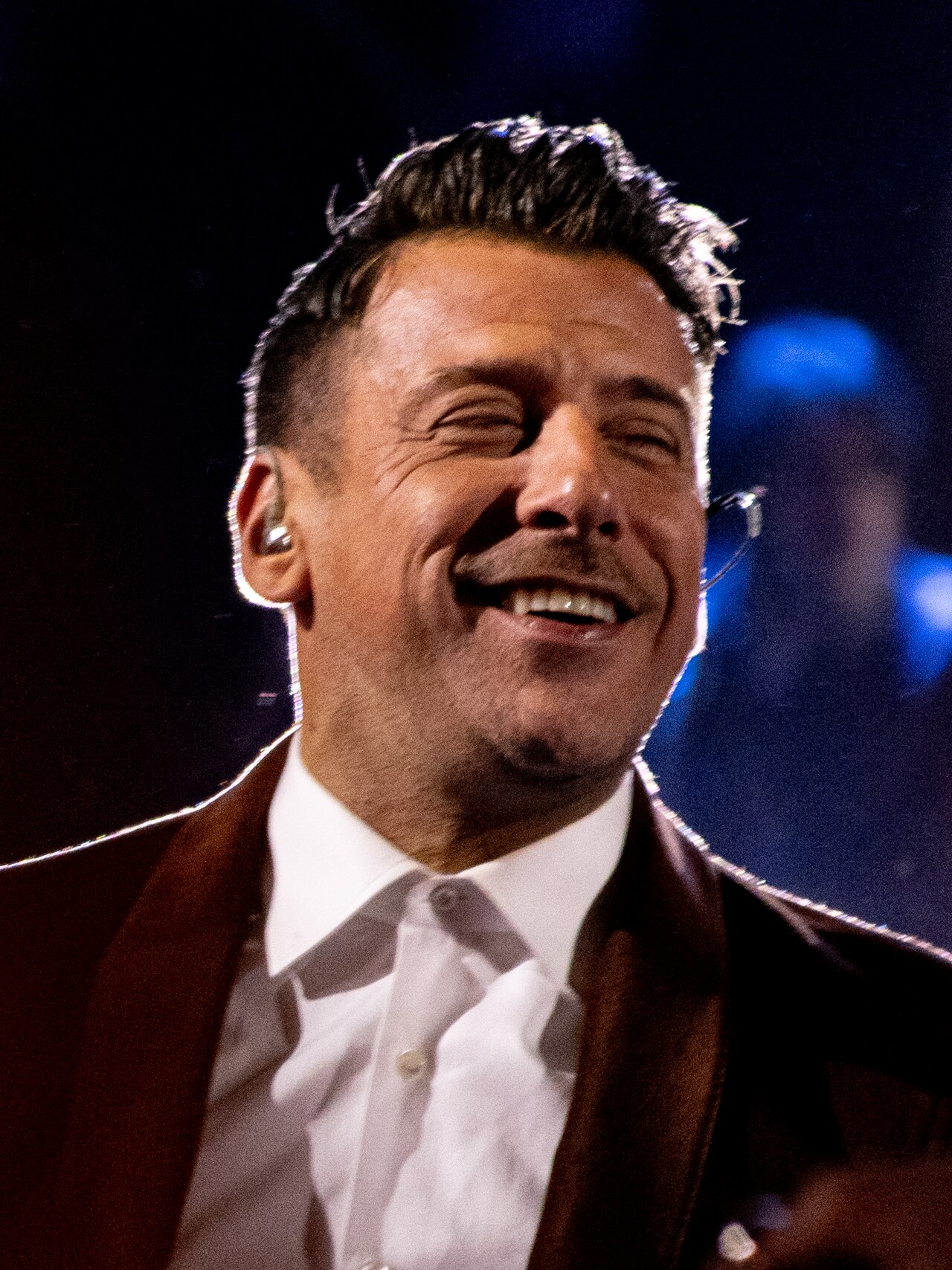
A four-year-old boy sits behind a drum kit in a music shop in Carrara. The sticks are too big for his hands, but the rhythm is already there — instinctive, physical, untaught. The shop belonged to his father, and for Francesco Gabbani, born on September 9, 1982, it was the only playground that mattered. Guitars hung on the walls like family portraits. Keyboards gathered dust in the back room, waiting for someone to press their keys. By nine, he had moved from percussion to six strings. By his teens, he could make noise on piano and bass too. This was not a prodigy story — it was a child who simply never left the store.
The backstage education of a multi-instrumentalist
Most Italian teenagers obsess over football or scooters. Gabbani obsessed over American blues, funk, and jazz — music that felt foreign and raw in a coastal Tuscan town known for marble quarries, not groove. He played in local bands, soaked up everything from Stevie Wonder's harmonic language to the grit of Chicago blues. Before he ever stood in front of a microphone as a solo artist, he worked behind the scenes — acoustic technician, stage tech, the guy who sets up the gear while the audience files in. That backstage education taught him something conservatories rarely do: how sound actually behaves in a room.
At eighteen, still a student at the 'E. Repetti' school in Carrara, Gabbani signed his first contract. The project was called Trikobalto, conceived by Alex Neri and Marco Baroni of Planet Funk — two producers who knew how to fuse club culture with Italian songwriting. Their videos hit rotation on Italy's major music television channels. Suddenly, the kid from the instrument shop was playing the Heineken Jammin' Festival, sharing stages with international acts, performing at Rock TV-branded parties. Trikobalto even opened for Oasis at Milan's BlueNote club. Imagine being nineteen, still figuring out who you are, and the Gallagher brothers are backstage while you soundcheck.
Trikobalto dissolved, as such projects do. Gabbani spent years recalibrating. In 2009, he appeared on singer Mira Leon's single 'Filodoro' — a quiet guest spot that kept his voice in circulation. Then came the real pivot: 2011, two solo singles, 'Estate' and 'Maledetto amore,' released into a landscape that had no obvious place for him. Italian pop was dominated by balladeers and talent-show graduates. Gabbani was neither. He was a multi-instrumentalist with a head full of synth-pop textures and indie-pop structures, writing songs that sounded like they belonged on a European festival stage rather than a Sanremo orchestra arrangement.
Two more singles arrived in 2013 — 'I dischi non si suonano' and 'Clandestino' — teasing what would become his debut album. When 'Greitist Iz' finally dropped on May 27, 2014, the title alone announced his intentions: misspelled, playful, refusing to take itself seriously. The record landed at number 59 on the Italian album chart. Not a blockbuster. Not a failure. Just a first statement from an artist who was still assembling his language. The songs moved between irony and sincerity, between dancefloor pulse and songwriter confession. Critics noticed. The wider public, not yet.
Everything changed with a signature. In 2015, Gabbani signed with BMG Rights Management — a global publisher with the infrastructure to match his ambition. A year later, he walked onto the stage of the Sanremo Music Festival in the 'New Voices' category, carrying a song called 'Amen.' The track was strange and wonderful: a meditation on faith and doubt wrapped in an irresistible pop hook. He won the category outright. Then he won the Mia Martini Critics' Award too. In one weekend, the former stage tech from Carrara became the name every Italian music journalist needed to explain to their readers.
The Sanremo earthquake and Eurovision
'Amen' became the lead single from his second album, but the real earthquake hit in 2017. Gabbani returned to Sanremo — this time in the main competition — with 'Occidentali's Karma.' The song was a sly, philosophical dissection of Western self-help culture, complete with a dancing gorilla in the performance and a chorus that lodged itself in the national consciousness. He won. Not the newcomers' section. The whole thing. Italy chose him to represent the country at Eurovision 2017, where he finished sixth — the kind of result that, for an artist singing in Italian about Eastern philosophy and modern anxiety, felt like a victory in itself.
What makes Gabbani's trajectory worth examining, now that he turns 44, is how thoroughly he rejected the standard Italian pop career path. No conservatory diploma. No talent-show backstory. No pivot to English-language crossover. Instead: a childhood spent in his father's instrument shop, years as a technician learning how venues breathe, a detour through a Planet Funk side project, and a debut album that peaked at 59. The synth-pop and indie-pop labels fit, but they don't capture the theatrical intelligence — the way his songs wink at the audience while still meaning every word.
His catalog lives on BMG Rights Management, spanning from those early Trikobalto videos to the Sanremo triumphs. The 'Greitist Iz' vinyl exists — a 2014 pressing that captures an artist before anyone knew what to call him. On the cover, Gabbani stares out with the expression of someone who already knows the joke but is kind enough to let you catch up. That expression hasn't changed much in twelve years.