
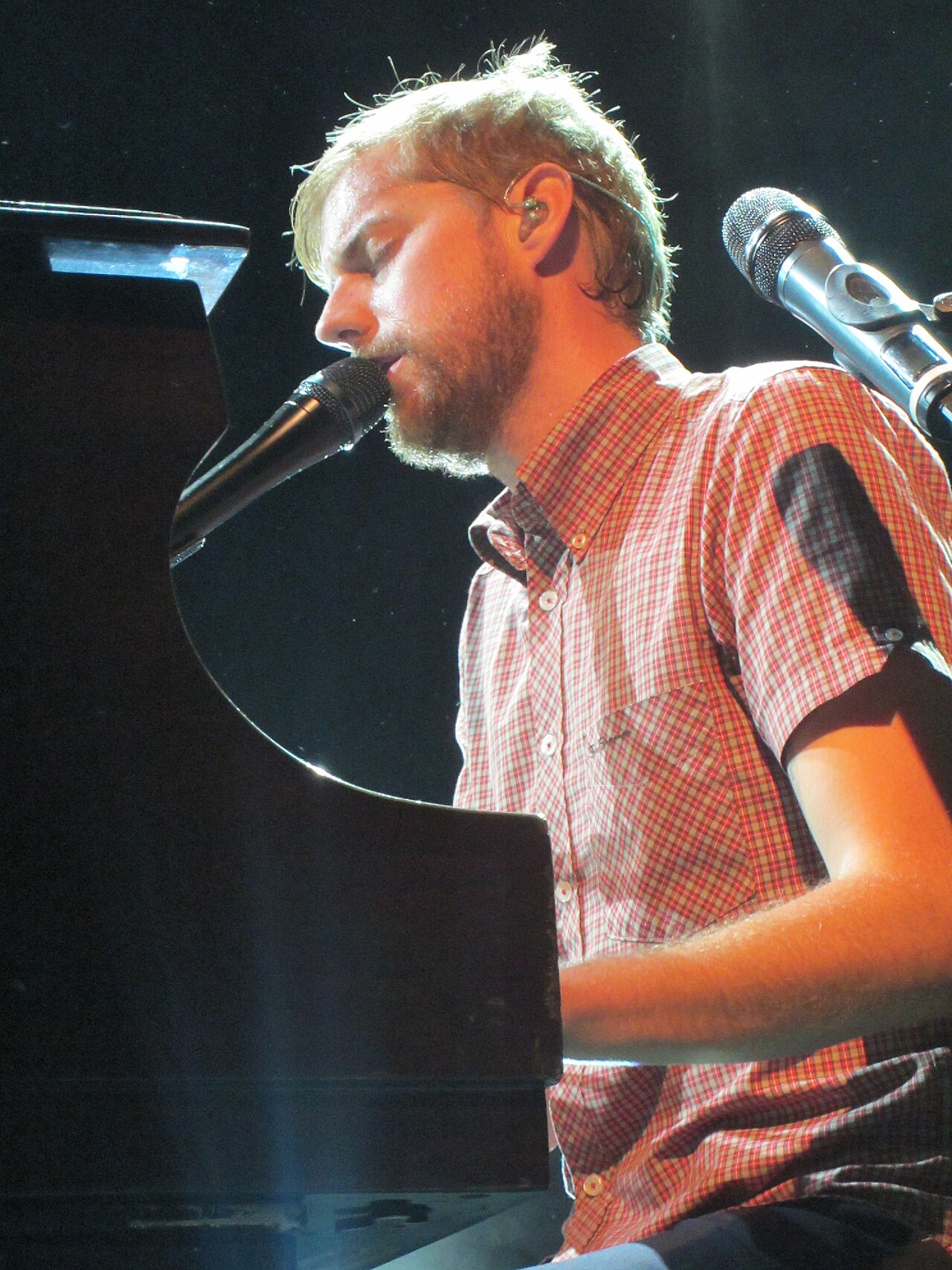
He was a local legend before he could read a note. Growing up in Bexley, Ohio, the kid would sit at the piano and pull songs out of the air by ear, drawing neighbors and friends into a living room that doubled as a stage. Andrew McMahon was eight years old, a recent transplant from Massachusetts, and already building the restless, melodic engine that would power three distinct musical identities over the next three and a half decades. Born on September 3, 1982, in Concord — though some sources point to Lexington — McMahon turns 44 in 2026, and the thread tying it all together isn't a genre or a band name.
A childhood mapped by loss and motion
The constant was motion. His father's retail career yanked the family across the map: Concord to Ho-Ho-Kus, New Jersey, then a 1991 relocation to Bexley, where he attended Cassingham Elementary School. A few years later, fourth grade brought another seismic shift. The family moved to California to support his mother's side of the family after the death of her brother. That loss carved itself into McMahon deeply. He later marked it permanently, tattooing his forearm as a private memorial to an uncle whose absence shadowed the boy navigating yet another unfamiliar town.
California was supposed to be a landing point. Instead, the moves kept coming. By eighth grade, the family had circled back and settled there for good, but McMahon had already internalized a sense of being permanently out of step. He saw himself as small, talkative, artistic — a kid who didn't fit the local mold. During the hardest stretches, he lived in his aunt's house. The piano was the one room that traveled with him, even when the actual instrument belonged to someone else.
From Something Corporate to Jack's Mannequin
Something Corporate emerged from that dislocation. McMahon became the voice, the pianist, and the primary lyricist, channeling adolescent chaos into songs that balanced pop immediacy with a literary eye. The band built a fervent following, but McMahon's creative metabolism was faster than any single project could contain. He eventually stepped into the role of frontman and chief songwriter for Jack's Mannequin, a project born from solo material that swelled into something bigger and more theatrical.
Then came the pivot no one saw coming. In 2013, McMahon released The Pop Underground, a solo EP that arrived on April 30 and stripped away the band dynamics to focus on raw songcraft. It was a quiet reset. A year and a half later, on October 14, 2014, the full-length Andrew McMahon in the Wilderness landed on Vanguard Records, introducing the third major chapter under a new pseudonym. The album's title was a mission statement: he was wandering into pop territory with no map, trusting the same ear that had guided him since childhood.
A decade of solo reinvention
The Wilderness era accelerated. Zombies on Broadway followed on February 10, 2017, a record that sharpened the pop instincts and leaned into neon-bright production. Upside Down Flowers arrived less than two years later, on November 16, 2018, pushing the songwriting toward something stranger and more introspective. By the time Tilt at the Wind No More appeared on March 31, 2023, McMahon had been releasing music as a solo artist for a full decade, and the project had accumulated its own weight and history.
In the middle of this prolific run, he made a hard left turn into prose. On October 26, 2021, Princeton Architectural Press published Three Pianos, a memoir that reframed his entire creative life through the instruments that carried him. The book wasn't a victory lap. It was an excavation — of the Bexley living room, the California upheavals, the uncle's death, the tattoos that mapped grief onto skin.
The title itself is a quiet provocation. Three pianos. Three lives. Something Corporate, Jack's Mannequin, and Andrew McMahon in the Wilderness each demanded a different version of the same person, a different relationship to the keys. McMahon never abandoned one for the next; he simply kept adding rooms to the house. His pop music — restless, confessional, allergic to stasis — is the sound of someone who learned early that home is a temporary arrangement, and a song is the only furniture you can carry.
That kid in Ohio, playing piano by ear before he could decode a page of sheet music, set the terms for everything that followed. The moves, the losses, the reinventions — they never stopped, and neither did the writing. At 44, Andrew McMahon is still chasing the next melody, still trusting that the instrument will tell him where to go.